

Tuesday, July 28, 2026
Science
No Result
View All Result
  • Login
  • HOME
  • SCIENCE NEWS
  • CONTACT US
  • HOME
  • SCIENCE NEWS
  • CONTACT US
No Result
View All Result
Scienmag
No Result
View All Result
Home Science News Medicine

Adaptive policies could boost Zambia nutrition security amid future climate shocks

July 28, 2026
in Medicine
Reading Time: 2 mins read
0
Adaptive policies could boost Zambia nutrition security amid future climate shocks

Adaptive policies could boost Zambia nutrition security amid future climate shocks

65
SHARES
587
VIEWS
Share on FacebookShare on Twitter
ADVERTISEMENT

Zambia is on the front line of climate volatility, and new research suggests that smart, adaptive policy could help protect nutrition—even when droughts, floods, and heat extremes disrupt farming. In a study published in Nature Food, researchers modeled how future climate shocks may reshape crop yields, household access to food, and the balance between agricultural production and imported staples.

The team focused on three interacting levers: agricultural productivity, changes in cropland area, and trade policy. Instead of treating these as separate solutions, the analysis framed them as competing choices that governments must coordinate. When climate stress reduces harvests, countries can respond by expanding land, increasing efficiency, or leaning on international markets—each option carries costs and risks.

Using integrated scenario-based modeling, the researchers estimated how different policy mixes could influence the availability of calories and key nutrients across vulnerable regions. The results indicate that strategies that simultaneously manage trade relationships, boost yield performance, and allow carefully planned cropland increases can outperform approaches that optimize only one dimension. In other words, resilience emerges from tradeoffs: scaling food production helps, but trade can stabilize shortfalls, while cropland expansion may buffer longer disruptions.

A central finding is that adaptive policies can reduce the likelihood that nutrition security deteriorates sharply under repeated or compound climate events. The model suggests that productivity gains—such as improved crop management and climate-smart agricultural practices—are particularly valuable because they reduce dependence on land expansion. Meanwhile, maintaining effective trade channels can act as a shock absorber during years when local output falls.

The study also highlights why timing matters. Policy responses must be flexible enough to shift between pathways as climate conditions worsen or ease. Static targets may fail when extremes accelerate; adaptive frameworks can instead recalibrate support for farmers, procurement, and market access in near real time.

Importantly, the authors emphasize that cropland expansion cannot be treated as an automatic fix. It needs guardrails related to sustainability, land use competition, and the risk of undermining long-term agricultural stability. When paired with productivity improvements and workable trade options, however, land expansion becomes one component of a broader resilience plan.

For Zambia, the message is clear: nutrition security under future climate shocks will likely require coordinated, multi-sector decisions. Policies that balance productivity, trade, and cropland—rather than prioritizing a single tool—offer a more credible pathway to keeping food systems stable as climate risks intensify.

Subject of Research: Nutrition security and adaptive agricultural policy under climate shocks in Zambia.

Article Title: Adaptive policies balancing trade, productivity and cropland increases can support Zambia’s nutrition security under future climate shocks.

Article References: Jennings, S., Challinor, A., Macdiarmid, J.I. et al. Adaptive policies balancing trade, productivity and cropland increases can support Zambia’s nutrition security under future climate shocks. Nat Food (2026). https://doi.org/10.1038/s43016-026-01405-1

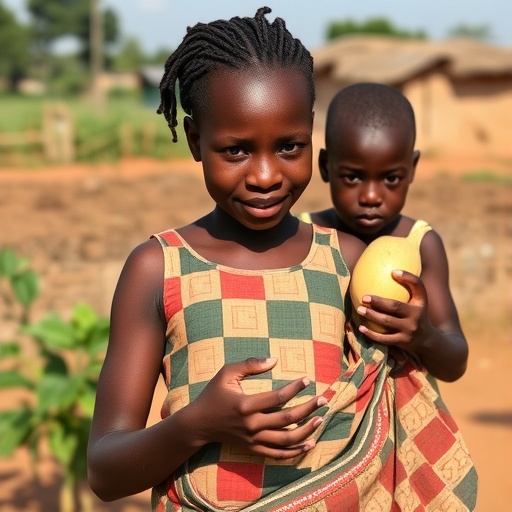
Image Credits: AI Generated

DOI: https://doi.org/10.1038/s43016-026-01405-1

Tags: adaptive agricultural policiesclimate change and household food accessclimate resilienceclimate shocks impact on nutritioncrop yield optimizationintegrated scenario modelingland use and climate adaptationmulti-dimensional agricultural strategiesnutrition security under climate stressresilience through policy coordinationtrade policy in agricultureZambia food security
Share26Tweet16
Previous Post

Nanoneedle Arrays Enable Sequencing-Free Spatial Profiling of Fresh Tissue Regulation

Next Post

Single-Plane Imaging Tracks Dynamic 3D Structures in Living Cells with Focus Feedback

Related Posts

Standardizing Lung Ultrasound to Improve Neonatal Care Outcomes
Medicine

Standardizing Lung Ultrasound to Improve Neonatal Care Outcomes

July 28, 2026
Alpha-synuclein Aggregates Differentially Alter Electrophysiology of SNpc and VTA Neurons
Medicine

Alpha-synuclein Aggregates Differentially Alter Electrophysiology of SNpc and VTA Neurons

July 28, 2026
Study finds higher healthcare costs linked to inappropriate medication use in seniors
Medicine

Study finds higher healthcare costs linked to inappropriate medication use in seniors

July 28, 2026
Single-Plane Imaging Tracks Dynamic 3D Structures in Living Cells with Focus Feedback
Medicine

Single-Plane Imaging Tracks Dynamic 3D Structures in Living Cells with Focus Feedback

July 28, 2026
Nanoneedle Arrays Enable Sequencing-Free Spatial Profiling of Fresh Tissue Regulation
Medicine

Nanoneedle Arrays Enable Sequencing-Free Spatial Profiling of Fresh Tissue Regulation

July 28, 2026
Pediatrician Office Treatment for Childhood Obesity Proves Effective
Medicine

Pediatrician Office Treatment for Childhood Obesity Proves Effective

July 28, 2026
Next Post
Single-Plane Imaging Tracks Dynamic 3D Structures in Living Cells with Focus Feedback

Single-Plane Imaging Tracks Dynamic 3D Structures in Living Cells with Focus Feedback

  • Mothers who receive childcare support from maternal grandparents show more

    Mothers who receive childcare support from maternal grandparents show more parental warmth, finds NTU Singapore study

    27656 shares
    Share 11059 Tweet 6912
  • University of Seville Breaks 120-Year-Old Mystery, Revises a Key Einstein Concept

    1061 shares
    Share 424 Tweet 265
  • Bee body mass, pathogens and local climate influence heat tolerance

    682 shares
    Share 273 Tweet 171
  • Researchers record first-ever images and data of a shark experiencing a boat strike

    546 shares
    Share 218 Tweet 137
  • Groundbreaking Clinical Trial Reveals Lubiprostone Enhances Kidney Function

    531 shares
    Share 212 Tweet 133
Science

Embark on a thrilling journey of discovery with Scienmag.com—your ultimate source for cutting-edge breakthroughs. Immerse yourself in a world where curiosity knows no limits and tomorrow’s possibilities become today’s reality!

RECENT NEWS

  • Rescuer Rotation Affects Neonatal Chest Compression Metrics, Simulation Study Finds
  • Standardizing Lung Ultrasound to Improve Neonatal Care Outcomes
  • Alpha-synuclein Aggregates Differentially Alter Electrophysiology of SNpc and VTA Neurons
  • Study finds higher healthcare costs linked to inappropriate medication use in seniors

Categories

  • Agriculture
  • Anthropology
  • Archaeology
  • Athmospheric
  • Biology
  • Biotechnology
  • Blog
  • Bussines
  • Cancer
  • Chemistry
  • Climate
  • Earth Science
  • Editorial Policy
  • Marine
  • Mathematics
  • Medicine
  • Pediatry
  • Policy
  • Psychology & Psychiatry
  • Science Education
  • Social Science
  • Space
  • Technology and Engineering

Subscribe to Blog via Email

Enter your email address to subscribe to this blog and receive notifications of new posts by email.

Join 5,146 other subscribers

© 2025 Scienmag - Science Magazine

Welcome Back!

Login to your account below

Forgotten Password?

Retrieve your password

Please enter your username or email address to reset your password.

Log In
No Result
View All Result
  • HOME
  • SCIENCE NEWS
  • CONTACT US

© 2025 Scienmag - Science Magazine

Discover more from Science

Subscribe now to keep reading and get access to the full archive.

Continue reading
