

Tuesday, August 18, 2026
Science
No Result
View All Result
  • Login
  • HOME
  • SCIENCE NEWS
  • CONTACT US
  • HOME
  • SCIENCE NEWS
  • CONTACT US
No Result
View All Result
Scienmag
No Result
View All Result
Home Science News Medicine

Nanoneedle Arrays Enable Sequencing-Free Spatial Profiling of Fresh Tissue Regulation

July 28, 2026
in Medicine
Reading Time: 2 mins read
0
Nanoneedle Arrays Enable Sequencing-Free Spatial Profiling of Fresh Tissue Regulation

Nanoneedle Arrays Enable Sequencing-Free Spatial Profiling of Fresh Tissue Regulation

65
SHARES
587
VIEWS
Share on FacebookShare on Twitter
ADVERTISEMENT

A team of researchers has unveiled a sequencing-free, amplification-free strategy for mapping gene regulation directly in space, tackling key bottlenecks that have limited current spatial transcriptomics. Traditional methods rely on next-generation sequencing, demanding complex sample preparation and costly instrument pipelines, and they often provide only a partial view of how cells control gene expression after transcription.

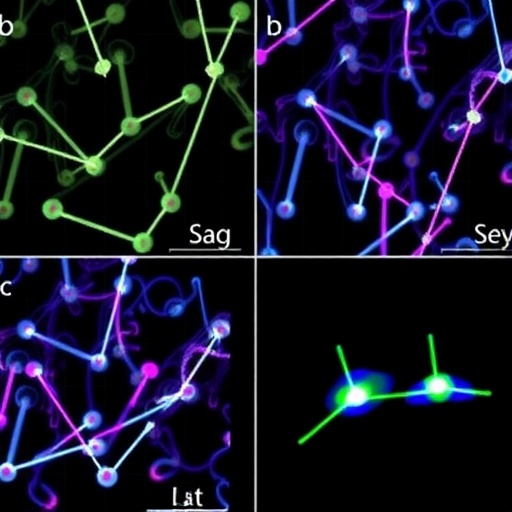
The new approach targets post-transcriptional regulation in fresh tissues while preserving cellular geography. Instead of capturing and reading RNA by sequencing, the method uses a nanoneedle array to extract messenger RNAs (mRNAs), microRNAs (miRNAs), and N6-methyladenosine (m6A)-modified RNAs at the subcellular level. This design aims to quantify regulatory molecules without amplification steps that can distort abundance measurements.

To read out what is collected, the researchers rely on multiplexed fluorescence encoding followed by imaging-based decoding. In effect, RNA targets are translated into fluorescence signatures that can be decoded computationally from microscopy, enabling spatially resolved profiles across large tissue areas. By operating on minimally processed fresh slices, the workflow avoids harsh fixation steps that can degrade sensitive RNA species.

Benchmarking against established standards strengthens the case for performance. The team compared their maps with fluorescence in situ hybridization, immunostaining, and bulk measurements. Reported results indicate sensitivity and spatial fidelity on par with conventional spatial transcriptomics approaches, while reducing both cost and operational complexity.

They also demonstrate biological utility by mapping patterned mRNA expression in developing mouse neural tissue. Such patterned readouts provide a stringent test of whether the system can faithfully reproduce structured expression landscapes rather than just detecting scattered signals.

As an even harder challenge, the method is applied to the olfactory bulb, a layered brain region known for pronounced spatial heterogeneity. Layered organization offers a rigorous scenario for evaluating whether regulatory profiles align with known anatomical structure.

Beyond model systems, the researchers extend the technology to human biopsy specimens. This compatibility suggests a path toward affordable spatial multi-omics-like analysis in clinical contexts, supporting disease stratification and prognostic assessment.

Overall, the study presents a streamlined route to spatially resolved post-transcriptional regulation that does not depend on sequencing. If broadly adopted, it could make high-resolution spatial biology more accessible—especially for fresh samples and laboratories where sequencing capacity is limited.

Subject of Research: Sequencing-free spatial profiling of post-transcriptional regulation in fresh tissues using nanoneedle arrays.

Article Title: Sequencing-free spatial profiling of post-transcriptional regulation in fresh tissues using nanoneedle arrays.

Article References: Ji, X., Fang, P., Wan, Y. et al. Sequencing-free spatial profiling of post-transcriptional regulation in fresh tissues using nanoneedle arrays. Nat. Biomed. Eng (2026). https://doi.org/10.1038/s41551-026-01745-0

DOI: https://doi.org/10.1038/s41551-026-01745-0

Keywords: Sequencing-free spatial transcriptomics; nanoneedle array; post-transcriptional regulation; microRNA; m6A; fluorescence encoding and imaging decoding; fresh tissues; subcellular resolution.

Tags: amplification-free molecular quantificationfresh tissue spatial profilingimaging-based RNA decodingmicroRNA and m6A detectionminimally processed tissue analysismultiplexed fluorescence imagingnanoneedle array gene mappingpost-transcriptional gene regulationsequencing-free gene expression profilingSpatial transcriptomicssubcellular RNA extractionTissue Architecture Preservation
Share26Tweet16
Previous Post

China Issues Consensus on Precision Testing and Molecular Diagnosis for Pancreatic Cancer

Next Post

Adaptive policies could boost Zambia nutrition security amid future climate shocks

Related Posts

Laser Therapy Shows Promise Against Deadly Brain Tumors
Medicine

Laser Therapy Shows Promise Against Deadly Brain Tumors

August 18, 2026
Engineered Bacteria Mimic Organelles, Restore PTEN and p53, Fight Cancer
Medicine

Engineered Bacteria Mimic Organelles, Restore PTEN and p53, Fight Cancer

August 18, 2026
Real-world study confirms TB preventive treatment works for people with HIV
Medicine

Real-world study confirms TB preventive treatment works for people with HIV

August 18, 2026
Global genomic surveillance reveals emerging WHO-priority antibiotic resistance patterns in invasive Salmonella
Medicine

Global genomic surveillance reveals emerging WHO-priority antibiotic resistance patterns in invasive Salmonella

August 18, 2026
Experts warn AHRQ cuts threaten US healthcare quality and patient safety
Medicine

Experts warn AHRQ cuts threaten US healthcare quality and patient safety

August 18, 2026
Severe mental illness tied to higher dementia risk and earlier strokes
Medicine

Severe mental illness tied to higher dementia risk and earlier strokes

August 17, 2026
Next Post
Adaptive policies could boost Zambia nutrition security amid future climate shocks

Adaptive policies could boost Zambia nutrition security amid future climate shocks

  • Mothers who receive childcare support from maternal grandparents show more

    Mothers who receive childcare support from maternal grandparents show more parental warmth, finds NTU Singapore study

    27656 shares
    Share 11059 Tweet 6912
  • University of Seville Breaks 120-Year-Old Mystery, Revises a Key Einstein Concept

    1061 shares
    Share 424 Tweet 265
  • Bee body mass, pathogens and local climate influence heat tolerance

    682 shares
    Share 273 Tweet 171
  • Researchers record first-ever images and data of a shark experiencing a boat strike

    546 shares
    Share 218 Tweet 137
  • Groundbreaking Clinical Trial Reveals Lubiprostone Enhances Kidney Function

    531 shares
    Share 212 Tweet 133
Science

Embark on a thrilling journey of discovery with Scienmag.com—your ultimate source for cutting-edge breakthroughs. Immerse yourself in a world where curiosity knows no limits and tomorrow’s possibilities become today’s reality!

RECENT NEWS

  • Integrated data and machine learning transform lung cancer diagnosis and treatment
  • Long-range magnetism controls ferrimagnets’ approach to phase transitions
  • Laser Therapy Shows Promise Against Deadly Brain Tumors
  • Satellites Improve Assessment of Hurricane Wind Damage

Categories

  • Agriculture
  • Anthropology
  • Archaeology
  • Athmospheric
  • Biology
  • Biotechnology
  • Blog
  • Bussines
  • Cancer
  • Chemistry
  • Climate
  • Earth Science
  • Editorial Policy
  • Marine
  • Mathematics
  • Medicine
  • Pediatry
  • Policy
  • Psychology & Psychiatry
  • Science Education
  • Social Science
  • Space
  • Technology and Engineering

Subscribe to Blog via Email

Enter your email address to subscribe to this blog and receive notifications of new posts by email.

Join 5,150 other subscribers

© 2025 Scienmag - Science Magazine

Welcome Back!

Login to your account below

Forgotten Password?

Retrieve your password

Please enter your username or email address to reset your password.

Log In
No Result
View All Result
  • HOME
  • SCIENCE NEWS
  • CONTACT US

© 2025 Scienmag - Science Magazine

Discover more from Science

Subscribe now to keep reading and get access to the full archive.

Continue reading
