


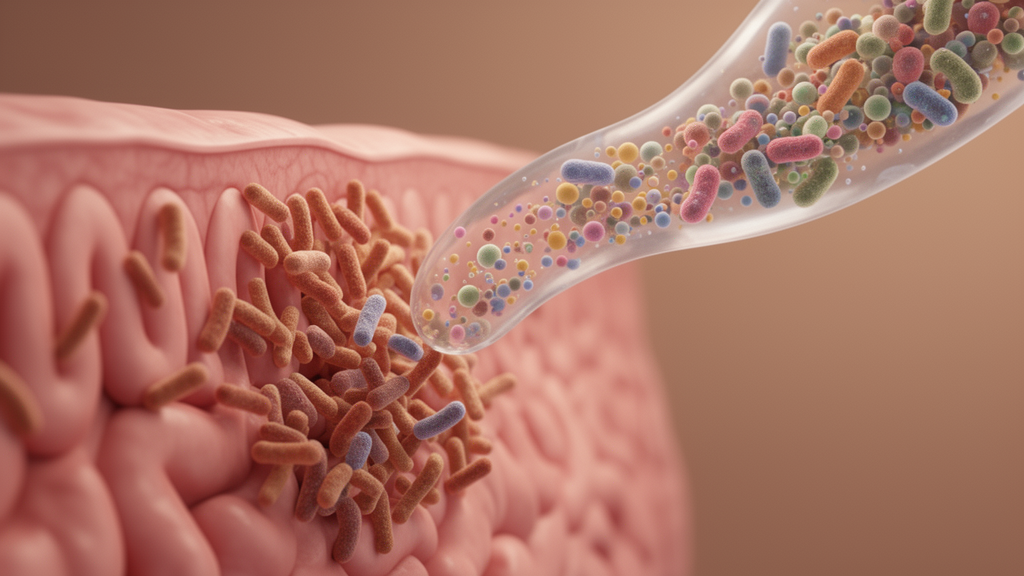
Fecal microbiota transplantation, a procedure best known for rescuing patients from recurrent Clostridioides difficile infection, has long tantalized gastroenterologists as a way to rewrite the microbial ecology of inflammatory bowel disease. Results in Crohn’s disease, however, have been modest and inconsistent, and no therapy has ever been shown to selectively eradicate the bacterium most strongly implicated in driving the disease. A new open-label pilot study published in Nature Communications now offers the first human evidence that a single colonoscopic fecal microbiota transplant, or FMT, can sweep away adherent-invasive Escherichia coli, a notorious gut-dwelling pathobiont, from the intestinal lining of patients with Crohn’s disease.
Adherent-invasive E. coli, abbreviated AIEC, is no ordinary gut bacterium. Defined by its ability to cling to intestinal epithelial cells, invade them, and survive inside macrophages, AIEC is found at markedly higher frequencies in the ileal mucosa of Crohn’s patients than in healthy individuals. In mouse models, the organism induces and exacerbates gut inflammation, and accumulating evidence positions it as a key contributor to the chronic inflammatory cascade that defines the disease. Until now, however, whether FMT could actually clear AIEC from the mucosa, where it does its damage, had never been tested. Fecal samples alone cannot answer that question, because sequencing methods cannot distinguish AIEC from harmless commensal E. coli strains.
The research team, led by investigators at the Chinese University of Hong Kong including Zhilu Xu, Hui Jiang and senior author Siew Chien Ng, enrolled thirty adults with Crohn’s disease who were seropositive for a serum anti-E. coli antibody, a marker associated with mucosal AIEC colonization. Between October 2022 and January 2023, each participant received a single infusion of donor fecal material delivered by colonoscopy directly into the terminal ileum, the stretch of small intestine where AIEC most often takes hold. The preparation was drawn from one of two carefully screened healthy donors whose stool had been processed into a filtered suspension of 150 milliliters in sterile saline. The trial was registered as NCT05611866, and the primary outcome was safety, specifically adverse events occurring within twelve weeks of the procedure.
On the safety front, the news was reassuring. Only two adverse events were recorded across the entire cohort: one patient developed mild diarrhea six days after the transplant, and another experienced gastrointestinal bleeding 44 days afterward, an event the investigators judged unlikely to be related to the FMT. Both patients recovered spontaneously, and no FMT-related serious adverse events were reported. Disease activity, measured with the Harvey-Bradshaw Index and the Crohn’s Disease Activity Index, remained stable overall, while some laboratory parameters, including white blood cell count, platelet count and alkaline phosphatase, declined significantly after the procedure.
The microbiological results were striking. At baseline, nine of the thirty participants carried mucosal AIEC, and eight of them completed the twelve-week follow-up. Every single one of those eight evaluable patients showed complete clearance of AIEC from their ileal biopsies at week twelve, a one hundred percent decolonization rate. Participants who were AIEC-negative at baseline remained negative throughout. The researchers also confirmed that baseline anti-E. coli antibody levels were significantly higher in colonized patients than in non-colonized patients, supporting the antibody as an indirect marker of AIEC presence, although levels did not fall after successful clearance, suggesting the antibody reflects long-standing immune memory rather than current bacterial burden.
To understand how the transplant reshaped the gut ecosystem, the team deployed shotgun metagenomic sequencing on fecal samples and 16S rRNA sequencing on ileal mucosal biopsies collected before and after the procedure. In feces, the overall community structure shifted significantly after FMT, with pro-inflammatory taxa such as Erysipelatoclostridium ramosum and Streptococcus sanguinis decreasing, while butyrate-producing species with potential anti-inflammatory properties, including Phascolarctobacterium faecium, Alistipes putredinis and Gemmiger formicilis, increased. Notably, the growth in Phascolarctobacterium faecium correlated with a drop in fecal calprotectin, a standard marker of intestinal inflammation.
The most revealing findings emerged from the mucosal compartment itself. Ileal Shannon diversity, a measure of microbial variety at the disease site, rose significantly after FMT, an effect never observed in the paired fecal samples. That increase in mucosal diversity correlated with reductions in fecal calprotectin, hinting that restored ecological complexity at the gut lining is tied to dampened inflammation. Reductions in mucosal Escherichia-Shigella abundance, meanwhile, tracked with improvements in the Crohn’s Disease Activity Index, and mucosa-associated pathobionts such as Haemophilus and Bilophila also declined after the transplant.
Perhaps the study’s most conceptually important insight concerns how donor microbes take hold. Recipients of one donor, whose stool was rich in Bifidobacterium adolescentis, showed higher species-level engraftment rates than recipients of the other donor, yet that taxonomic advantage did not translate into greater functional convergence. Instead, all recipients’ microbial pathway profiles became significantly more similar to their respective donors after FMT, and the convergence was strongest in patients who cleared AIEC. The authors interpret this as evidence that donor-derived ecological and metabolic functions, such as bile acid transformation and short-chain fatty acid production, rather than any single antagonistic bacterial species, may create a mucosal environment hostile to AIEC persistence. Successful engraftment, in other words, does not necessarily mean functional integration, a phenomenon the researchers attribute to functional redundancy within microbial communities.
The team also reflected on why the clearance succeeded where their earlier animal experiments had suggested AIEC could resist FMT. In murine colitis models, sustained inflammation and dysbiosis create a hostile soil that resists donor engraftment, whereas the human cohort here consisted mostly of patients with mild disease or clinical remission, presenting a less inflamed, more ecologically permissive mucosa. Exploratory subgroup analyses supported this idea, showing distinct patterns of disease activity change according to baseline AIEC status. The analogy extended to oncology, where recent FMT trials suggest success depends more on eliminating inhibitory bacteria than on simply adding donor strains, a pattern the authors see echoed in their own data.
Important caveats temper the enthusiasm. The study was an exploratory proof-of-concept pilot without a control group and with a small sample size, so the changes cannot be causally attributed to FMT. Most participants were in remission or had mild disease, limiting the ability to detect overt clinical improvement, endoscopic endpoints were not assessed, and decolonization here means AIEC was no longer detectable rather than proven eradicated. The twelve-week follow-up also cannot speak to long-term durability. Nevertheless, by directly sampling the ileal mucosa with culture-based AIEC identification, the study captured microbial changes at the disease site that fecal testing would have missed entirely. The message for the field is twofold: AIEC may be a modifiable target in Crohn’s disease, and future FMT trials should be judged by what happens at the gut lining, not merely in the stool.
Subject of Research: Fecal microbiota transplantation to clear adherent-invasive E. coli colonization in Crohn's disease
Article Title: Fecal microbiota transplantation for the decolonization of mucosal adherent-invasive Escherichia coli in Crohn’s disease: an open-label pilot study
Article References: Xu, Z., Jiang, H., Huang, W., Chan, A., Lin, Y., Chan, T., Lui, R. N., Wong, M. T. L., Mak, J. W. Y., Chan, F. K. L., Chevarin, C., Colombel, J.-F., Buisson, A., & NG, S. C. (2026). Fecal microbiota transplantation for the decolonization of mucosal adherent-invasive Escherichia coli in Crohn’s disease: an open-label pilot study. Nature Communications, 17(1), Article 10678. https://doi.org/10.1038/s41467-026-77455-7
Image Credits: AI Generated
DOI: 10.1038/s41467-026-77455-7
Keywords: Crohn's disease, fecal microbiota transplantation, adherent-invasive E. coli, gut microbiome, ileal mucosa, dysbiosis, inflammatory bowel disease, metagenomics, fecal calprotectin, microbial engraftment, pathobionts, pilot study
Cite Scienmag News
Morgan Morrow. (October 15, 2026). Single FMT dose clears gut-hugging E. coli linked to Crohn’s disease in small pilot trial. Scienmag. https://scienmag.com/single-fmt-dose-clears-gut-hugging-e-coli-linked-to-crohns-disease-in-small-pilot-trial/
Morgan Morrow. "Single FMT dose clears gut-hugging E. coli linked to Crohn’s disease in small pilot trial." Scienmag, 15 October 2026, https://scienmag.com/single-fmt-dose-clears-gut-hugging-e-coli-linked-to-crohns-disease-in-small-pilot-trial/. Accessed 15 October 2026.
Morgan Morrow. "Single FMT dose clears gut-hugging E. coli linked to Crohn’s disease in small pilot trial." Scienmag. October 15, 2026. https://scienmag.com/single-fmt-dose-clears-gut-hugging-e-coli-linked-to-crohns-disease-in-small-pilot-trial/


