


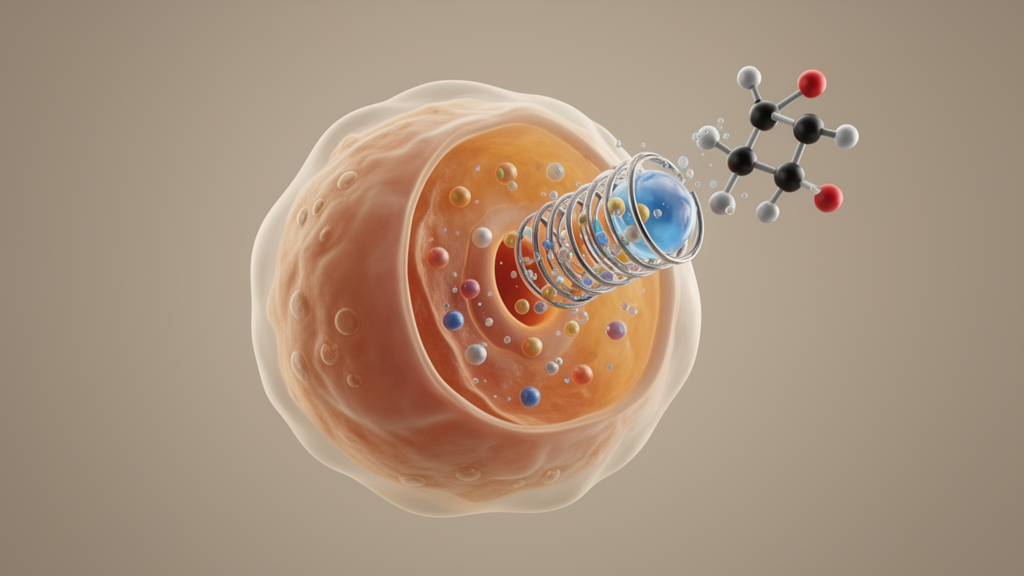
In a preliminary cell experiment using human osteoarthritis fibroblast-like synoviocytes from one donor, decanoic acid lowered extracellular prostaglandin accumulation while increasing intracellular prostaglandin E2, or PGE2. The 10-carbon medium-chain fatty acid also inhibited MRP4-mediated transport of a probe substrate in engineered membrane vesicles and strengthened the suppression of extracellular PGE2 by very-low-dose dexamethasone. MRP4, also known as ABCC4, is an established transporter involved in prostanoid efflux, but this study did not directly measure whether decanoic acid inhibited PGE2 transport. Nor did it show that retained PGE2 produced anti-inflammatory resolution signaling, improved cartilage outcomes or any clinical benefit.
The researchers exposed cultured synoviocytes to the inflammatory cytokine interleukin-1β and treated them with decanoic acid, dexamethasone or both. Decanoic acid at 100 and 200 micromolar reduced extracellular PGE2 by 80.6% and 96.6%, respectively, relative to the stimulated control. In the corresponding cell lysates, however, intracellular PGE2 rose by 49.4% and 53.3%. A combination of 100 micromolar decanoic acid with 0.5 nanomolar dexamethasone reduced extracellular PGE2 by 97.16% while increasing intracellular PGE2 by 31.8%. This reciprocal pattern is compatible with altered prostaglandin export or intracellular handling rather than a simple block of prostaglandin synthesis, although it is not specific to MRP4. The cellular experiments used independently cultured wells from one preparation, so their replicates measure within-donor experimental variation rather than biological variation among patients.
The interaction between the two compounds was examined in a nine-point concentration-response experiment using a fixed 0.1-nanomolar dexamethasone background. That steroid concentration was chosen because it produced only minimal inhibition by itself, unlike the approximately 98% suppression of extracellular PGE2 observed with 10 and 100 nanomolar dexamethasone. Across several intermediate decanoic acid concentrations, the combination suppressed extracellular PGE2 more than decanoic acid alone. At 25 micromolar, inhibition increased from 33.8% with decanoic acid alone to 49.2% when 0.1 nanomolar dexamethasone was added. At 12.5, 6.25 and 3.12 micromolar, adding dexamethasone increased inhibition by 12.3, 16.0 and 14.4 percentage points, respectively.
Fitting a four-parameter logistic model produced a decanoic acid half-maximal inhibitory concentration, or IC50, of 19.42 micromolar without dexamethasone and 8.62 micromolar with the fixed steroid background. The profile-likelihood 95% confidence intervals were 11.14–32.49 micromolar and 4.69–15.26 micromolar, respectively. An extra-sum-of-squares F-test comparing the fitted log IC50 values gave P = 0.0402. The authors describe this leftward shift as pharmacologic potentiation with synergy-consistent features, rather than definitive synergy, because the series included only one dexamethasone concentration. It therefore does not map the interaction across multiple dose ratios or effect levels, and the authors did not assign a formal combination index.
A separate experiment indicated that the extracellular effect was not confined to PGE2. This analysis used 0.5 nanomolar dexamethasone and therefore cannot be combined analytically with the 0.1-nanomolar PGE2 concentration-response experiment. At that higher steroid background, dexamethasone alone reduced extracellular PGD2 by 45% and PGI2 by 64%. Decanoic acid at 100 micromolar reduced the corresponding concentrations by 81% and 88%, while the combination achieved reductions of 92% for PGD2 and 94% for PGI2. Prostaglandin H2 was not detectable in this synoviocyte model. The results show that decanoic acid and dexamethasone can jointly lower several extracellular prostaglandins under the tested inflammatory conditions, but they do not establish whether those changes improve tissue repair or pain.
To test the proposed transporter mechanism, the team used inside-out membrane vesicles prepared from HEK293 cells overexpressing human MRP4. These cell-free vesicles were supplied with ATP and the probe substrate dehydroepiandrosterone sulfate, or DHEAS, while decanoic acid concentrations ranged from 7.81 to 500 micromolar. Relative ATP-dependent substrate accumulation declined in a concentration-dependent manner, reaching 81.51% of the vehicle-control level at 7.81 micromolar, 53.64% at 31.25 micromolar, 34.85% at 62.5 micromolar and 10.72% at 500 micromolar. Those values corresponded to 18%, 46%, 65% and 89% inhibition, respectively. The calculated IC50 was approximately 33.86 micromolar.
The known MRP4 inhibitor MK-571 reduced relative ATP-dependent accumulation to 2.98%, corresponding to 97% inhibition. This control showed that the assay could detect MRP4-sensitive transport. The vesicle experiment therefore demonstrates that decanoic acid can inhibit MRP4-mediated DHEAS transport at concentrations overlapping the active range in the synoviocyte experiments. It does not directly show that decanoic acid blocks MRP4-mediated PGE2 transport, because DHEAS and PGE2 can interact differently with the transporter. Because MRP4 is already established as a mediator of prostanoid efflux, the experiment strengthens an MRP4-associated explanation for the cellular pattern while leaving the specific contribution of PGE2 transport unresolved.
Molecular docking offered additional but similarly limited support. Using the inward-facing cryo-electron microscopy structure of human MRP4 in a nanodisc, the researchers placed decanoic acid 1.37 angstroms from the reference pose of MK-571 inside a hydrophobic pocket associated with substrate and inhibitor binding. Its predicted binding affinity was minus 5.470 kilocalories per mole, weaker than those predicted for MK-571 at minus 9.222, cyclic AMP at minus 8.362 and PGE2 at minus 7.201 kilocalories per mole. PGE2 docked 3.92 angstroms from the MK-571 pose, while cyclic AMP was 9.63 angstroms away. Docking can identify a plausible orientation within a modeled pocket, but it cannot prove physical binding, quantify inhibition of PGE2 transport or distinguish direct transporter inhibition from membrane-mediated and transcriptional effects.
The investigators also profiled lipid mediators by ultra-high-performance liquid chromatography coupled to mass spectrometry after six hours of interleukin-1β stimulation. Four independently cultured cell pellets from the same donor were analyzed per condition. The cytokine increased several inflammatory products, including 15(S)-HETE by 12.33-fold, with a false discovery rate of 0.0008, and a chromatographically unresolved pool containing 8-isoPGE2, PGE2 and PGD2 by 22.65-fold, with a false discovery rate of 0.002. It also modestly increased selected resolution-associated mediators, including 17(S)-HDHA by 3.89-fold and maresin 2 by 4.35-fold, while producing a broader overall pro-inflammatory shift.
Decanoic acid-containing treatments produced larger increases in the two selected resolution-associated mediators. At 100 and 200 micromolar, decanoic acid raised 17(S)-HDHA by 5.14-fold and 7.70-fold and maresin 2 by 5.8-fold and 8.70-fold. Dexamethasone alone did not reproduce this pattern, although the combination preserved the decanoic-acid-associated increases: 5.07-fold for 17(S)-HDHA and 4.98-fold for maresin 2. These observations are associative rather than causal. The experiments did not show that retained intracellular PGE2 caused either mediator to increase, nor did they demonstrate a complete switch from pro-inflammatory to pro-resolving signaling. Decanoic acid could affect fatty-acid metabolism, lipoxygenase pathways, PPAR signaling, cellular stress or other processes independently of MRP4.
The biological meaning of lower extracellular PGE2 is also context dependent. Extracellular PGE2 can amplify synovial inflammation and nociception, yet the source article notes homeostatic and chondroprotective functions in some cartilage-related systems. Lower extracellular PGE2 therefore cannot be assumed to provide uniform benefit across synoviocytes, chondrocytes, immune cells, sensory neurons and other joint tissues. The monoculture did not measure EP-receptor signaling, chondrocyte hypertrophy, cartilage matrix synthesis, tissue repair or pain. The study also generated no intra-articular pharmacokinetic, formulation or safety data. The tested decanoic acid concentrations of 100–200 micromolar correspond to approximately 17–34 micrograms per milliliter, above usual fasting plasma concentrations and potentially overlapping levels reported under specialized dietary exposure, but this comparison does not establish free concentrations in synovial fluid or support a dosing regimen.
Taken together, the results provide a coherent proof-of-concept hypothesis: decanoic acid may influence extracellular prostaglandin signaling partly by inhibiting MRP4-associated export while increasing selected resolution-associated lipids, and a low dexamethasone background may strengthen suppression of extracellular PGE2. The evidence stops short of directly demonstrating PGE2 transport inhibition, transporter-specific retention in synoviocytes, formal drug synergy or therapeutic efficacy. The researchers identify multi-donor validation, direct PGE2 transport assays, genetic MRP4 loss-of-function experiments, full drug-by-drug interaction matrices, time-resolved lipid-flux studies, cartilage and joint-tissue models, and intra-articular pharmacokinetic and safety assessments as necessary next steps. Until those studies are completed, the findings remain a mechanistic lead rather than evidence for clinical use or a therapeutic claim.
Subject of Research: Decanoic acid effects on MRP4-associated prostaglandin transport in human osteoarthritis synoviocytes
Article Title: Decanoic acid reduces extracellular prostaglandin accumulation, inhibits MRP4 transport, and enhances low-dose dexamethasone effects in IL-1β-stimulated human osteoarthritis synoviocytes
Article References: Williams, J., Hausburg, M. A., Thomas, G. W., Bar-Or, R., Banton, K., & Bar-Or, D. (2026). Decanoic acid reduces extracellular prostaglandin accumulation, inhibits MRP4 transport, and enhances low-dose dexamethasone effects in IL-1β-stimulated human osteoarthritis synoviocytes. Frontiers in Medicine, 13, Article 1876378. https://doi.org/10.3389/fmed.2026.1876378
Image Credits: AI Generated
DOI: 10.3389/fmed.2026.1876378
Keywords: osteoarthritis, synoviocytes, decanoic acid, MRP4, ABCC4, prostaglandin E2, dexamethasone, lipid mediators, inflammation, cell culture, Decanoic, acid
Cite Scienmag News
Ophelia Keating. (October 20, 2026). Single-donor osteoarthritis cell study links decanoic acid to MRP4 transport. Scienmag. https://scienmag.com/single-donor-osteoarthritis-cell-study-links-decanoic-acid-to-mrp4-transport/
Ophelia Keating. "Single-donor osteoarthritis cell study links decanoic acid to MRP4 transport." Scienmag, 20 October 2026, https://scienmag.com/single-donor-osteoarthritis-cell-study-links-decanoic-acid-to-mrp4-transport/. Accessed 21 October 2026.
Ophelia Keating. "Single-donor osteoarthritis cell study links decanoic acid to MRP4 transport." Scienmag. October 20, 2026. https://scienmag.com/single-donor-osteoarthritis-cell-study-links-decanoic-acid-to-mrp4-transport/


