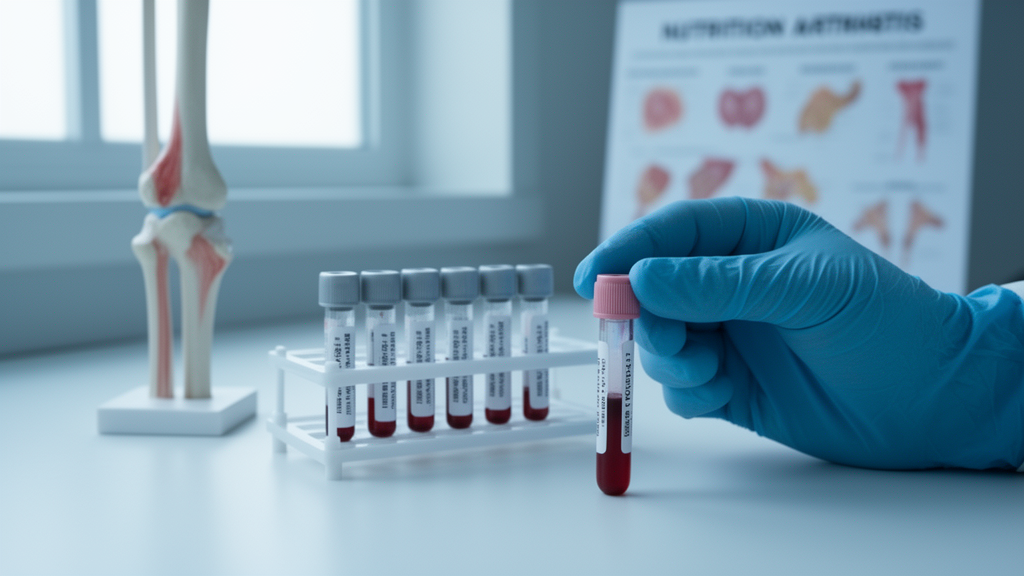
A routine blood test that costs pennies to perform may reveal far more about rheumatoid arthritis than clinicians ever suspected. A new cross-sectional study of 984 patients, published in Immunity, Inflammation and Disease, reports that the Prognostic Nutritional Index (PNI)—a simple composite of serum albumin and lymphocyte count—is independently and negatively associated with rheumatoid arthritis disease activity. More strikingly, the researchers uncovered a nonlinear relationship: below a threshold of roughly 45 points, each unit increase in PNI produces a dramatic drop in disease activity scores, while above that threshold the effect shrinks by more than two-thirds. The finding suggests that a two-line calculation from standard laboratory panels could help clinicians identify the patients whose inflammatory and nutritional burden is quietly driving their disease.
Rheumatoid arthritis is a chronic autoimmune disease affecting roughly one percent of the global population, characterized by persistent, erosive inflammation of the joints. Its global burden is projected to climb from 1.07 million cases in 2019 to 1.5 million by 2040. Beyond morning stiffness, pain, swelling, and progressive joint destruction, the disease carries serious extra-articular risks including depression, interstitial lung disease, cardiovascular disease, lymphoma, and hematological abnormalities. Its pathogenesis is a tangled web of genetic, hormonal, immunological, and environmental factors, and increasingly, researchers have recognized that nutrition sits squarely within that web. Malnutrition can amplify immune dysfunction and fuel inflammatory responses, and patients with rheumatoid arthritis generally show poorer nutritional status than healthy individuals—a deficit closely linked to increased all-cause mortality.
The established biomarkers of rheumatoid arthritis, including C-reactive protein (CRP), erythrocyte sedimentation rate (ESR), rheumatoid factor, and anti-citrullinated protein antibodies, are indispensable for diagnosis and monitoring, but each has blind spots. CRP and ESR capture only acute systemic inflammation, while the autoantibodies reflect autoimmune status without revealing the metabolic and nutritional consequences of chronic inflammation. Roughly one-third of patients are seronegative for the traditional autoantibodies, and the disease’s insidious onset can delay diagnosis. This heterogeneity has pushed researchers toward composite scores built from routine laboratory parameters—scores that might capture a dimension of disease burden that conventional markers miss entirely.
Enter the Prognostic Nutritional Index. The formula is elegantly simple: serum albumin in grams per liter plus five times the lymphocyte count in units of ten to the ninth per liter. Albumin reflects nutritional reserve, while lymphocytes reflect adaptive immune competence. Originally developed to assess nutritional risk and postoperative complications in surgical patients, PNI has since been validated as a prognostic marker in multiple malignancies and has shown predictive value in inflammatory bowel disease and cardiovascular disease. Previous studies had hinted at an L-shaped association between PNI and both the presence of rheumatoid arthritis and mortality from it, but the relationship between PNI and day-to-day disease activity remained incompletely characterized.
The new study, led by researchers at Xingtai People’s Hospital in China, retrospectively reviewed the medical records of 984 patients who met the 2010 American College of Rheumatology/European League Against Rheumatism classification criteria. After excluding patients with other autoimmune diseases, malignancies, severe liver or kidney dysfunction, infections, and incomplete data, the cohort comprised 769 women (78.2 percent) with a median age of 59 years. Blood samples were drawn on the same day as DAS28 disease activity assessments, and patients were divided into tertiles based on their PNI values. The lowest tertile ranged from 25.95 to 42.29, the middle tertile from 42.29 to 47.70, and the highest from 47.70 to 64.99.
The baseline differences were stark. Compared with patients in the highest PNI tertile, those in the lowest were older, had markedly higher inflammatory markers—median ESR of 78 versus 52 millimeters per hour, and median CRP of 43.12 versus 11.39 milligrams per liter—and significantly lower levels of nutrition-related markers including lymphocytes, red blood cells, hemoglobin, and albumin. Most importantly, their disease activity was substantially worse: the low-PNI group’s median DAS28-ESR was 4.88 compared with 4.31 in the high-PNI group, with parallel differences in DAS28-CRP. In univariate analysis, PNI was significantly negatively correlated with both disease activity measures, alongside expected associations with age, inflammatory markers, sex, and treatment status.
The association survived rigorous statistical scrutiny. In a fully adjusted model accounting for thirteen covariates—sex, age, body mass index, neutrophil count, monocyte count, red blood cell count, hemoglobin, platelet count, platelet distribution width, globulin, glucocorticoid use, biologic use, and number of DMARD types—every unit increase in PNI corresponded to a 0.034-point decrease in DAS28-ESR and a 0.044-point decrease in DAS28-CRP, both highly significant. Patients in the middle and highest PNI tertiles had significantly lower disease activity than those in the lowest, with a clear dose-response trend. Sensitivity analyses that removed potentially correlated variables one by one shifted the PNI coefficients by less than 0.003, confirming the robustness of the estimates, and collinearity diagnostics showed no problematic overlap among predictors.
The study’s most novel contribution came from segmented regression analysis, which allows the data itself to reveal where a relationship changes slope. The two-piecewise model identified a consistent inflection point at approximately PNI 45.0 for both disease activity measures, confirmed by the log-likelihood ratio and Davies tests at p less than 0.001. Below that threshold, each additional PNI unit reduced DAS28-ESR by 0.073 points and DAS28-CRP by 0.069 points. Above it, the DAS28-ESR slope collapsed to a nonsignificant −0.012, while the DAS28-CRP slope fell to −0.020—a 71 percent reduction in effect strength. In practical terms, the benefit of improving nutritional-immune status is roughly 3.5 times greater in patients below the threshold than above it, meaning the patients who need the most help are precisely those who stand to gain the most.
The pathophysiology behind the association is biologically plausible. Pro-inflammatory cytokines such as interleukin-6 and tumor necrosis factor-alpha directly suppress hepatic albumin synthesis by inhibiting albumin gene transcription, while chronic inflammation raises protein catabolism and resting energy expenditure, producing the well-described state of rheumatoid cachexia in which patients lose muscle mass despite adequate caloric intake. Hypoalbuminemia then perpetuates the inflammatory cycle by impairing antioxidant capacity and reducing the binding and clearance of pro-inflammatory molecules. On the immune side, rheumatoid arthritis involves a breakdown of immune tolerance, an imbalance between pro-inflammatory Th17 cells and anti-inflammatory regulatory T cells, and chronic inflammation-driven lymphocyte apoptosis that produces a relative lymphopenia correlating with disease severity. PNI, by integrating both dimensions, captures the overall pathophysiological status in a way that neither albumin nor lymphocyte count alone can.
The authors acknowledge important limitations. The cross-sectional design cannot establish causality or temporal sequence, and the single-center Chinese population may limit generalizability to other ethnic and geographic groups. Retrospective data collection introduces potential inter-rater variability in joint examinations, although the parallel findings for both DAS28-ESR and DAS28-CRP support reliability. Only 27 patients were in remission, too few for multivariate analysis, so the findings apply chiefly to active disease—which constituted 97 percent of the cohort. And PNI does not capture dietary intake, energy balance, or body composition, leaving room for future studies using food frequency questionnaires and bioelectrical impedance analysis. Still, the message is compelling: a marker that is simple, economical, and already available in every hospital laboratory can flag patients carrying a heavy nutritional-inflammatory burden, and prospective trials must now test whether interventions targeting nutritional status can actually move the needle on disease activity.
Subject of Research: Association between the Prognostic Nutritional Index and disease activity in rheumatoid arthritis
Article Title: Nonlinear Correlation Between Prognostic Nutritional Index and Disease Activity of Rheumatoid Arthritis: A Cross‐Sectional Study
Article References: Nonlinear Correlation Between Prognostic Nutritional Index and Disease Activity of Rheumatoid Arthritis: A Cross‐Sectional Study. (n.d.). https://doi.org/10.1002/iid3.70516
Image Credits: AI Generated
DOI: 10.1002/iid3.70516
Keywords: rheumatoid arthritis, Prognostic Nutritional Index, DAS28, albumin, lymphocyte count, disease activity, malnutrition, inflammation, biomarkers, cross-sectional study, segmented regression, autoimmune disease
Cite Scienmag News
Daisy Hatcher. (October 8, 2026). Simple Blood Score Reveals Hidden Nutritional Threshold in Rheumatoid Arthritis Activity. Scienmag. https://scienmag.com/simple-blood-score-reveals-hidden-nutritional-threshold-in-rheumatoid-arthritis-activity/
Daisy Hatcher. "Simple Blood Score Reveals Hidden Nutritional Threshold in Rheumatoid Arthritis Activity." Scienmag, 8 October 2026, https://scienmag.com/simple-blood-score-reveals-hidden-nutritional-threshold-in-rheumatoid-arthritis-activity/. Accessed 8 October 2026.
Daisy Hatcher. "Simple Blood Score Reveals Hidden Nutritional Threshold in Rheumatoid Arthritis Activity." Scienmag. October 8, 2026. https://scienmag.com/simple-blood-score-reveals-hidden-nutritional-threshold-in-rheumatoid-arthritis-activity/