


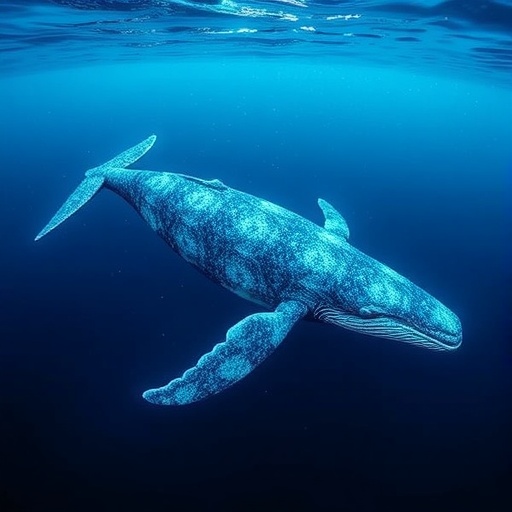
In the bustling waters of British Columbia’s Salish Sea, Southern Resident killer whales navigate corridors heavily trafficked by an array of marine vessels. These endangered orcas, specifically the J, K, and L pods, face the grave challenge of acoustic interference from cargo ships, passenger ferries, and recreational boats, which disrupts their vital communication and echolocation capabilities. Addressing this critical conservation issue, researchers at Simon Fraser University have embarked on an ambitious project powered by artificial intelligence (AI) to forecast whale movements in real time, aiming to mitigate the detrimental effects of noise pollution and reduce the risk of vessel-related harm.
The project, known as Humans and Algorithms Listening for Orcas (HALLO), recently received close to $1 million in funding from the Digital Research Alliance of Canada. This financial support is paving the way for the development of a sophisticated AI-based system designed to integrate various streams of data—including real-time acoustic sensors, visual monitoring, vessel tracking, and reports from citizen scientists—to pinpoint current whale locations and provide accurate forecasts of their movement patterns over ensuing hours. By doing so, the HALLO system empowers authorities and vessel pilots at the Port of Vancouver to implement dynamic slowdowns, adjusting ship speeds not according to fixed schedules but based on actual whale presence in critical shipping lanes.
Killer whales depend heavily on sound for hunting Chinook salmon, their primary prey. However, the acoustic clutter generated by maritime traffic interferes significantly with their ability to communicate and echolocate fish, which presents a direct threat to their survival. Ruth Joy, an assistant professor of environmental science and the principal investigator for HALLO, emphasizes that noise pollution represents a controllable threat, which exacerbates the existing challenges posed by dwindling salmon populations. She explains that even an abundant salmon population would not benefit these orcas if the noise from vessels muffles their ability to detect prey.
Currently, the Port of Vancouver enforces a voluntary static slowdown program, which encourages pilots to reduce vessel speeds from June to November through sensitive habitats like Haro Strait and Boundary Pass. Though well intentioned, this approach often compels ships to extend their transit times beyond a pilot’s typical eight-hour work period, necessitating additional crew shifts and operational burdens. More critically, static slowdowns occur during periods when whales may not be present, creating inefficiencies and unnecessary economic impacts. HALLO seeks to replace this blanket approach with a precision technique, narrowing slowdowns to moments and locations warranted by real-time whale activity.
The technical complexity underlying HALLO’s AI system involves several neural network models working in concert. NOAA and other agencies have long tracked whale pods acoustically, but HALLO advances this knowledge by using machine learning classifiers to differentiate Southern Resident orcas from transient killer whales, which pose different conservation considerations. Fabio Frazao, a primary HALLO researcher, is spearheading efforts to refine the AI’s capability to reliably identify these species from acoustic signals. Meanwhile, Teng-Wei Lim develops predictive models that analyze historical movement trajectories, environmental variables, and detected sounds to anticipate the orcas’ path and velocity within the shipping corridors.
Beyond immediate slowdowns, the real-time whale monitoring offered by HALLO holds promise for a broader range of marine management applications. For example, it can provide crucial data to inform decisions about port infrastructure expansions, pile driving, and other coastal developments that generate underwater noise harmful to marine life. The system’s scalability also extends its potential utility to the Atlantic coast, where North Atlantic right whales, another critically endangered species, are threatened by ship strikes and entanglement in fishing gear. Here, similar AI forecasting could significantly enhance the efficacy of ongoing protection measures.
The conceptual shift from static, calendar-based conservation measures to dynamic, data-driven interventions exemplifies the novel integration of technology with marine ecology. HALLO’s web application currently grants authorized users access to this predictive data, although the research team continues to collaborate with port authorities to determine the optimal format and delivery methods for conveying these insights to vessel pilots in operational contexts. Importantly, HALLO is not designed to transmit direct alerts to ships but rather to equip decision-makers with the tools and information necessary to guide timely, evidence-based interventions that balance conservation priorities with the practical realities of marine transportation logistics.
This AI-powered system symbolizes a pioneering advance at the intersection of environmental science and maritime industry, where cutting-edge computational techniques offer tangible solutions to conservation challenges shaped by human activity. By bridging these domains, the HALLO project highlights how emerging technologies can reconcile ecosystem protection with economic imperatives, potentially transforming how endangered marine species are safeguarded around the world.
As vessel operators and regulators grapple with the acoustic footprint of shipping traffic, the ability to forecast when and where Southern Resident killer whales enter shipping lanes represents a game-changing capability. It allows for more targeted and effective mitigation strategies that reduce noise and collision risks without unduly hindering maritime commerce. This breakthrough not only augments existing static slowdown programs but offers a new paradigm of adaptive, precision marine conservation energized by AI.
Ultimately, the success of HALLO will depend on continued interdisciplinary collaboration among marine biologists, AI specialists, port authorities, and the maritime industry. Its outcomes could provide a prototype for global efforts to harness artificial intelligence in preserving the delicate balance between human economic activity and marine ecosystem health. As nations face mounting pressures to protect endangered species amid expanding coastal development, projects like HALLO demonstrate that innovative tech-driven strategies are essential tools for safeguarding the future of iconic marine wildlife such as the Southern Resident killer whale.
News Publication Date: Not specified in the source content
Web References: https://orca.research.sfu.ca/
Cite Scienmag News
Margaret Porter. (May 6, 2026). SFU Researchers Secure Increased Funding to Enhance Whale Movement Forecasting with AI. Scienmag. https://scienmag.com/sfu-researchers-secure-increased-funding-to-enhance-whale-movement-forecasting-with-ai/
Margaret Porter. "SFU Researchers Secure Increased Funding to Enhance Whale Movement Forecasting with AI." Scienmag, 6 May 2026, https://scienmag.com/sfu-researchers-secure-increased-funding-to-enhance-whale-movement-forecasting-with-ai/. Accessed 3 September 2026.
Margaret Porter. "SFU Researchers Secure Increased Funding to Enhance Whale Movement Forecasting with AI." Scienmag. May 6, 2026. https://scienmag.com/sfu-researchers-secure-increased-funding-to-enhance-whale-movement-forecasting-with-ai/


