


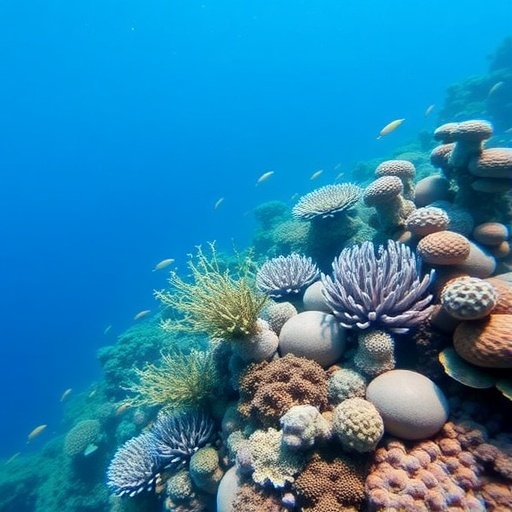
A groundbreaking collaborative study led by The Hong Kong University of Science and Technology (HKUST), in conjunction with the Institute of Zoology at the Chinese Academy of Sciences (IOZ-CAS) and the Southern Marine Science and Engineering Guangdong Laboratory (Guangzhou) (GML), has unveiled the immense and hitherto underappreciated carbon sequestration capability of coral reef ecosystems. This study demonstrates how the intricate interplay of reef-dwelling fish, coral communities, and sedimentary deposits collectively govern the carbon reservoirs in these vibrant marine habitats, redefining our understanding of global carbon dynamics.
Coral reefs, often lauded as the most biologically diverse and productive marine environments, have paradoxically remained poorly quantified in terms of their role in carbon storage and cycling. Addressing this gap, the interdisciplinary research team spearheaded by Prof. Qian Peiyuan of HKUST, Prof. Wei Fuwen of IOZ-CAS, and Prof. Zhou Wenliang of GML developed an innovative methodological framework combining stereo-video surveys, precise elemental chemical analyses, and advanced statistical modeling. This multifaceted approach enabled the quantification of carbon stocks within the South China Sea’s coral reef ecosystems, aggregating data from reef fish biomass, coral calcification, and sediment carbon content.
The survey yielded unexpected yet revelatory results: the carbon storage within the coral reefs of the South China Sea rivals, and in some cases surpasses, the carbon reservoirs traditionally attributed to blue carbon ecosystems such as mangroves, salt marshes, and seagrasses. These findings challenge the longstanding perception that blue carbon ecosystems dominate coastal carbon sequestration and invite a reevaluation of coral reefs’ ecological significance in mitigating anthropogenic climate change. Among the carbon pools assessed, sedimentary carbon emerged as the dominant reservoir, underscoring sediments’ pivotal role in long-term carbon retention. Nonetheless, coral calcification and fish biomass substantively contributed to the overall carbon storage, signaling the necessity to preserve coral and fish populations.
Delving deeper, the team synthesized over fifty global studies from renowned coral reef hotspots to map the dynamic carbon fluxes within reef ecosystems meticulously. The synthesis revealed a positive trajectory in net calcification rates and net organic production on an ecosystem scale, indicative of robust and complex carbon exchange processes. These insights reflect the delicate balance of carbon fixation, transformation, and release mechanisms operating simultaneously within coral reefs, portraying these ecosystems as highly dynamic biogeochemical hotspots rather than static carbon sinks.
Perhaps most strikingly, this research highlights the underrecognized functional role of reef fish in the carbon cycle of coral reefs. Beyond their biomass, reef fish critically influence carbon pathways through bioerosion—the physical breakdown of reef structures—and the release of organic and inorganic carbon via excretion and respiration. The study posits that the annual carbon transported by fish assemblages into reef sediments significantly exceeds the carbon directly stored within fish tissues. This finding accentuates the importance of conserving fish populations not only to maintain biodiversity but also to preserve the sedimentary carbon reservoirs essential for long-term carbon storage in coral reefs.
The intricate carbon dynamics elucidated by this study deepen our comprehension of how coral reefs regulate carbon sequestration and redistribution amid rapidly changing environmental conditions. As ocean temperatures rise and reef degradation accelerates due to anthropogenic pressures, the loss of coral cover and reef fish diversity could precipitate a decline in carbon storage capabilities, leading to the release of previously sequestered carbon back into marine and atmospheric systems. This feedback loop underscores the global climate implications of local reef health.
Prof. Qian Peiyuan emphasized the salience of these findings: “Our research exemplifies the critical yet overlooked role coral reef ecosystems play in the global carbon cycle, particularly highlighting the synergistic contributions of corals and reef-associated fish. Protecting biodiversity within these systems is paramount to uphold their carbon sequestration functions in the face of escalating climate and environmental stressors.”
The interdisciplinary nature of this research, integrating oceanography, marine biology, chemistry, and statistical modeling, pushed the boundaries of existing methodologies for assessing carbon stocks in complex ecosystems. The deployment of stereo-video survey techniques allowed for precise three-dimensional mapping of reef fish populations and coral structures, while elemental analysis provided rigorous quantification of carbon contents within biological tissues and sediments. Statistical models then synthesized these datasets to produce comprehensive and spatially resolved estimates of carbon reservoirs and fluxes.
This study’s revelations advocate for elevating coral reefs in climate policy frameworks, recognizing their instrumental role alongside more established blue carbon ecosystems. Safeguarding reefs and their inhabitants could constitute a vital natural climate solution, curtailing carbon emissions and fostering ecosystem resilience simultaneously. Consequently, conservation efforts must integrate carbon dynamics into management strategies, supporting reef restoration and protection not only for biodiversity but also for their emergent climate regulation functions.
Funding for this research was robustly supported by multiple agencies, including the Ministry of Science and Technology of China, the Science and Technology Department of Guangdong Province, the Guangdong Forestry Administration, the Southern Marine Science and Engineering Guangdong Laboratory (Guangzhou), the Hong Kong Special Administrative Region Government, and the HKUST Otto Poon Center for Climate Resilience and Sustainability. Their investment underscores the growing recognition of coral reefs’ multifaceted value beyond conventional ecosystem services.
The findings were published in the prestigious interdisciplinary journal Advanced Science, spotlighting the collaborative work by Prof. Qian Peiyuan, Prof. Wei Fuwen, Prof. Zhou Wenliang, and first author PhD candidate Chen Yiting. This publication not only expands the scientific narrative surrounding coral reef biogeochemistry but also calls for increased global efforts to study and preserve these ecosystems amid the mounting threats of climate change.
In conclusion, the study fundamentally reshapes our understanding of coral reefs as vital reservoirs and regulators within the Earth’s carbon cycle. The synergy of reef organisms and sediment interactions fosters substantial carbon storage capacities that rival well-known blue carbon habitats. With global reefs facing unprecedented stress, this research accentuates the urgent need for integrated conservation strategies that prioritize not just biodiversity preservation but also the critical climate functions coral reefs fulfill, reinforcing their position as indispensable components in the fight against climate change.
News Publication Date: 17-Apr-2026
Web References: https://advanced.onlinelibrary.wiley.com/doi/full/10.1002/advs.202520612
Cite Scienmag News
Violet Maxwell. (May 22, 2026). HKUST Scientists Uncover Carbon Storage Capacity and Biological Roles in Carbon Cycling within South China Sea Coral Reef Ecosystems. Scienmag. https://scienmag.com/hkust-scientists-uncover-carbon-storage-capacity-and-biological-roles-in-carbon-cycling-within-south-china-sea-coral-reef-ecosystems/
Violet Maxwell. "HKUST Scientists Uncover Carbon Storage Capacity and Biological Roles in Carbon Cycling within South China Sea Coral Reef Ecosystems." Scienmag, 22 May 2026, https://scienmag.com/hkust-scientists-uncover-carbon-storage-capacity-and-biological-roles-in-carbon-cycling-within-south-china-sea-coral-reef-ecosystems/. Accessed 3 September 2026.
Violet Maxwell. "HKUST Scientists Uncover Carbon Storage Capacity and Biological Roles in Carbon Cycling within South China Sea Coral Reef Ecosystems." Scienmag. May 22, 2026. https://scienmag.com/hkust-scientists-uncover-carbon-storage-capacity-and-biological-roles-in-carbon-cycling-within-south-china-sea-coral-reef-ecosystems/


