


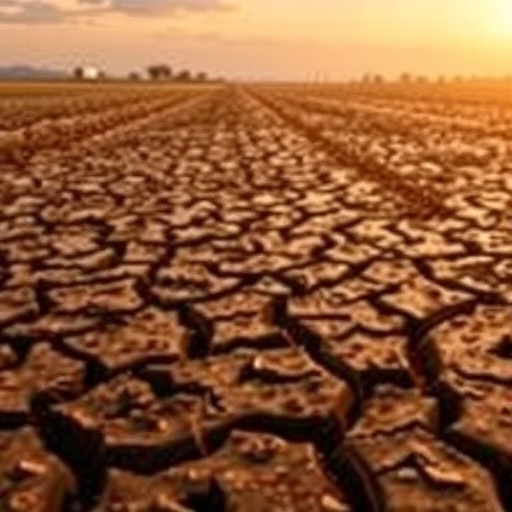
Drought, a complex and multifaceted phenomenon, continues to challenge human societies and ecosystems with increasing intensity and frequency. Emerging evidence shows that climate change, alongside anthropogenic pressures such as land use change and water demand growth, is exacerbating drought risks across the globe. These compounding effects threaten not only natural environments but also socioeconomic structures that depend heavily on water availability for agriculture, industry, and daily livelihoods. In this context, understanding the evolving dynamics of droughts and their cascading impacts has become critical for policymakers, scientists, and practitioners alike.
Recent interdisciplinary collaborations have brought together experts from hydrology, environmental science, social science, and policy to dissect the multi-dimensional nature of drought. One such effort, involving the International Association of Hydrological Sciences Working Group on ‘Drought in the Anthropocene’ and participants of the Drought Resilience +10 conference, has crystallized a set of pivotal insights and identified crucial research gaps. These findings reflect the cumulative knowledge accrued over the past decade and underscore how an integrated approach is vital for crafting effective drought governance and resilience strategies.
The growing severity of droughts globally is intricately linked to the Anthropocene epoch, which is characterized by unprecedented human impact on the Earth system. Within this epoch, traditional hydrological patterns are increasingly disrupted by shifts in precipitation regimes, rising temperatures, and altered soil moisture dynamics. Such environmental shifts intensify the frequency, duration, and spatial extent of drought episodes, undermining water security in both rural and urban regions. As droughts become harsher and more protracted, their societal consequences—ranging from crop failures and reduced hydropower generation to health risks—are progressively amplified.
One critical dimension that recent research highlights is the intertwined nature of drought with socio-economic vulnerabilities. Livelihoods dependent on rainfed agriculture or small-scale water supply systems are particularly susceptible to drought shocks. The interplay between water scarcity and socio-economic conditions can trigger a cascade of adverse outcomes, including food insecurity, displacement, and escalation of poverty. Addressing these complex linkages requires contextual understanding of local agro-ecological conditions and socioeconomic profiles, which helps tailor drought response mechanisms according to specific needs.
Moreover, the governance frameworks currently managing drought risks often fall short in integrating scientific advancements and diverse stakeholder perspectives. Institutional fragmentation, lack of reliable data, and inadequate early warning systems hinder proactive drought management. The decade-long synthesis brought forth by the working group emphasizes the need for policy coherence that aligns climate adaptation strategies, water management, and disaster risk reduction. Such alignment can foster resilience by enabling adaptive governance, which dynamically responds to evolving drought threats and human-water interactions.
From a hydrological standpoint, innovations in remote sensing and data analytics have revolutionized drought monitoring. The confluence of satellite imagery, ground-based sensors, and machine learning models permits finer spatial and temporal resolution in drought detection. This technological leap facilitates more accurate forecasting and early warning, which are crucial for timely interventions that minimize damages. However, coupling these technical tools with community participation and indigenous knowledge remains a challenge, which is pertinent for enhancing ground-truthing and ensuring culturally appropriate responses.
Ecosystem impacts of drought also warrant rigorous examination. Beyond immediate water deficits, drought events trigger longer-term ecological consequences such as biodiversity loss, soil degradation, and altered biogeochemical cycles. These ecological changes can feedback into hydrological regimes, potentially intensifying future droughts. The reviewed literature advocates for integrating ecological resilience into drought risk assessments and mitigation planning, recognizing ecosystems as both victims and buffers of drought stress.
Another prominent insight concerns the systemic nature of drought’s consequences, which cross traditional sectoral boundaries. For instance, water scarcity in agriculture can ripple through energy production, manufacturing, and urban water supply. This interconnectedness necessitates adopting a nexus approach to drought management, prioritizing cross-sectoral coordination and resource optimization. Such an approach challenges siloed governance structures and calls for multifunctional policy instruments that simultaneously serve water, energy, and food security objectives.
Addressing drought resilience also demands focusing on vulnerable populations who often bear disproportionate impacts. Social equity considerations in drought policy are currently underdeveloped despite their significance for effective adaptation. Vulnerability assessments involving gender, age, socio-economic status, and indigenous identity are crucial for inclusive drought risk management. Tailored social safety nets and capacity-building measures can empower marginalized groups, enhancing overall community resilience to drought shocks.
Research gaps remain, however, particularly in understanding compound hazards where drought intersects with other extreme events such as heatwaves or floods. These compound events amplify risks and complicate response strategies, yet are underrepresented in existing drought literature. Expanding multi-hazard frameworks and scenario modeling will improve preparedness and reduce cascading vulnerabilities arising from simultaneous stressors.
Financial mechanisms represent another domain requiring further exploration. Sustainable funding models to support long-term drought resilience initiatives are scarce, and many responses are reactive rather than preventive. This highlights the necessity for innovative financing approaches including risk pooling, insurance products, and public-private partnerships that incentivize proactive drought risk reduction.
Crucially, global climate models predict that drought-prone regions will increasingly experience harsher conditions under future climate scenarios. This projection demands adaptive management frameworks that are robust to uncertainty and dynamic in nature. Scalable solutions that integrate local knowledge with scientific insights hold great promise in building adaptive capacity, but their validation through pilot studies and knowledge exchange platforms remains a priority.
Technological advancement alone will not suffice without embedding drought research findings into policy and practice. Effective drought governance must cultivate participatory decision-making processes, transparent communication, and cross-scale coordination. By bridging gaps between science, policy, and communities, stakeholders can co-create adaptive pathways that are resilient, equitable, and sustainable.
The synthesis of insights from a diverse, global scientific community underscores a pivotal shift toward integrated drought risk science. Moving forward, this agenda provides a roadmap for holistic drought risk management that synergizes environmental, social, and economic dimensions. Importantly, it calls for a paradigm shift from reactive crisis response toward anticipatory, resilience-building strategies.
As drought crises intensify worldwide, the urgency for coordinated and innovative drought research intensifies. By addressing these knowledge gaps and translating scientific understanding into actionable policies, societies can better navigate the complex interplay of ecosystems, climate, and human systems implicated in drought. This approach not only mitigates immediate risks but ensures a more resilient and water-secure future in the Anthropocene.
Cite Scienmag News
Violet Maxwell. (June 12, 2026). Ten Essential Drought Research and Policy Insights. Scienmag. https://scienmag.com/ten-essential-drought-research-and-policy-insights/
Violet Maxwell. "Ten Essential Drought Research and Policy Insights." Scienmag, 12 June 2026, https://scienmag.com/ten-essential-drought-research-and-policy-insights/. Accessed 5 September 2026.
Violet Maxwell. "Ten Essential Drought Research and Policy Insights." Scienmag. June 12, 2026. https://scienmag.com/ten-essential-drought-research-and-policy-insights/


