


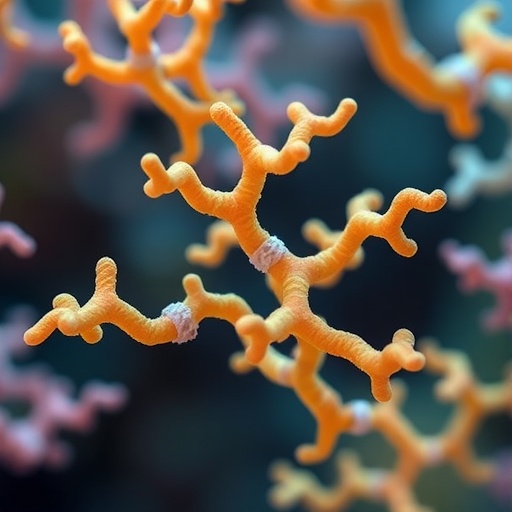
Marine organisms have long thrived in some of the planet’s harshest and most variable environments, evolving a sophisticated array of host-defense peptides that protect them against an array of pathogens. These peptides, typically composed of short chains ranging from two to twenty amino acids, represent a frontier in pharmaceutical and biotechnological research. Recently, leading scientists from the School of Pharmacy at China Pharmaceutical University have delivered a comprehensive review in the Chinese Journal of Natural Medicines, detailing cutting-edge advances in the production, purification, and computational analysis of marine-derived peptides. Their insights signal an exciting transformation in how these biomolecules are harnessed for therapeutic and industrial applications.
Traditional methodologies for obtaining marine peptides primarily relied on solvent extraction and chemical hydrolysis, but the field is rapidly adopting greener and more precise technologies. Notably, extraction techniques now frequently employ innovative green deep eutectic solvents. These solvents have demonstrated remarkable efficacy, exemplified by a 96% collagen peptide recovery rate from cod skin. Moreover, enzymatic hydrolysis and microbial fermentation strategies provide unprecedented specificity, enabling the controlled liberation of bioactive sequences from complex marine matrices. For instance, high-altitude Bacillus strains fermenting scallop skirt proteins have generated the iron-chelating heptapeptide FEDPEFE, reducing production expenses by half while maintaining biological potency.
Once isolated, peptides undergo robust separation techniques that exceed past capabilities. Membrane filtration, multi-mode chromatography, and capillary electrophoresis are commonly combined with nano-reversed-phase ultra-high-performance liquid chromatography and high-resolution mass spectrometry. These methods enable the accurate sequencing and characterization of trace peptides within heterogeneous hydrolysate samples, a feat previously unattainable at such resolution. This analytical precision underpins the rational design of peptides with specified bioactivities from complex marine sources.
The therapeutic potential of marine peptides spans a wide spectrum of biological activities. Anti-inflammatory peptides, such as phycocyanin-derived PCP3, exert effects through the Akt and AMPK/autophagy signaling pathways, modulating cellular stress responses. Parallel research highlights the tripeptide SRP from Sipunculus nudus, which significantly mitigates cadmium-induced renal toxicity by targeting MAPK pathways. Meanwhile, antimicrobial peptides extracted from Antarctic icefish demonstrate dual mechanisms of action by disrupting bacterial membranes and binding microbial DNA, positioning them as promising agents against multidrug-resistant infections.
Antioxidant marine peptides play an indispensable role in free radical scavenging and activation of endogenous defense mechanisms, with modulation of Keap1/Nrf2 pathways being a central theme. Cancer therapeutics derived from marine algae include peptides like MP06, capable of selectively inducing apoptosis in notoriously refractory non-small cell lung cancer cells. Cardiovascular research benefits from antihypertensive peptides such as LEPWR and TLRFALHGME, which effectively inhibit angiotensin-converting enzyme with high potency in the low micromolar range, offering new avenues for blood pressure management. Furthermore, antidiabetic peptides from marine origins enhance glycemic control by inhibiting dipeptidyl peptidase-IV, and activating critical PI3K/AKT and AMPK signaling cascades.
Bioinformatics has revolutionized peptide discovery by integrating virtual proteolysis platforms—such as BIOPEP, PeptideCutter, and EnzymePredictor—into early-stage screening. These tools enable researchers to rapidly sift through extensive protein databases to predict bioactive fragments prior to laboratory validation, significantly accelerating discovery timelines. Breakthroughs in structural biology powered by AI-based platforms like AlphaFold2, ESMFold, and RoseTTAFold facilitate high-confidence three-dimensional modeling of peptides, allowing structure-guided optimization. AlphaFold3, which the authors identify as especially promising, exemplifies the next generation of deep learning frameworks advancing structural predictions to new horizons.
Computational advances extend to quantitative structure-activity relationship (QSAR) models, residue-pattern analytical methods, and sophisticated molecular docking studies. These approaches, validated through cellular thermal shift assays and surface plasmon resonance, build a quantitative bridge linking peptide sequences to biological functions. This synergy between in silico predictions and experimental validation enriches the pipeline for designing peptides with tailored pharmacodynamic profiles.
From a translational perspective, the marine peptide market is burgeoning, valued at approximately $310 million in 2023 with an annual growth projection of 6.7%. Despite this potential, only a handful of marine peptides have achieved drug approval, including ziconotide for severe chronic pain and plitidepsin for multiple myeloma. Numerous promising candidates have faltered in clinical trials due to toxicity issues or poor pharmacokinetics, underscoring the need for advanced modification strategies.
Addressing these challenges, the authors emphasize chemical and peptide engineering methodologies to enhance therapeutic indices. Cyclization, incorporation of D-amino acids, PEGylation, and conjugation with cell-penetrating peptides illustrate strategies that improve stability, bioavailability, and target specificity. Additionally, employing AI-driven algorithms to optimize absorption, distribution, metabolism, and excretion (ADME) parameters represents a paradigm shift in peptide drug development. Complemented by multi-omics analyses and intelligent delivery systems, these innovations aspire to expedite the transition of marine peptides from experimental leads to viable pharmaceuticals, functional foods, and nutraceutical products.
This review not only charts the landscape of marine peptide technology but articulates a vision where marine bioactive compounds become cornerstones of future therapeutic and industrial paradigms. The integration of eco-friendly production techniques, sophisticated purification and characterization methods, alongside powerful computational tools, crystallizes a compelling narrative for unlocking the pharmaceutical treasure troves hidden within the ocean’s depths.
As the science evolves, sustained interdisciplinary collaboration combining marine biology, chemistry, computational science, and clinical research will be vital in overcoming existing bottlenecks. The promise of harnessing the ocean’s molecular diversity to address pressing medical challenges propels this research into an exciting era with profound scientific and societal impacts.
Cite Scienmag News
Violet Maxwell. (May 22, 2026). Unlocking the Ocean’s Medicine Cabinet: Scientists Pioneer New Horizons in Marine Peptide Drug Discovery. Scienmag. https://scienmag.com/unlocking-the-oceans-medicine-cabinet-scientists-pioneer-new-horizons-in-marine-peptide-drug-discovery/
Violet Maxwell. "Unlocking the Ocean’s Medicine Cabinet: Scientists Pioneer New Horizons in Marine Peptide Drug Discovery." Scienmag, 22 May 2026, https://scienmag.com/unlocking-the-oceans-medicine-cabinet-scientists-pioneer-new-horizons-in-marine-peptide-drug-discovery/. Accessed 5 September 2026.
Violet Maxwell. "Unlocking the Ocean’s Medicine Cabinet: Scientists Pioneer New Horizons in Marine Peptide Drug Discovery." Scienmag. May 22, 2026. https://scienmag.com/unlocking-the-oceans-medicine-cabinet-scientists-pioneer-new-horizons-in-marine-peptide-drug-discovery/


