


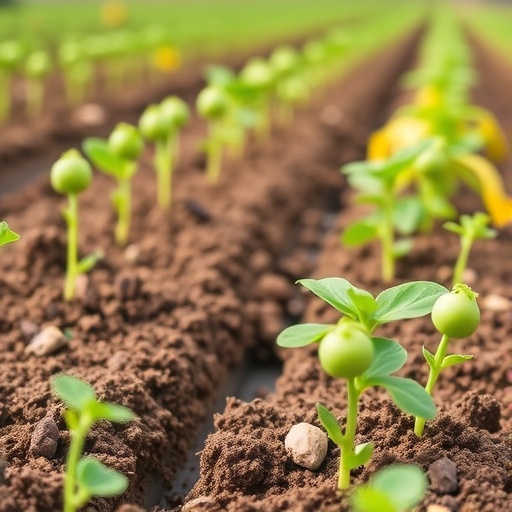
Rainfed chickpeas are gaining increased attention in sustainable agricultural practices, particularly in dryland farming systems. Recent research led by Zeidali, Fathi, and Sheiroie delves into how seedbed preparation and the application of macro-fertilizers can significantly influence the yield and radiation use efficiency (RUE) of these crops, particularly in the presence of weed competition.
Chickpeas, a staple legume, are renowned for their ability to fix nitrogen and improve soil health. This makes them not only a valuable food source but also an essential component in sustainable crop rotation systems. However, their productivity is often hampered by invasive weed species, particularly in rainfed conditions. Weeds compete for crucial resources such as nutrients, water, and light, ultimately reducing the yield potential of chickpea crops.
The innovative study led by the authors aimed to explore adaptive strategies that could enhance chickpea growth while overcoming the challenges posed by weeds. A key focus was on the intricacies of seedbed preparation techniques, which are essential for optimizing plant establishment and growth characteristics. The research indicates that different seedbed configurations can create varying microenvironments, thereby affecting chickpea growth and resilience under competitive stress from weeds.
Macro-fertilizers, particularly those rich in nutrients essential for plant development, were evaluated in this context. These fertilizers not only provide essential nutrients but also play a pivotal role in improving soil structure and fertility, which is integral in arid conditions. The authors conducted trials comparing various fertilization regimes, seeking to uncover the optimal formulations that could bolster both the yield and RUE of chickpeas in rainfed settings.
Another dimension of this research is the understanding of radiation use efficiency, a measure of how effectively plants convert sunlight into biomass. By assessing how different agronomic practices affect RUE, the researchers provide critical insights that can inform growers about best practices for enhancing crop productivity. This specific metric is increasingly recognized as crucial for improving agricultural outputs, especially in regions where water is a limiting factor.
Preliminary findings from this extensive investigation reveal a clear interplay between seedbed preparation methods and macro-fertilizer applications, suggesting that the synergy between these two elements can lead to significantly improved yields. Traditional methods of planting might not suffice under competitive environmental conditions; thus, the study advocates for a shift towards more innovative agronomic practices to optimize the growth of chickpeas.
Furthermore, the research underscores the importance of integrating weed management strategies within the broader framework of chickpea cultivation. Effective weed control not only enhances crop yield but also maximizes the utilization of available sunlight and nutrients, resulting in better overall plant health. This holistic approach to cropping systems is essential in ensuring sustainable agricultural production, especially in increasingly unpredictable climates.
The study’s implications extend beyond just chickpea cultivation. It raises fundamental questions about how various agronomic practices can be adapted to improve resilience and productivity across different crops in rainfed systems. Such investigations are critical in the wake of global food security challenges, where the need for efficient agricultural practices is more pressing than ever.
Moreover, the researchers employed a multidisciplinary approach, combining agronomy, ecology, and technology to yield results that are not only theoretically sound but also practically applicable. This convergence of disciplines illustrates the complex nature of agricultural systems and highlights the necessity for integrative strategies that can holistically address challenges faced by farmers in arid and semi-arid regions.
The findings of this research are particularly timely, considering the escalating pressures of climate change. Extreme weather events and erratic rainfall patterns demand that farmers adapt their practices to ensure optimal crop performance. The insights gleaned from this study provide a framework for developing innovative farming practices aimed at achieving higher resilience to adverse climatic conditions.
As the agriculture sector seeks sustainable ways to increase productivity, this research serves as a guiding light, demonstrating the multifaceted influences of seedbed preparation and macro-fertilizer use on crop yield and efficiency. It encourages local farmers to reconsider their cultivation practices in light of emerging agronomic evidence, ensuring they harness all available resources for maximum benefit.
In conclusion, the research undertaken by Zeidali, Fathi, and Sheiroie on rainfed chickpeas is a significant step towards understanding and optimizing agricultural practices under challenging conditions. It offers potent insights into how critical agronomic decisions can impact both crop yield and resource efficiency, paving the way for a more sustainable approach to agriculture that not only addresses current challenges but also anticipates future needs.
The road ahead will require collaboration among scientists, farmers, and policymakers to further refine these findings and implement them on a broader scale, creating a resilient and productive agricultural landscape that can withstand the test of nature.
Cite Scienmag News
Alan Morgan. (October 14, 2025). Seedbed Prep and Fertilizers Boost Chickpea Yield. Scienmag. https://scienmag.com/seedbed-prep-and-fertilizers-boost-chickpea-yield/
Alan Morgan. "Seedbed Prep and Fertilizers Boost Chickpea Yield." Scienmag, 14 October 2025, https://scienmag.com/seedbed-prep-and-fertilizers-boost-chickpea-yield/. Accessed 3 September 2026.
Alan Morgan. "Seedbed Prep and Fertilizers Boost Chickpea Yield." Scienmag. October 14, 2025. https://scienmag.com/seedbed-prep-and-fertilizers-boost-chickpea-yield/


