


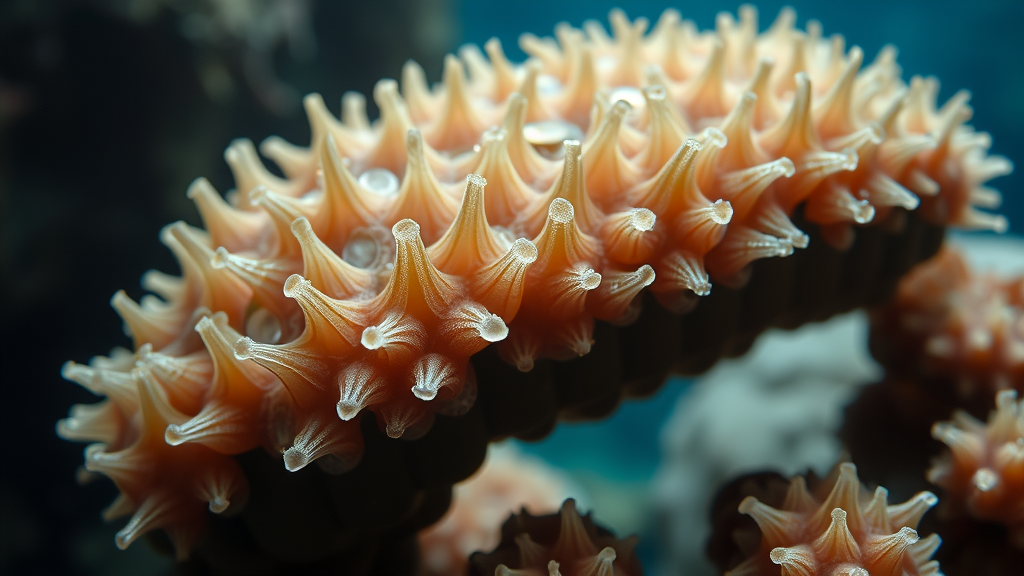
Deep beneath the surface of coastal waters, colonies of a small marine invertebrate called Hydractinia symbiolongicarpus perform feats of regeneration that would make any mammalian tissue envious. These colonial cnidarians, related to jellyfish and corals, can regrow lost body parts throughout their lives, thanks to a population of adult stem cells known as interstitial cells, or i-cells. For decades, researchers have treated these cells as a relatively uniform pool of pluripotent material, a biological blank slate capable of becoming anything the animal needs. A new study published in BMC Biology is now complicating that tidy picture, revealing that Hydractinia’s stem cells are far more diverse, dynamic, and context-dependent than anyone had fully appreciated.
The research, led by Justin Waletich, Danielle de Jong, and Christine E. Schnitzler of the University of Florida’s Whitney Laboratory for Marine Bioscience and Department of Biology, set out to interrogate eight newly identified marker genes drawn from a previously generated single-cell atlas of the organism. Their central finding is striking: i-cells do not constitute a homogeneous population spread evenly across the colony. Instead, they exhibit both transcriptional and morphological variation that shifts depending on where cells reside in the animal and what biological situation the animal faces, whether routine growth, tissue maintenance, or the dramatic demands of head regeneration.
Hydractinia occupies a special place in the modern study of adult stem cells. Unlike the stem cell compartments of mammals, which are typically restricted to producing specific tissue types, i-cells are definitively pluripotent, capable of generating both somatic lineages such as nerve cells and nematocytes, the stinging cells characteristic of cnidarians, as well as the germline. Earlier single-cell RNA sequencing work had produced a cellular atlas of the organism and revealed two distinct clusters of cells carrying i-cell signatures: one branch leading to somatic cell fates and another committed to germ cell fate. That atlas provided the roadmap, but the identity and behavior of specific genes distinguishing these clusters remained largely uncharted territory.
To fill that gap, the team selected eight marker genes for detailed characterization. Five of them, Pcna, Nop58, Mcm4, Ubr7, and Uhrf1, showed expression in both i-cell clusters, suggesting roles that are broadly shared across the stem cell compartment. The remaining three genes were more selective: Pter and FoxQ2-like were associated specifically with the somatic i-cell cluster, while Zcwpw1 marked the germ i-cell cluster. Several of these genes have well-known functions in other systems. Pcna and Mcm4 are canonical components of the cell cycle machinery, involved in DNA replication and proliferation, while Uhrf1 is a chromatin-associated protein linked to DNA methylation maintenance, hinting at epigenetic regulation within the stem cell pool.
Characterizing where and when these genes are active required a combination of spatial and temporal approaches. The researchers mapped expression patterns across multiple tissue locations within the colony, from the feeding polyps that capture prey to the stolons, the cable-like structures that connect individual polyps and allow the colony to grow. They then extended the analysis to a demanding biological challenge: head regeneration in feeding polyps following decapitation. By tracking marker expression at different time points after amputation, measured in hours post-decapitation, the team could watch how different subsets of i-cells responded to injury and whether specific subpopulations were recruited into the regenerative blastema, the mass of proliferating cells that rebuilds the lost head.
The results painted a nuanced picture of context dependence. Certain marker genes were expressed consistently in the stolons of young colonies, while the same genes showed variable expression across different developmental stages of feeding polyps, from budding polyps through immature to fully mature individuals. During head regeneration, some markers were clearly expressed within the blastema and the body column, whereas others were conspicuously absent from the regenerating tissue. This divergence indicates that the two i-cell clusters identified in the atlas are not merely computational artifacts but correspond to biologically meaningful subpopulations with distinct spatial distributions and distinct responses to injury.
Morphology added yet another layer of complexity. The researchers examined cell diameters of cells marked by Histone H1.1 expression across feeding polyp developmental stages and in the stolons of young colonies, and found statistically significant differences among these contexts. In other words, i-cells do not just differ in what genes they express; they also differ in physical form depending on where they are and what stage the surrounding tissue is in. This pairing of transcriptional and morphological heterogeneity strengthens the conclusion that the stem cell compartment of Hydractinia is a mosaic of specialized states rather than a single interchangeable population.
The implications of this work extend well beyond a single unusual organism. Adult pluripotent stem cells are rare in the animal kingdom, found most prominently in invertebrates with exceptional regenerative abilities. Understanding how such cells are organized, how they maintain pluripotency, and how subsets are channeled toward somatic versus germline fates speaks to fundamental questions of developmental biology and stem cell biology more broadly. By providing a set of validated marker genes that discriminate between somatic and germ i-cell clusters, the study hands future researchers precise molecular tools to isolate, track, and manipulate specific stem cell subpopulations in living animals.
There are also potential echoes for regenerative medicine. Mammalian stem cells, whether in the intestine, skin, or blood, are increasingly recognized as heterogeneous, with subpopulations occupying distinct niches and displaying distinct transcriptional states that influence their behavior in homeostasis and injury repair. The Hydractinia data reinforce a growing principle: stem cell identity is not fixed but is shaped by spatial location and biological context. Although no one expects to transplant cnidarian i-cells into human patients, the mechanistic lessons about how a pluripotent compartment is maintained and deployed during regeneration could inform strategies for engineering regenerative responses in clinically relevant tissues.
The authors emphasize that their data provide important nuances for understanding Hydractinia’s remarkable adult stem cell population and a solid foundation for future research. The study was supported by the National Institutes of Health through grant R35GM138156 awarded to Christine Schnitzler. As open-access research, the work, including its supplementary figures, gene tables, and phylogenetic analyses, is freely available to the scientific community. What began as an effort to validate new markers has ended up redrawing the map of a stem cell system, replacing the comforting image of a uniform pluripotent pool with something richer and more intriguing: a living landscape of stem cell states, each tuned to its place in the colony and to the tasks the animal must perform.
Subject of Research: Transcriptional heterogeneity of adult pluripotent interstitial stem cells in the colonial cnidarian Hydractinia symbiolongicarpus
Article Title: Context-dependent transcriptional heterogeneity of new markers expands our understanding of stem cells in Hydractinia
Article References: Waletich, J., de Jong, D., & Schnitzler, C. E. (2026). Context-dependent transcriptional heterogeneity of new markers expands our understanding of stem cells in Hydractinia. BMC Biology. https://doi.org/10.1186/s12915-026-02736-y
Image Credits: AI Generated
DOI: 10.1186/s12915-026-02736-y
Keywords: Hydractinia, cnidarians, stem cells, i-cells, pluripotency, regeneration, single-cell RNA sequencing, marker genes, transcriptional heterogeneity, head regeneration, germline, BMC Biology
Cite Scienmag News
Drew Townsend. (September 22, 2026). Scientists Map Hidden Diversity in Stem Cells of a Remarkably Regenerative Marine Colony. Scienmag. https://scienmag.com/scientists-map-hidden-diversity-in-stem-cells-of-a-remarkably-regenerative-marine-colony/
Drew Townsend. "Scientists Map Hidden Diversity in Stem Cells of a Remarkably Regenerative Marine Colony." Scienmag, 22 September 2026, https://scienmag.com/scientists-map-hidden-diversity-in-stem-cells-of-a-remarkably-regenerative-marine-colony/. Accessed 5 October 2026.
Drew Townsend. "Scientists Map Hidden Diversity in Stem Cells of a Remarkably Regenerative Marine Colony." Scienmag. September 22, 2026. https://scienmag.com/scientists-map-hidden-diversity-in-stem-cells-of-a-remarkably-regenerative-marine-colony/


