


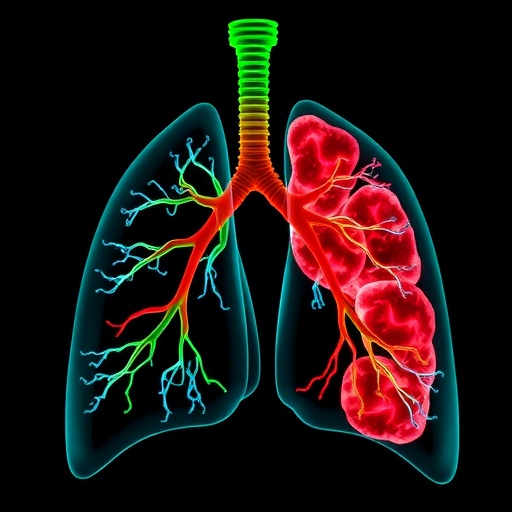
Small cell lung cancer (SCLC) poses a formidable challenge in oncology, notorious for its initial responsiveness to chemotherapy followed by a nearly inevitable relapse due to acquired drug resistance. Researchers at The University of Texas MD Anderson Cancer Center have recently uncovered a crucial molecular player that emerges in SCLC tumors following chemotherapy treatment, potentially explaining how these cancer cells survive and evade eradication. The focus of their study falls on the YAP1 protein, a regulator known to drive oncogenic processes and now implicated in mediating resistance mechanisms in relapsed SCLC.
YAP1 (Yes-associated protein 1) functions as a central effector of the Hippo signaling pathway, which plays a pivotal role in controlling cell proliferation and apoptosis. When dysregulated or overexpressed, YAP1 acts as an oncogene, promoting uncontrolled cell growth and inhibiting the programmed cell death that would normally eliminate damaged cells. The recent findings suggest that, while untreated SCLC tumors exhibit minimal YAP1 activity, exposure to chemotherapy induces the emergence of a YAP1-positive cellular population. This shift is critical, as these cells show enhanced invasive capabilities coupled with chemotherapy resistance, setting the stage for disease relapse.
The MD Anderson team, led by Carl Gay, M.D., Ph.D., meticulously analyzed tumor samples collected before and after chemotherapy to characterize YAP1 expression dynamics. Their multi-omics approach, integrating transcriptomic and proteomic data, revealed the absence of significant YAP1 expression in treatment-naïve tumors, asserting that YAP1 is not a defining molecular feature of any SCLC subtype prior to therapy. However, post-treatment samples consistently demonstrated YAP1 induction, underscoring a connection between this protein’s activation and the cancer’s adaptation to therapeutic stress.
Small cell lung cancer is uniquely heterogenous, with at least four recognized molecular subtypes, each distinguished by distinct tumor microenvironment profiles. These microenvironments consist of various immune and stromal cells that regulate tumor behavior, progression, and response to treatment. YAP1’s appearance following chemotherapy suggests an adaptive advantage that allows a sub-population of cells within these microenvironments to survive and eventually repopulate the tumor, thereby fostering relapse.
The identification of YAP1 as a biomarker for chemotherapy resistance revolutionizes how clinicians and researchers might approach treatment for relapsed SCLC patients. The high levels of YAP1 expression in relapsed cancer cells provide a tangible target for therapeutic intervention. While conventional chemotherapy may inadvertently select for YAP1-positive resistant cells, developing drugs or biologics that specifically inhibit YAP1 function could suppress this resistant population, potentially improving long-term patient outcomes.
Interestingly, the variability in YAP1 presence among relapse samples indicates that resistance mechanisms in SCLC may be multifaceted, with YAP1 representing a principal but not exclusive pathway contributing to therapy escape. This complexity necessitates a broadening of therapeutic strategies to consider combination regimens, possibly integrating novel agents such as antibody-drug conjugates or T cell engagers to target diverse resistant clones within tumors.
Beyond its role in chemotherapy resistance, YAP1 is an essential regulator of cellular mechanotransduction and tissue homeostasis, coupling extracellular signals to transcriptional programs controlling proliferation and survival. Its dysregulation affects not only tumor cell-intrinsic properties but also modulates interactions with the tumor immune microenvironment, potentially influencing immune evasion. Investigating how YAP1-positive cells interact with immune cells could yield insights relevant for synergizing immunotherapy with targeted inhibition of resistant tumor populations.
The translational implications of these discoveries are profound. Monitoring YAP1 expression levels in patient samples during and after chemotherapy could serve as a real-time biomarker to identify emerging resistance and adjust treatment protocols accordingly. Furthermore, the potential development of YAP1-targeted therapies could present a paradigm shift in managing relapsed SCLC, transforming a once uniformly fatal recurrence into a more controllable condition.
This research aligns closely with the ongoing efforts to understand the molecular underpinnings of cancer heterogeneity and treatment resistance, highlighting the importance of adaptive changes in oncogene expression post-therapy. It exemplifies the evolving landscape of personalized oncology, where identifying dynamic biomarkers rather than static molecular signatures is critical to overcoming therapeutic challenges.
Further studies are warranted to elaborate the mechanisms by which chemotherapy induces YAP1 expression and to explore whether other treatments likewise promote similar adaptive oncogenic shifts. These investigations may uncover new vulnerabilities in therapy-resistant SCLC subpopulations or identify combinatory treatment approaches that preemptively target such resistance pathways.
The team’s work has been supported by prestigious funding bodies, including the NIH, NCI, CPRIT, and various foundations dedicated to lung cancer and neuroendocrine tumor research. Their findings, published in the Journal of Thoracic Oncology, pave the way for novel therapeutic approaches and emphasize the necessity of integrating molecular profiling into clinical management to counteract tumor relapse effectively.
As the scientific community deepens its understanding of SCLC biology, the elucidation of YAP1’s role epitomizes the strides made toward decoding the molecular adaptations tumors employ to survive. This knowledge illuminates a path forward to designing smarter, more effective therapies that specifically thwart cancer’s evasive maneuvers and offer renewed hope to patients afflicted by this aggressive disease.
News Publication Date: May 5, 2026.
Web References:
- University of Texas MD Anderson Cancer Center (https://www.mdanderson.org)
- Journal of Thoracic Oncology (https://www.sciencedirect.com/science/article/pii/S1556086426001838?via%3Dihub)
References: Integrated within the article’s text as multi-omics studies and prior subtype characterizations cited.
Cite Scienmag News
Nathaniel Bowman. (May 5, 2026). Scientists Identify Biomarker Linked to Chemotherapy Resistance in Relapsed Lung Cancer. Scienmag. https://scienmag.com/scientists-identify-biomarker-linked-to-chemotherapy-resistance-in-relapsed-lung-cancer/
Nathaniel Bowman. "Scientists Identify Biomarker Linked to Chemotherapy Resistance in Relapsed Lung Cancer." Scienmag, 5 May 2026, https://scienmag.com/scientists-identify-biomarker-linked-to-chemotherapy-resistance-in-relapsed-lung-cancer/. Accessed 3 September 2026.
Nathaniel Bowman. "Scientists Identify Biomarker Linked to Chemotherapy Resistance in Relapsed Lung Cancer." Scienmag. May 5, 2026. https://scienmag.com/scientists-identify-biomarker-linked-to-chemotherapy-resistance-in-relapsed-lung-cancer/


