


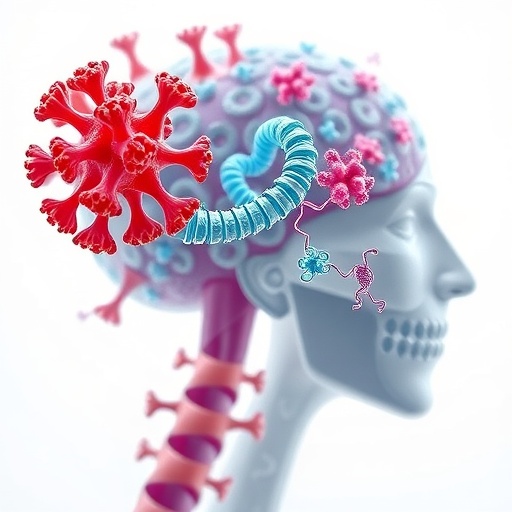
In a groundbreaking theoretical exploration set to challenge the entrenched paradigms of oncology, the Oncodarwinian Hypothesis (OdH) boldly reimagines cancer not as a mere pathological malfunction but as a sophisticated macro-immunoadaptive process. This perspective proposes that cancer represents an evolutionary algorithm—essentially a self-replicating, self-learning system—that the body might deploy in an adaptive immune context. Central to this radical rethinking is the role of the tumor suppressor protein p53, traditionally seen as the “guardian of the genome,” but here envisioned as a platform for next-generation bioengineering interventions utilizing artificial intelligence (AI) and 3D bioprinting.
Historically, cancer has been understood primarily through the lens of dysregulated cell growth fueled by genetic mutations in oncogenes and tumor suppressor genes. The p53 protein, in particular, is critical in sensing DNA damage and either repairing the cell or directing it toward apoptosis. However, the OdH suggests that what has been identified as “uncontrolled” cellular proliferation may instead reflect a higher-order immunological strategy—a biological creativity rather than mere fatalism. This paradigm shift invites researchers to decipher cancer’s “source code,” seeking pathways to reprogram malignant cells, thereby transforming treatments from suppression to adaptive modulation.
At the forefront of this innovative framework is the proposition to design and construct synthetic p53 superproteins using cutting-edge AI tools such as AlphaFold 3 for protein structure prediction, integrated with molecular design platforms like MoluCAD and Blender for 3D modeling and printing. These engineered superproteins are envisioned to function as wireless molecular biochips, capable of interfacing with AI algorithms (exemplified by models like ChatGPT) to dynamically regulate tumor suppression pathways. This represents a fusion of synthetic biology, computational modeling, and evolutionary medicine, delivering a potential leap toward precision immunotherapy.
Another transformative aspect of the hypothesis involves redefining the immunological role of cancer at two levels: micro-immunology and macro-immunology. Micro-immunology focuses on how tumor cells evade immune detection and destruction in the immediate environment, a well-studied phenomenon. In contrast, macro-immunology posits that cancer exists on an evolutionary timescale as an ongoing, non-pathological, self-learning immune response. The AI-integrated p53 superproteins could potentially accelerate this macro-immunoadaptive process, empowering the immune system to engage with tumor cells in a more nuanced and evolutionarily informed manner.
Technological advances in AI-driven protein design, especially tools like AlphaFold 3 and RoseTTAFold, have revolutionized the ability to predict and manipulate protein folding and function with unprecedented accuracy. Coupling these capabilities with 3D bioprinting offers the exciting prospect of fabricating complex protein-based devices that can be delivered efficiently to target sites. The OdH outlines a delivery mechanism leveraging attenuated Salmonella bacteria as vectors, capable of ferrying viral genomes and synthetic p53 constructs directly into the tumor microenvironment—an innovative platform termed CAPPSID reflecting combined cellular and molecular precision intervention.
While the theoretical scaffold of the Oncodarwinian Hypothesis is compelling, its clinical translation remains speculative and fraught with challenges. The author emphasizes the need for rigorous experimental validation to guard against confirmation bias, advocating for robust statistical methodologies (with significance thresholds such as α=0.05) to establish tumor inhibition capabilities. The analogy is drawn to Einstein’s photon hypothesis, which also met initial skepticism but was eventually confirmed through meticulous experimentation, underscoring the importance of perseverance in overturning scientific dogma.
This hypothesis not only reframes cancer biology but also presages a future where interdisciplinary partnerships among molecular biologists, AI specialists, synthetic biologists, and clinical oncologists become indispensable. The development of viability tests to ascertain the electrochemical functionality of p53 as a biochip and the refinement of bacterial delivery systems will be paramount steps. By harnessing AI and 3D printed biomolecular devices, researchers could unlock new frontiers in personalized medicine and immunotherapy.
By challenging the prevailing view of cancer as merely runaway cellular division and genetic chaos, the OdH offers a glimpse beyond conventional treatments toward decoding and reprogramming cancer’s underlying “algorithm.” This shift could transform the therapeutic landscape from blunt-force eradication to elegant immunoadaptive engagement, equipping the immune system to evolve and learn alongside the disease it battles. The integration of AI-designed p53 superproteins embodies a futuristic merging of computational intelligence with biological complexity, potentially ushering in an era where medicine acts like software engineers debugging and updating living systems.
Critically, the success of the Oncodarwinian Hypothesis hinges on experimental and clinical data in future research, from in vitro viability assays to in vivo delivery efficacy and safety studies. Establishing reproducible outcomes and clear mechanisms will be key to gaining acceptance in the broader scientific community and driving translational breakthroughs. If confirmed, the implications for oncology could be profound, shifting paradigms from destruction towards co-evolutionary harmony with cancer cells.
Ultimately, the power of OdH lies in its imaginative yet scientifically grounded vision—using AI and biofabrication to craft molecular sentinels capable of intelligently guiding the immune response. The hypothesis predicts a dynamic interplay where cancer is not an adversary to be obliterated indiscriminately but a complex biological narrative to be interpreted and directed. Such innovative thinking underscores the transformative potential of integrating technology, biology, and evolutionary medicine to confront one of humanity’s toughest medical challenges.
The Oncodarwinian Hypothesis thus marks an ambitious step toward decoding the genetics, immunology, and evolutionary biology of cancer through sophisticated, AI-driven biomolecular engineering. Whether future empirical findings validate this bold vision remains an open question, but the conceptual framework inaugurates new scientific dialogues and inspires novel lines of inquiry that may reshape how we understand and ultimately treat cancer.
News Publication Date: 22-Jan-2026
Web References:
https://dx.doi.org/10.14218/ERHM.2025.00041
https://www.xiahepublishing.com/journal/erhm
Cite Scienmag News
Nathaniel Bowman. (May 22, 2026). Exploring the Oncodarwinian Hypothesis: Cancer as a Possible Immunoadaptive Response and AI-Designed 3D-Printed p53 Superproteins. Scienmag. https://scienmag.com/exploring-the-oncodarwinian-hypothesis-cancer-as-a-possible-immunoadaptive-response-and-ai-designed-3d-printed-p53-superproteins/
Nathaniel Bowman. "Exploring the Oncodarwinian Hypothesis: Cancer as a Possible Immunoadaptive Response and AI-Designed 3D-Printed p53 Superproteins." Scienmag, 22 May 2026, https://scienmag.com/exploring-the-oncodarwinian-hypothesis-cancer-as-a-possible-immunoadaptive-response-and-ai-designed-3d-printed-p53-superproteins/. Accessed 6 September 2026.
Nathaniel Bowman. "Exploring the Oncodarwinian Hypothesis: Cancer as a Possible Immunoadaptive Response and AI-Designed 3D-Printed p53 Superproteins." Scienmag. May 22, 2026. https://scienmag.com/exploring-the-oncodarwinian-hypothesis-cancer-as-a-possible-immunoadaptive-response-and-ai-designed-3d-printed-p53-superproteins/


