


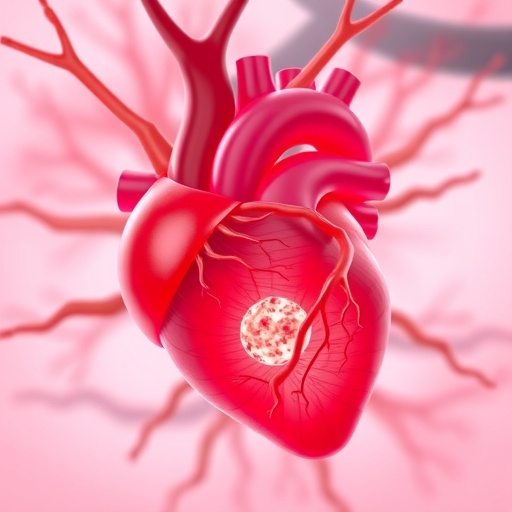
Scientists at the University of Toronto’s Institute of Biomedical Engineering have broken new ground in the field of cardiac tissue engineering by devising a sophisticated method to mature lab-grown heart cells. This development significantly advances the capability to produce in vitro heart cells that closely emulate the structural and functional characteristics of adult human heart tissue. Traditionally, stem cell-derived cardiomyocytes have resembled their fetal or neonatal counterparts, which has limited their utility in research, drug development, and therapeutic applications. By refining the chemical environment in which these cells are cultured, the research team succeeded in improving key physiological parameters, including cellular architecture, electrical signaling, and contractile behavior, thereby pushing the boundaries of cardiac tissue modeling.
The complexity of heart development in vivo presents a formidable challenge for replicating mature heart tissue in vitro. Biological maturation is governed by a multifaceted interplay of signaling pathways modulated by nutrients, hormones, and small molecules. Rather than exploring these factors in isolation, the University of Toronto researchers adopted an innovative computational-experimental approach to explore numerous variables simultaneously. Their algorithmic strategy enabled them to screen a staggering array of 169 distinct culture formulations across multiple experimental cycles, optimizing for enhanced metabolic function—a critical hallmark of cardiomyocyte maturity. This integration of machine learning with stem cell biology represents a paradigm shift away from conventional trial-and-error methodologies.
The culmination of this intensive screening process was the development of a novel culture medium, designated C16, which demonstrated remarkable efficacy in driving cardiac maturation in vitro. Cells cultured with C16 exhibited enhanced sarcomeric organization, more robust and rhythmic beating patterns, and improved electrophysiological responses compared to those grown in standard media. Metabolically, these cells showed a pronounced upregulation in oxidative phosphorylation, indicating a shift toward adult-like energy metabolism. This is particularly significant as cardiomyocyte function is intimately tied to mitochondrial biogenesis and energy utilization, factors that historically have been deficient in lab-grown heart cells.
One of the most pressing motivations behind this research is the notorious difficulty in predicting cardiotoxic effects of novel drugs prior to clinical trials. Existing animal models frequently fall short due to interspecies differences, resulting in inefficient drug development pipelines and prolonged patient wait times. Dr. Neal Callaghan, lead and co-corresponding author of the study, highlights the potential of the C16 medium to produce more predictive and physiologically relevant cardiomyocyte models, bridging a critical gap in translational medicine. By more accurately simulating human cardiac tissue, this advancement opens new avenues for safer, faster, and less expensive drug screening.
Beyond the scope of individual cells, the researchers applied the C16 formulation to three-dimensional engineered cardiac tissues, miniaturized versions of heart muscle that recapitulate native tissue complexity. The incorporation of C16 resulted in tissues with superior contractile force and structural stability. Such 3D constructs are invaluable for mimicking the anisotropic mechanical and electrical environment of the heart, which cannot be fully replicated in traditional two-dimensional culture systems. This work suggests a new standard for cardiac tissue engineering platforms that are both accessible and scalable.
The implications for regenerative medicine are profound. The enhanced maturity of lab-grown heart cells and tissues fulfills a critical prerequisite for clinical applications, such as grafting engineered tissue patches to repair myocardial damage following heart attacks. Professor Craig Simmons, co-corresponding author, envisions leveraging the C16 platform to propel forward therapeutic innovation that could fundamentally alter recovery trajectories for cardiac patients, reducing the burden of heart disease globally. His team is actively pursuing next-generation media formulations with increased functionality through their start-up, boutIQ Solutions, which harnesses machine learning to accelerate optimization.
This convergence of artificial intelligence and stem cell engineering sets a new benchmark in precision tissue fabrication. By systematically decoding the biochemical signatures that foster cardiomyocyte adulthood, the researchers have charted a comprehensive ‘road map’ to maturation—a feat previously elusive due to biological complexity. This foundational work not only advances the basic understanding of heart development but also establishes an adaptable framework for engineering other tissue types, heralding a new era in laboratory-grown organ mimics.
The licensing of C16 to Axol Bioscience, where it is commercially available as MyoMax, underscores the translational value of this research. It facilitates broader dissemination and standardized application in laboratories worldwide, enabling diverse research groups to produce more mature cardiomyocytes seamlessly. This democratization of advanced culture methods accelerates the collective progress toward overcoming cardiovascular diseases and related drug discovery challenges.
In summary, the University of Toronto team’s breakthrough in optimizing the chemical milieu for cardiac maturation represents a watershed moment in bioengineering. Their method enhances not only cellular phenotype and function but also practical usability in complex tissue constructs, presenting a vital tool for both pharmaceutical and regenerative research communities. As this technology matures further with ongoing enhancements, it promises a future where lab-grown heart tissues provide reliable, ethical, and highly accurate models for understanding and treating heart disease.
The study, published in the prestigious journal Nature Communications, reflects an international collaboration spanning several academic institutions, including York University, Dalhousie University, the University Health Network, and SickKids. This multidisciplinary effort highlights the integrative nature of contemporary biomedical research, combining computational science, stem cell biology, and clinical insight to tackle one of medicine’s most formidable challenges—maturing human heart tissue in the laboratory for real-world application.
News Publication Date: 2024
Web References:
Keywords
Stem cell-derived cardiomyocytes, cardiac tissue engineering, heart muscle maturation, computational optimization, culture medium, C16, drug cardiotoxicity testing, 3D heart tissues, regenerative medicine, bioengineering, metabolic maturation, machine learning
Cite Scienmag News
Denise Maddox. (May 5, 2026). University of Toronto Scientists Advance Maturity of Lab-Grown Heart Cells for Enhanced Disease Modeling. Scienmag. https://scienmag.com/university-of-toronto-scientists-advance-maturity-of-lab-grown-heart-cells-for-enhanced-disease-modeling/
Denise Maddox. "University of Toronto Scientists Advance Maturity of Lab-Grown Heart Cells for Enhanced Disease Modeling." Scienmag, 5 May 2026, https://scienmag.com/university-of-toronto-scientists-advance-maturity-of-lab-grown-heart-cells-for-enhanced-disease-modeling/. Accessed 9 September 2026.
Denise Maddox. "University of Toronto Scientists Advance Maturity of Lab-Grown Heart Cells for Enhanced Disease Modeling." Scienmag. May 5, 2026. https://scienmag.com/university-of-toronto-scientists-advance-maturity-of-lab-grown-heart-cells-for-enhanced-disease-modeling/


