


The vast majority of life on Earth remains scientifically invisible, not because of a lack of data, but because of a persistent and deeply entrenched bias in how researchers select their subjects. According to two new studies conducted by the University of New South Wales, the global scientific community is systematically ignoring most living things. This phenomenon creates a significant blind spot in our understanding of the natural world, where the focus is disproportionately concentrated on a tiny fraction of biodiversity. The research reveals that this imbalance is not merely an accident of funding or geography, but is driven by human cultural preferences, personal interests, and media exposure. As a result, the scientific record is heavily skewed toward charismatic megafauna, leaving millions of other species largely unexamined and misunderstood.
Lead author Dr. Pietro Pollo from UNSW Science explains that the selection of research topics is often influenced by factors that have little to do with scientific necessity or ecological importance. Instead, researchers are swayed by personal preferences and cultural attitudes, including the impact of popular media. Films, television shows, and even visits to zoos play a surprising role in shaping the scientific agenda. For instance, the widespread popularity of the animated film Finding Nemo may have inspired a generation of individuals to pursue careers in marine biology, specifically focusing on fish species that are visually appealing or culturally prominent. This cultural imprint on scientific inquiry means that the organisms we study are often those we find cute, exciting, or familiar, rather than those that are most critical to understanding the full scope of life on Earth.
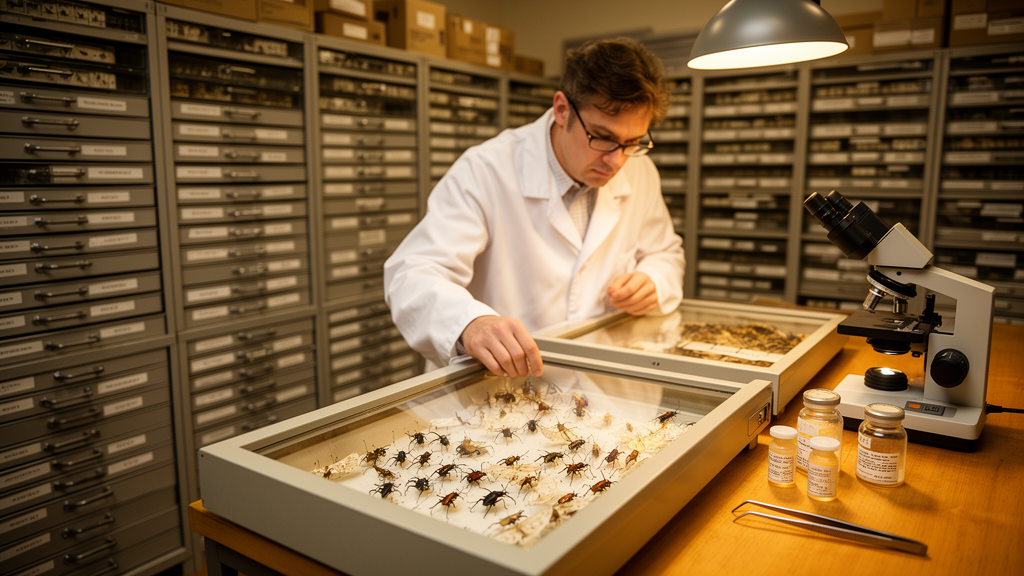
The consequences of this bias are stark. Birds and mammals, which are the most visible and often the most charismatic groups of animals, dominate the research landscape. However, these vertebrate groups make up only a tiny fraction of overall biodiversity. In contrast, less popular animals such as insects, spiders, slugs, and worms receive far less attention. These invertebrates, which constitute the vast majority of animal species, are often overlooked in favor of their more well-known vertebrate counterparts. This disparity means that our understanding of the natural world is incomplete, with large gaps in our knowledge of the organisms that actually make up the bulk of life on the planet. The scientific community is, in effect, studying a small, biased sample of biodiversity while ignoring the rest.
To quantify this bias, the researchers analyzed more than one million ecology and evolution papers. The findings were revealing: vertebrates appeared in more than half of the papers involving animals, despite making up just 4.7% of described animal species. This statistic underscores the extent to which scientific attention is misaligned with the actual distribution of life on Earth. Furthermore, the study found that studies of vertebrates attract more citations and media attention than studies of invertebrates published in the same journals. This suggests that the bias is not only in the selection of research topics but also in the perception of their importance and impact. The scientific community tends to value and promote research on charismatic species, further entrenching the cycle of bias and neglect.
The researchers argue that this scientific blind spot manifests in unpredictable ways, making it difficult to anticipate the long-term consequences of ignoring certain groups of organisms. Basic research is inherently unpredictable, and it is impossible to know in advance which studies will lead to major breakthroughs. However, by focusing only on a narrow range of species, the scientific community risks missing out on potential discoveries. Dr. Pollo emphasizes that we do not know what we do not know, and that the next major discovery could be hiding in an organism that is currently ignored because it is not considered cute or exciting. This uncertainty underscores the importance of broadening the scope of scientific inquiry to include a more representative sample of life on Earth.
Historical examples illustrate the potential value of studying a wide range of organisms. Research into lizard saliva, for instance, helped lead to the development of drugs such as Ozempic, a medication used to treat diabetes and obesity. Similarly, fluorescent proteins discovered in jellyfish have transformed the study of individual cells, providing scientists with powerful tools for visualizing and understanding cellular processes. These examples highlight the importance of studying a broad range of organisms, as even the most unassuming species can hold the key to significant scientific and medical breakthroughs. By ignoring these less popular animals, the scientific community may be missing out on opportunities for innovation and discovery that could have far-reaching implications for human health and well-being.
The researchers call for a fundamental shift in how science is conducted, advocating for a broadening of training, outreach, and research opportunities to include a more representative sample of life on Earth. They argue that with millions of species and limited time and funding, it is essential to diversify research efforts as much as possible. This means not only studying a wider range of species but also ensuring that researchers are trained to appreciate and investigate the full diversity of life. By doing so, the scientific community can begin to address the blind spot that currently exists and develop a more comprehensive understanding of the natural world. This shift will require a change in mindset, moving away from a focus on charismatic megafauna and toward a more inclusive and representative approach to scientific inquiry.
The implications of this research extend beyond the scientific community, touching on broader issues of conservation, policy, and public engagement. If the scientific community is ignoring most living things, then the data used to inform conservation efforts and environmental policy may be incomplete or biased. This could lead to ineffective or misguided strategies for protecting biodiversity, as the most vulnerable or ecologically important species may be overlooked. Additionally, public engagement with science may be limited by the focus on charismatic species, as people may not be aware of the importance of less visible organisms. By broadening the scope of scientific inquiry, the community can help to raise awareness of the full diversity of life on Earth and foster a greater appreciation for the importance of all species, not just the most popular ones.
As the scientific community grapples with the challenges of a changing world, the need for a more inclusive and representative approach to research has never been more urgent. The bias toward charismatic megafauna is a reminder that science is not immune to human biases and cultural influences. By acknowledging and addressing this bias, the community can work toward a more complete and accurate understanding of the natural world. This will require a collective effort, involving researchers, educators, policymakers, and the public, to ensure that all species are given the attention they deserve. In doing so, the scientific community can not only fill the gaps in our knowledge but also unlock new opportunities for discovery and innovation, ultimately benefiting both the natural world and human society.
Subject of Research: Taxonomic bias in ecology and evolution research
Article Title: Researchers are ignoring most living things
Article References: Researchers are ignoring most living things. Original publication (Bibliographic details unavailable.)
Image Credits: AI Generated
DOI: Not provided
Keywords: biodiversity, scientific bias, ecology, evolution, vertebrates, invertebrates, research methodology, UNSW, taxonomic diversity, conservation science, Researchers, ignoring
Cite Scienmag News
Margaret Porter. (October 18, 2026). Scientific Bias Leaves Most Earth’s Species Unstudied. Scienmag. https://scienmag.com/scientific-bias-leaves-most-earths-species-unstudied/
Margaret Porter. "Scientific Bias Leaves Most Earth’s Species Unstudied." Scienmag, 18 October 2026, https://scienmag.com/scientific-bias-leaves-most-earths-species-unstudied/. Accessed 18 October 2026.
Margaret Porter. "Scientific Bias Leaves Most Earth’s Species Unstudied." Scienmag. October 18, 2026. https://scienmag.com/scientific-bias-leaves-most-earths-species-unstudied/


