


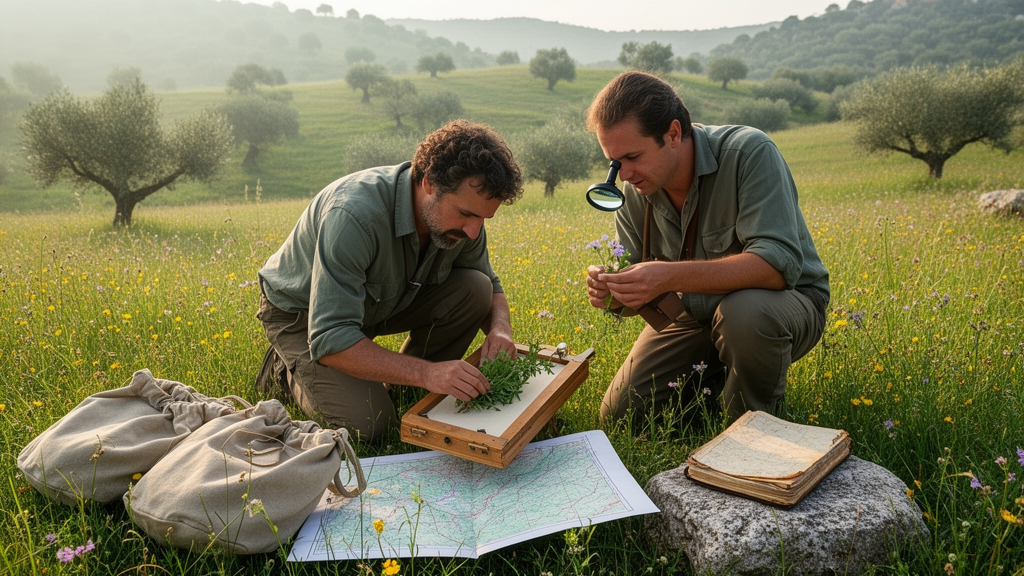
Italian botanists have released a comprehensive update to the country’s native vascular flora, documenting a series of significant new records, confirmations, and exclusions across multiple administrative regions. Published in the journal Italian Botanist, this contribution represents the eighteenth installment in a long-running series dedicated to refining the understanding of Italy’s botanical diversity. The data presented in this latest volume covers taxa belonging to fifteen distinct genera, including Alchemilla, Carex, Chenopodium, Cistus, Convolvulus, Erysimum, Euphorbia, Festuca, Klasea, Lotus, Orobanche, Poa, Stellaria, Trifolium, and Viola. These updates are crucial for maintaining an accurate and current inventory of the plant species that naturally occur within the Italian peninsula and its associated islands.
The methodology behind these floristic updates relies heavily on the examination of physical herbarium specimens and field observations conducted by trained botanists. Each new record is meticulously documented with precise geographic coordinates, elevation data, collection dates, and the names of the individuals who collected and identified the plants. This rigorous approach ensures that the data can be verified by other researchers and contributes to the broader scientific understanding of plant distribution patterns. The specimens are typically deposited in major herbaria, such as the FI Herbarium in Florence, where they serve as permanent references for future taxonomic studies.
One of the most notable findings in this update is the discovery of several new species for the region of Umbria. Botanists F. Falcinelli and G. Tondi reported the presence of three distinct species of Alchemilla, a genus commonly known as lady’s mantle, in high-altitude pastures and beech forest clearings. Specifically, Alchemilla acutata was found at 1,375 meters in Gualdo Tadino, while Alchemilla strigosula and Alchemilla undulata were recorded at Monte Pozzoni, at elevations of 1,890 and 1,480 meters, respectively. These discoveries highlight the importance of high-altitude habitats in harboring specialized plant species that may be overlooked in lower-elevation surveys.
In the northwestern region of Valle D’Aosta, a new record for Chenopodium pedunculare was confirmed, marking the first time this species has been documented in northwestern Italy. The plant was found in a meadow near the village of Rovarey in Fénis, at an elevation of 1,518 meters. This species, which is native to Europe, had previously been recorded in other parts of the country, but its presence in this specific region expands the known distribution range. The identification was confirmed by multiple experts, including D. Iamonico, ensuring the accuracy of the new record.
Conversely, the update also includes the exclusion of certain species from regional floras, a process that is equally important for maintaining scientific accuracy. For instance, Klasea lycopifolia, a member of the Asteraceae family, has been excluded from the flora of Emilia-Romagna. Previous reports of this species in the region were based on observations by Bracchi et al. in 2003, but no herbarium specimens were available to verify these claims. Upon revisiting the localities, researchers found only individuals of Centaurea scabiosa, suggesting that the original identification was erroneous. This case underscores the necessity of physical evidence in botanical documentation and the ongoing effort to correct past mistakes in the scientific record.
Another significant exclusion involves Convolvulus tricolor subsp. meonanthus, which has been removed from the flora of Campania. Historical records from the early 20th century indicated the presence of this subspecies in the Campi Flegrei area, but recent re-examination of herbarium specimens revealed that the plants were actually Convolvulus tricolor subsp. cupanianus. This taxonomic clarification helps to refine the understanding of the local biodiversity and prevents the misinterpretation of historical data. The process of re-evaluating old records is a vital part of modern botany, as it allows scientists to update their knowledge with the benefit of improved taxonomic tools and techniques.
In the southern regions, new records for Poa maroccana were confirmed in both Calabria and Puglia. In Calabria, the species was found along the edge of an unpaved road in Monasterace, while in Puglia, it was observed in a university campus in Bari. These findings suggest that the species may be more widespread in southern Italy than previously thought. The presence of Poa maroccana in these locations adds to the growing body of evidence regarding the adaptability of this grass species to various habitats, including urban and semi-urban environments.
The update also highlights the importance of coastal habitats in supporting unique plant communities. In Lazio, the presence of Lotus creticus was confirmed along the Pontine coast, where it grows in association with other coastal species such as Ononis variegata and Cakile maritima. The identification of Lotus creticus was based on specific morphological characteristics, such as the density of hairs on the leaves and the size of the rachis, which are more reliable than the shape of the calyx. This detailed morphological analysis is essential for distinguishing between closely related species and ensuring accurate taxonomic assignments.
Furthermore, the status of Cistus albidus in Lazio has been updated from a casual alien to a naturalized alien. This change reflects the ability of the species to sustain itself in the local environment, as evidenced by the presence of seedlings and young plants at different stages of growth. The population, first recorded in 2005 in the Monte Mario Natural Reserve, has persisted and expanded over the past 18 years. This case illustrates the dynamic nature of plant communities and the importance of long-term monitoring in understanding the impacts of introduced species on native ecosystems.
These floristic updates contribute to a broader understanding of the ecological and biogeographical patterns in Italy. By documenting new records, confirming existing ones, and excluding erroneous reports, botanists are able to create a more accurate and detailed map of the country’s plant diversity. This information is valuable for conservation efforts, as it helps to identify areas of high biodiversity and species that may be at risk. The ongoing work of Italian botanists in refining the national flora is a testament to the importance of rigorous scientific documentation and the collaborative nature of botanical research.
Subject of Research: Updates to the distribution of native vascular flora in Italy
Article Title: Notulae to the Italian native vascular flora: 18
Article References: Bartolucci, F., Domina, G., Buccomino, G., Ciaschetti, G., Conti, F., Costanza, N., De Luca, A., Del Guacchio, E., Falcinelli, F., Forte, L., Galasso, G., Ganz, C., Iamonico, D., Lonati, M., Marengo, G., Mei, G., Nota, G., Orsenigo, S., Pazienza, G., … Lastrucci, L. (2024). Notulae to the Italian native vascular flora: 18. Italian Botanist, 18, 97-108. https://doi.org/10.3897/italianbotanist.18.140958
Image Credits: AI Generated
DOI: 10.3897/italianbotanist.18.140958
Keywords: Italian flora, botany, plant distribution, vascular plants, herbarium records, taxonomic updates, conservation biology, ecology, Notulae, Italian, native, vascular
Cite Scienmag News
Drew Townsend. (October 18, 2026). Italian Botanists Map New Native Plant Records. Scienmag. https://scienmag.com/italian-botanists-map-new-native-plant-records/
Drew Townsend. "Italian Botanists Map New Native Plant Records." Scienmag, 18 October 2026, https://scienmag.com/italian-botanists-map-new-native-plant-records/. Accessed 18 October 2026.
Drew Townsend. "Italian Botanists Map New Native Plant Records." Scienmag. October 18, 2026. https://scienmag.com/italian-botanists-map-new-native-plant-records/


