


Cancer remains one of the most significant challenges in modern medicine, characterized by uncontrolled cellular proliferation and complex molecular heterogeneity. While traditional therapies have made substantial progress, the need for novel agents with improved selectivity and efficacy continues to drive research in epigenetic modulation. Histone deacetylases, or HDACs, have emerged as critical therapeutic targets because they regulate gene expression and chromatin remodeling without altering the underlying DNA sequence. By inhibiting these enzymes, researchers aim to restore the expression of tumor suppressor genes and induce cell-cycle arrest in malignant cells, offering a promising avenue for targeted cancer treatment.
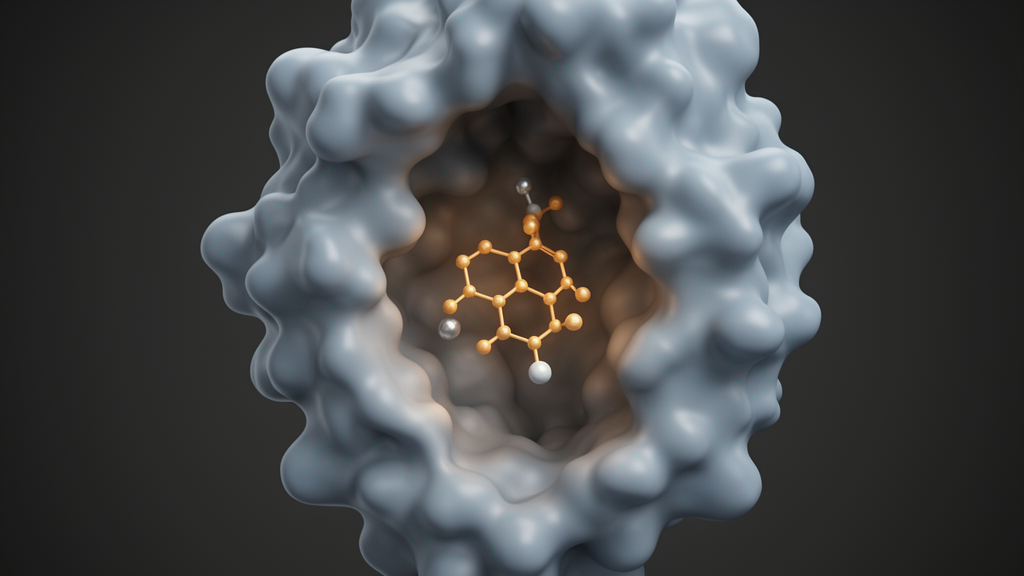
A recent computational study published in the journal Pharmacia presents a detailed evaluation of fifteen newly designed 4-oxoquinazolin-3(4H)-yl-N-hydroxybenzamide derivatives as potential inhibitors of HDAC8. The research team utilized an integrated in silico workflow that combines molecular docking, molecular mechanics generalized Born surface area analysis, absorption, distribution, metabolism, and excretion prediction, density functional theory, and molecular dynamics simulation. This multi-faceted approach allows for a comprehensive assessment of how these hybrid molecules interact with the HDAC8 catalytic pocket and how they might behave in a biological system before any experimental testing is conducted.
The design of these derivatives was guided by the pharmacophoric requirements of known HDAC inhibitors, which typically consist of a zinc-binding group, a linker region, and a surface-recognition cap. In this study, the hydroxamate moiety was retained as the zinc-binding group to ensure coordination with the catalytic zinc ion, while the quinazolinone scaffold served as a rigid heterocyclic core. This scaffold was selected for its ability to provide aromatic surface contacts and hydrogen-bonding capacity, with various substituents introduced to explore how steric bulk, polarity, and lipophilicity influence binding orientation and pharmacokinetic properties.
Molecular docking simulations performed against the HDAC8 crystal structure, identified by Protein Data Bank ID 1T69, revealed that several of the designed derivatives exhibited favorable accommodation within the catalytic pocket. Derivative 11 recorded the most favorable docking score, with an XP GScore of –9.388 kcal/mol, surpassing the reference inhibitor suberoylanilide hydroxamic acid, or SAHA, which scored –8.807 kcal/mol. The predicted interaction patterns for these top-ranked compounds included hydrogen bonding with key residues such as TYR306 and GLY151, pi-cation interactions, and consistent coordination with the catalytic zinc ion, suggesting a stable binding mode that mimics the behavior of established HDAC inhibitors.
To provide a more detailed energetic estimate beyond simple docking scores, the researchers employed Prime MM-GBSA analysis to calculate the binding free energies of the selected complexes. This method accounts for van der Waals, electrostatic, and lipophilic interactions, offering a more nuanced view of the ligand-protein affinity. The results indicated that derivative 10 had the lowest calculated binding free energy of –35.24 kcal/mol, which was more favorable than the –26.59 kcal/mol recorded for SAHA. These findings suggest that specific modifications to the quinazolinone scaffold can enhance the energetic stability of the complex, primarily through improved hydrophobic and electrostatic contributions within the active site.
In addition to binding affinity, the study evaluated the drug-likeness and pharmacokinetic profiles of the derivatives using in silico ADME prediction. Most of the compounds displayed acceptable physicochemical properties, including molecular weights below 500 Da and lipophilicity values within a reasonable range for oral absorption. Derivative 3 showed the highest predicted oral absorption at 89.14%, while derivatives 7 and 15 exhibited lower absorption profiles, indicating that further structural optimization may be necessary for these specific analogs. The predicted blood-brain barrier penetration was generally low across the series, which is often considered favorable for non-central nervous system anticancer agents to minimize potential neurological side effects.
Density functional theory calculations were performed on selected representative compounds to provide electronic-level insights into their reactivity and interaction potential. By analyzing the highest occupied and lowest unoccupied molecular orbitals, the researchers identified regions of electron density that could facilitate hydrogen bonding and zinc coordination. The molecular electrostatic potential maps further supported the docking results by highlighting electron-rich areas around oxygen and nitrogen atoms, which are critical for the specific interactions observed in the HDAC8 catalytic pocket. These electronic descriptors provide a deeper understanding of the chemical basis for the predicted binding modes and help rationalize the differences in activity among the various derivatives.
To assess the temporal stability of the predicted binding poses, a 100-nanosecond molecular dynamics simulation was conducted on the HDAC8-derivative 15 complex. Although derivative 15 was not the highest-ranked compound in the docking or MM-GBSA analyses, it was selected as a representative case study to examine the persistence of the binding mode under solvated conditions. The simulation results showed that the protein backbone remained stable, with root-mean-square deviation values fluctuating within a narrow range, and the ligand maintained its position within the catalytic pocket without significant displacement. Contact analysis confirmed that the key interactions with residues such as TYR306 and GLY151, as well as coordination with the zinc ion, persisted throughout the simulation trajectory.
Despite the promising computational results, the authors emphasize that these findings represent preliminary in silico leads rather than validated inhibitors. The study acknowledges the limitations of computational methods, including the potential for false positives and the inability of short-timescale simulations to fully capture long-term binding stability or experimental binding affinity. The discrepancies between docking scores and MM-GBSA rankings highlight the importance of using multiple complementary methods for prioritization. Future research should focus on experimental enzymatic inhibition assays, binding studies, and cellular activity testing to confirm the biological relevance of these derivatives.
This integrated computational approach demonstrates the value of combining diverse in silico tools in the early stages of drug discovery. By systematically evaluating the binding, energetic, pharmacokinetic, and electronic properties of quinazolinone-hydroxamate hybrids, the study provides a robust framework for identifying candidates with high potential for further development. The identification of derivatives with favorable predicted profiles offers a rational basis for experimental validation, potentially leading to the discovery of new HDAC8-targeting agents with improved therapeutic efficacy and selectivity for cancer treatment.
Subject of Research: Quinazolinone–hydroxamate derivatives as potential HDAC8 inhibitors: An integrated docking, ADME, DFT, and molecular dynamics study
Article Title: Quinazolinone–hydroxamate derivatives as potential HDAC8 inhibitors: An integrated docking, ADME, DFT, and molecular dynamics study
Article References: Saleem, D., Mahdi, M. F., & Rasheed, A. M. (2026). Quinazolinone–hydroxamate derivatives as potential HDAC8 inhibitors: An integrated docking, ADME, DFT, and molecular dynamics study. Pharmacia, 73, Article e201285. https://doi.org/10.3897/pharmacia.73.e201285
Image Credits: AI Generated
DOI: 10.3897/pharmacia.73.e201285
Keywords: Quinazolinone, hydroxamate, derivatives, potential, HDAC8, inhibitors, integrated, docking, ADME, molecular, dynamics, scientific research
Cite Scienmag News
Juliet Wilcox. (October 18, 2026). Computational Study Identifies Quinazolinone Derivatives as HDAC8 Leads. Scienmag. https://scienmag.com/computational-study-identifies-quinazolinone-derivatives-as-hdac8-leads/
Juliet Wilcox. "Computational Study Identifies Quinazolinone Derivatives as HDAC8 Leads." Scienmag, 18 October 2026, https://scienmag.com/computational-study-identifies-quinazolinone-derivatives-as-hdac8-leads/. Accessed 18 October 2026.
Juliet Wilcox. "Computational Study Identifies Quinazolinone Derivatives as HDAC8 Leads." Scienmag. October 18, 2026. https://scienmag.com/computational-study-identifies-quinazolinone-derivatives-as-hdac8-leads/


