…
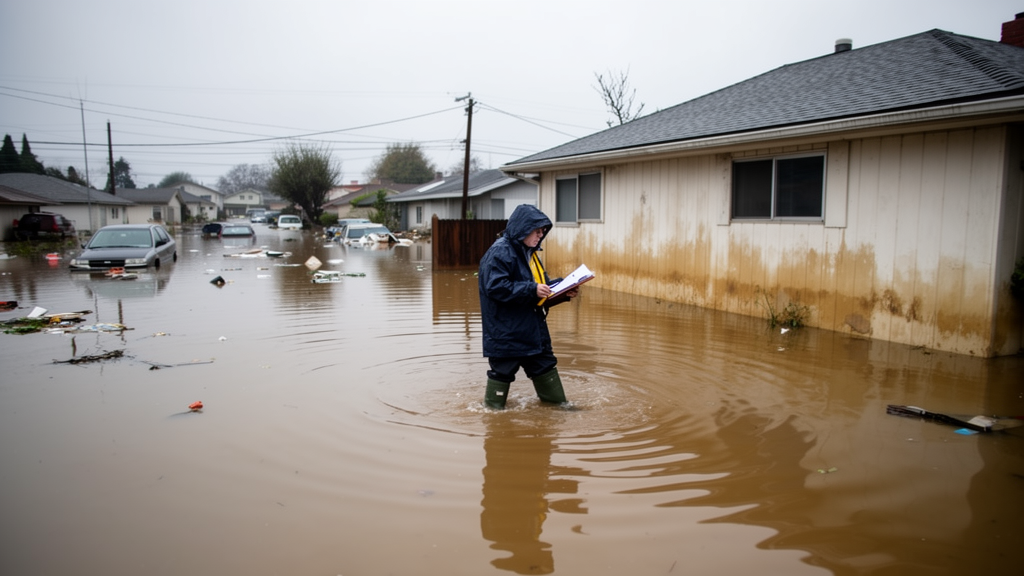
The warning that hydrological extremes are now outpacing the systems designed to pay for their consequences rests on a well-documented empirical foundation. The World Meteorological Organization’s multi-decade assessment of weather, climate and water extremes found that floods, droughts and storms dominate both the death toll and the economic losses recorded between 1970 and 2019, and that the frequency of these events has risen sharply over the period. More recent market data reinforce the trend: reinsurance-sector analyses of the catastrophe year 2023 recorded some of the highest insured and economic losses on record, driven in large part by flooding and severe convective storms. What was once treated as a tail risk is increasingly behaving like a recurring operating cost, and that shift has profound implications for how governments, insurers and households budget for water-related shocks.
The concept of a resilience trap, invoked in the source commentary, describes a self-reinforcing cycle that is familiar from development economics but is only recently being applied to hydrological risk. When a disaster strikes an unprotected community, households sell productive assets, governments divert investment from long-term projects to emergency response, and reconstruction often restores the pre-existing level of exposure rather than reducing it. The next event then inflicts proportionally greater damage on the same population. Because insurance penetration in many flood- and drought-prone countries remains in the single digits, the financial shock of each event is absorbed by the very people least able to bear it, depressing savings, creditworthiness and growth. Escaping this loop requires financing instruments that pay out before or immediately after a hazard materializes, rather than months later through ad hoc appeals.
The four pillars identified — anticipation, inclusion, prevention and mutualization — map onto distinct segments of the risk-management value chain, and each addresses a different market failure. Anticipation refers to pre-arranged finance: contingency funds, contingent credit lines and parametric insurance triggered by measurable hazard indices such as rainfall totals, river gauge levels or satellite-derived vegetation stress. Evidence from early-warning and early-action programmes suggests that anticipatory payouts can cost a fraction of delayed response, because aid delivered before a crisis prevents distress sales, disease outbreaks and asset depletion rather than reversing them. The challenge is institutional rather than technical: triggers must be trusted, data must be reliable, and disbursement channels must be pre-negotiated so that money moves in days, not quarters.
Inclusion addresses the fact that the financial protection gap is not evenly distributed. Smallholder farmers, informal-sector workers, coastal fishing communities and residents of informal settlements are precisely the groups least likely to hold any insurance at all, yet they face the highest exposure to floods and droughts. Microinsurance schemes, index-based livestock and crop products, and social-protection systems that can be scaled horizontally after a shock have all shown promise, but coverage remains thin. The commentary’s emphasis on inclusion reflects a growing consensus that risk transfer which bypasses the most vulnerable does not close the protection gap; it merely relocates it. Gender dimensions matter here as well, since women in many agrarian economies hold fewer titled assets and therefore have less collateral access to formal risk-pooling mechanisms.
Prevention is the pillar most easily neglected in a financing discussion, yet it determines the insurability of everything else. No insurance product can remain affordable if the underlying hazard grows without bound; premiums track expected losses, and expected losses track exposure and climate trends. Investments in flood defenses, wetland restoration, drainage, resilient infrastructure and land-use planning reduce the layer of risk that must then be financed. The economics literature on water risk has estimated that inaction on water security could cost the global economy substantial shares of GDP by mid-century, while adaptation investments typically return multiples of their cost in avoided losses. The difficulty is temporal: prevention spending yields benefits that are invisible when successful, making it politically fragile, whereas disaster payouts are visible and immediate. Risk-financing reform therefore has to create fiscal incentives — such as reduced premiums or deductibles for protected assets — that make prevention legible in budget terms.
Mutualization, the fourth pillar, concerns who ultimately bears the residual risk. Hydrological disasters are correlated across space: a single monsoon failure or riverine flood can affect millions simultaneously, which is why purely local insurance pools collapse under correlated claims. Regional and sovereign risk pools — such as those operating in the Caribbean, the Pacific, Africa and Southeast Asia — allow small states to diversify risk across climatologically distinct members, lowering premiums relative to standalone coverage. At the opposite end of the scale, proposals for European-level backstops for natural catastrophes, examined in recent stability-mechanism research, apply the same logic within large currency unions: a supranational liquidity facility can absorb shocks that would otherwise force procyclical austerity in the affected member states. Reinsurance markets perform a similar function globally, but recent analyses of reinsurance under climate stress warn that simultaneous, compounding events across supply chains could strain even global capacity, particularly when catastrophe models lag the changing hazard distribution.
A recurring theme in the underlying literature is that risk-financing instruments cannot substitute for risk knowledge. Sovereign credit-rating methodologies, for instance, have historically underpriced physical climate risk, meaning that the cost of capital does not yet discriminate between a country investing in flood defenses and one allowing exposure to accumulate. Integrating adaptation into credit assessments would create a market signal rewarding prevention, complementing the direct fiscal case. Similarly, central-bank analyses of climate-related catastrophes highlight how uninsured losses propagate through banking systems, household balance sheets and sovereign debt, turning localized hydrological events into macroeconomic shocks. This macro-financial framing is relatively new: disaster risk was long treated as a humanitarian and engineering problem, whereas it is now understood as a balance-sheet problem spanning households, firms, insurers and treasuries.
Transboundary hydrology adds a further layer of complexity that purely domestic financing architectures cannot address. A majority of the world’s freshwater flows cross at least one international border, and the operational status of cooperation arrangements over shared basins remains uneven. When upstream flood management, reservoir operation or drought allocation affects downstream exposure, the risk-financing calculus of one country is partly determined by decisions in another. Mutualization in this context may eventually require basin-scale instruments — pooled reserves, joint parametric triggers or contingent financing tied to cooperative water management — though few such mechanisms exist at present. The commentary’s appearance in a series supporting the 2026 UN Water Conference signals that these governance questions are moving from technical forums to head-of-state agendas.
The macroeconomic stakes are considerable. Economic assessments of water risk have projected trillions of dollars in cumulative global GDP at risk by mid-century under water-stress scenarios, with losses concentrated in economies that combine high hydrological exposure with low financial protection. Conversely, the same analyses suggest that targeted investment in water security and resilience yields strong benefit-cost ratios. The distributional question is equally stark: the countries contributing least to greenhouse-gas emissions often face the most severe intensification of flood and drought regimes, while having the thinnest insurance markets and the least fiscal space. International mechanisms — from climate funds to humanitarian anticipatory financing — therefore function as a partial substitute for domestic risk capital, but their scale remains orders of magnitude below estimated needs.
What emerges from the commentary and the body of evidence it draws upon is a diagnosis rather than a prescription: the tools exist, in the form of parametric triggers, regional pools, inclusive insurance products, resilient infrastructure and macroprudential recognition of climate risk, but they are deployed piecemeal. Anticipation without inclusion leaves the vulnerable uncovered; inclusion without prevention makes premiums unaffordable over time; prevention without mutualization leaves residual risk concentrated in the least resilient balance sheets. The resilience trap closes only when all four operate together, embedded in institutions that can sustain them across political cycles. As hydrological extremes continue to intensify, the window in which adaptation is cheaper than reconstruction narrows; the argument of the commentary is that risk financing must evolve from a post-disaster accounting exercise into a forward-looking instrument of hydrological governance, aligned with the pace of the changing water cycle itself.
Subject of Research: …
Article Title: Risk-financing systems must adapt to a changing hydrological reality
Article References: Glemarec, Y., & Babinsky, F. (2026). Risk-financing systems must adapt to a changing hydrological reality. Nature Water. https://doi.org/10.1038/s44221-026-00737-3
Image Credits: AI Generated
DOI: 10.1038/s44221-026-00737-3
Keywords: risk financing, hydrological extremes, flood insurance, climate adaptation, financial protection gap, disaster risk reduction, parametric insurance, resilience trap, water-related disasters, sovereign credit ratings, risk pooling, UN Water Conference
Cite Scienmag News
Violet Maxwell. (October 16, 2026). Risk-Financing Systems Struggle to Keep Pace With Intensifying Water Disasters. Scienmag. https://scienmag.com/risk-financing-systems-struggle-to-keep-pace-with-intensifying-water-disasters/
Violet Maxwell. "Risk-Financing Systems Struggle to Keep Pace With Intensifying Water Disasters." Scienmag, 16 October 2026, https://scienmag.com/risk-financing-systems-struggle-to-keep-pace-with-intensifying-water-disasters/. Accessed 16 October 2026.
Violet Maxwell. "Risk-Financing Systems Struggle to Keep Pace With Intensifying Water Disasters." Scienmag. October 16, 2026. https://scienmag.com/risk-financing-systems-struggle-to-keep-pace-with-intensifying-water-disasters/