For millions of people living with IgA nephropathy, the world’s most common form of chronic glomerulonephritis, the fear of silent kidney damage has always been shadowed by an uncomfortable truth: the only reliable way to see how much scarring has occurred is a needle biopsy. Now, researchers in China report that a remarkably simple ratio derived from two routine blood tests may offer a non-invasive window into the hidden kidney damage that drives this disease toward kidney failure.
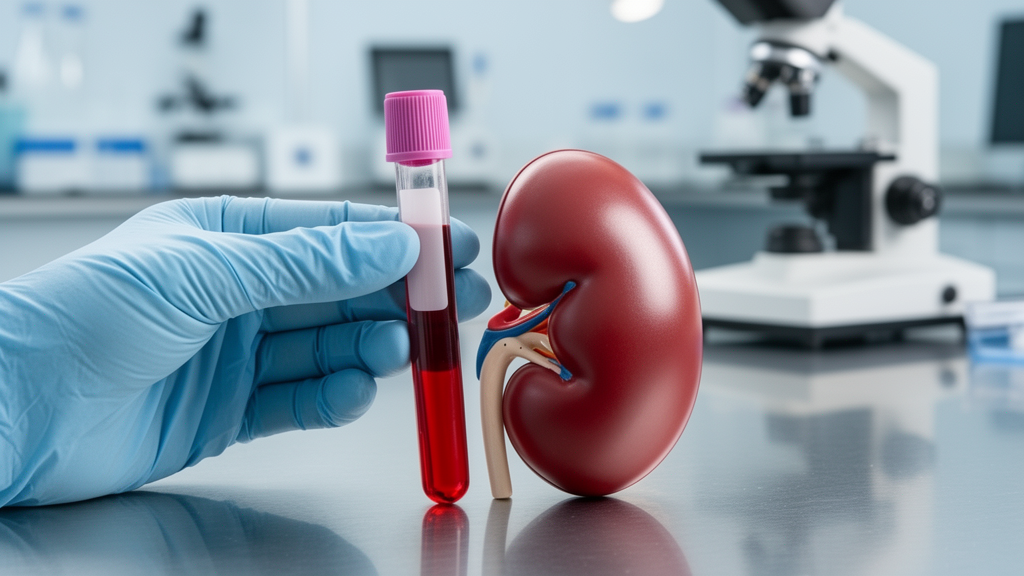
The study, published in Frontiers, analyzed 396 patients with IgA nephropathy and found that the ratio of lactate dehydrogenase (LDH) to serum albumin, known as the lactate dehydrogenase-to-albumin ratio (LAR), was significantly associated with the severity of kidney fibrosis, the scarring that progressively destroys kidney function. The findings suggest that the LAR could serve as a practical, non-invasive marker for identifying patients at risk of severe kidney damage.
“The LAR is a simple, readily available, and inexpensive marker that can be easily calculated from routine blood tests,” the researchers write. “Our findings suggest that the LAR could serve as a practical, non-invasive marker for identifying patients at risk of severe kidney damage.”
The study’s findings are particularly significant because IgA nephropathy affects millions of people worldwide, and the disease can progress silently for years before symptoms appear. By the time patients are diagnosed, significant kidney damage may already have occurred. The ability to detect severe kidney damage early, without resorting to biopsy, could transform how patients are monitored and treated.
The researchers emphasize that the LAR is not a replacement for biopsy, but rather a complementary tool that could help identify patients who need closer monitoring or more aggressive treatment. “The LAR is not a replacement for biopsy, but rather a complementary tool that could help identify patients who need closer monitoring or more aggressive treatment,” they note.
The study’s findings also highlight the importance of the LDH-to-albumin ratio as a marker of cellular damage and inflammation. LDH is released when cells are damaged, while albumin levels decline in response to inflammation and cellular stress. The ratio of these two markers may therefore reflect the balance between cellular damage and the body’s response to that damage.
The researchers note that the study has limitations, including its retrospective design and the fact that it was conducted at a single center. However, the findings are consistent with growing evidence that routine blood tests can provide valuable insights into kidney health, and they open new avenues for research into non-invasive markers of kidney disease.
As the search for better ways to monitor and treat IgA nephropathy continues, the discovery that a simple ratio of two routine blood tests may reveal hidden kidney scarring represents a significant step forward. For patients who have long faced the uncertainty of silent kidney damage, the LAR may offer a new tool for detecting severe kidney damage early, without resorting to biopsy.
The biological rationale behind the LAR rests on two well-characterized laboratory phenomena. Lactate dehydrogenase is a cytosolic enzyme abundant in virtually all tissues, and it leaks into the bloodstream whenever cell membranes are compromised, whether through hypoxia, inflammation, or direct injury. In the context of kidney disease, rising tubular epithelial cell death and interstitial inflammatory activity can be expected to elevate circulating LDH. Serum albumin, by contrast, typically falls in chronic inflammatory states because hepatic albumin synthesis is downregulated by cytokines such as interleukin-6, while capillary permeability changes and urinary losses further deplete circulating levels. Dividing one by the other therefore produces a composite index in which a numerator reflecting cellular injury is amplified by a denominator that shrinks as systemic inflammation and nutritional depletion worsen. This logic explains why the ratio has already proven informative in conditions as diverse as sepsis, malignancy, ischemic stroke, and heart failure, and why the investigators reasoned it might capture the destructive tubulointerstitial processes that dominate long-term prognosis in IgA nephropathy.
The pathological significance of the tubulointerstitial compartment deserves particular emphasis. Within the Oxford MEST-C classification, which grades mesangial hypercellularity, segmental glomerulosclerosis, endocapillary hypercellularity, tubular atrophy and interstitial fibrosis, and crescents, the T score has repeatedly emerged in validation cohorts as the variable most tightly linked to future loss of kidney function. Glomerular lesions may drive the initial immune injury, but it is the progressive scarring of the tubules and interstitium that determines how quickly filtration capacity erodes, because the tubular epithelium has limited regenerative capacity and interstitial fibrosis disrupts the peritubular capillary network that sustains both glomeruli and tubules. A blood test that correlates with this compartment is therefore arguably more prognostically meaningful than one that tracks glomerular inflammation alone, which is precisely what makes the present findings noteworthy despite the modest diagnostic performance of the ratio itself.
The quantitative characteristics of the test warrant careful interpretation. An area under the receiver operating characteristic curve of 0.717 places LAR in the moderate range of discriminative ability, well short of the performance expected of a stand-alone diagnostic test but comparable to many biomarkers already used in clinical medicine for risk stratification. The optimal cut-off of 4.91, derived from the study population, yielded a sensitivity of 56.8% and a specificity of 78.0%, meaning that the ratio misses a substantial fraction of patients with moderate-to-severe fibrosis while correctly reassuring most of those below the threshold. In practical terms, this profile suits a rule-out or prioritization role rather than a rule-in one: a low LAR does not guarantee mild disease, but a high LAR flags a patient in whom earlier or more frequent consideration of biopsy, intensified supportive therapy, or closer monitoring of proteinuria and kidney function may be justified. The finding that patients above the cut-off had a fibrosis prevalence of 54.2% compared with 20.2% below it illustrates how the ratio could meaningfully reshape pre-test probability in routine nephrology practice.
The restricted cubic spline analysis adds an important dimension to the interpretation. Because the association between LAR and fibrosis was linear, with no statistically significant departure from linearity, the marker does not appear to have a threshold effect above which risk suddenly escalates. Instead, each incremental rise in the ratio carries a proportionate increase in the odds of moderate-to-severe fibrosis, with an adjusted odds ratio of 1.425 per unit increase. This dose-response pattern strengthens the biological plausibility of the association and suggests that LAR functions as a continuous severity signal rather than a binary switch, which is consistent with the graded nature of tubulointerstitial scarring itself.
The subgroup findings also merit attention. The association reached statistical significance among men, patients aged forty or older, and those with an estimated glomerular filtration rate of 60 mL/min/1.73 m² or higher. The last of these is particularly interesting, because it suggests that LAR may retain diagnostic value early in the disease course, before kidney function has declined to the point where the clinical imperative for biopsy is already obvious. In patients with preserved filtration, the decision to proceed to biopsy is often the most uncertain, and a cheap, widely available marker that enriches the pre-biopsy probability of significant scarring could be genuinely useful in that setting. The attenuation of the signal in some subgroups, including those with reduced kidney function, may reflect the confounding influence of impaired renal clearance on LDH and albumin metabolism, or simply reduced statistical power in smaller strata.
Several methodological strengths and limitations frame how these results should be applied. The cohort was reasonably large for a single-center biopsy series, the pathological readings were performed by two independent renal pathologists using standardized Oxford criteria, and the biochemical measurements were made on a single automated platform with inter-assay coefficients of variation below 5%, reducing measurement variability. Missing data were addressed with multiple imputation by chained equations across thirty datasets, a technique that preserves statistical efficiency while acknowledging uncertainty in the imputed values. On the other hand, the retrospective, cross-sectional, single-center design means that the findings capture association rather than causation, and they say nothing about whether LAR predicts future progression of fibrosis or loss of kidney function over time. The exclusion criteria, which removed patients with malignancy, active infection, hemolysis, liver disease, recent myocardial infarction, and prior immunosuppressive treatment, were necessary to isolate a renal signal but also mean that the reported performance may not generalize to the many real-world patients who carry such comorbidities, since these conditions independently elevate LDH and could confound the ratio.
Prospective validation in independent, multi-ethnic cohorts will be essential before LAR can be incorporated into clinical decision-making, and future studies should test whether the ratio adds predictive value beyond established risk factors such as proteinuria, blood pressure, and estimated glomerular filtration rate. It would also be informative to examine whether serial LAR measurements track the evolution of fibrosis on repeat biopsy or correlate with treatment response, which would establish the marker as a monitoring tool rather than merely a cross-sectional one. Until such evidence accumulates, the most defensible use of LAR is as an inexpensive adjunct that helps clinicians and patients weigh the urgency of biopsy and the intensity of follow-up, positioned alongside, never in place of, the histological assessment that remains the definitive measure of tubulointerstitial damage in IgA nephropathy.
Subject of Research: Nephrology
Article Title: The lactate dehydrogenase-to-albumin ratio is independently associated with moderate-to-severe tubulointerstitial fibrosis in patients with IgA nephropathy
Article References: Zheng, L., & Yang, G. (2026). The lactate dehydrogenase-to-albumin ratio is independently associated with moderate-to-severe tubulointerstitial fibrosis in patients with IgA nephropathy. Frontiers in Nephrology, 6, Article 1931478. https://doi.org/10.3389/fneph.2026.1931478
Image Credits: AI Generated
DOI: 10.3389/fneph.2026.1931478
Keywords: IgA nephropathy, lactate dehydrogenase-to-albumin ratio, kidney fibrosis, biopsy, nephrology, chronic kidney disease, inflammation, cellular damage, diagnostic biomarker, renal prognosis, lactate, dehydrogenase-to-albumin
Cite Scienmag News
Jerry Hayes. (October 16, 2026). A Simple Blood Test Ratio May Reveal Hidden Kidney Scarring in IgA Nephropathy. Scienmag. https://scienmag.com/a-simple-blood-test-ratio-may-reveal-hidden-kidney-scarring-in-iga-nephropathy/
Jerry Hayes. "A Simple Blood Test Ratio May Reveal Hidden Kidney Scarring in IgA Nephropathy." Scienmag, 16 October 2026, https://scienmag.com/a-simple-blood-test-ratio-may-reveal-hidden-kidney-scarring-in-iga-nephropathy/. Accessed 16 October 2026.
Jerry Hayes. "A Simple Blood Test Ratio May Reveal Hidden Kidney Scarring in IgA Nephropathy." Scienmag. October 16, 2026. https://scienmag.com/a-simple-blood-test-ratio-may-reveal-hidden-kidney-scarring-in-iga-nephropathy/