


In an era where robotics are increasingly becoming a part of everyday life, a significant breakthrough has been made by a team of researchers at Zhe jiang University, China. Their latest creation, a wrist-inspired soft actuator capable of bidirectional torsion, promises to transform the landscape of soft robotics.

Credit: Yan Xu, School of Aeronautics and Astronautics, Zhe jiang University.
In an era where robotics are increasingly becoming a part of everyday life, a significant breakthrough has been made by a team of researchers at Zhe jiang University, China. Their latest creation, a wrist-inspired soft actuator capable of bidirectional torsion, promises to transform the landscape of soft robotics.
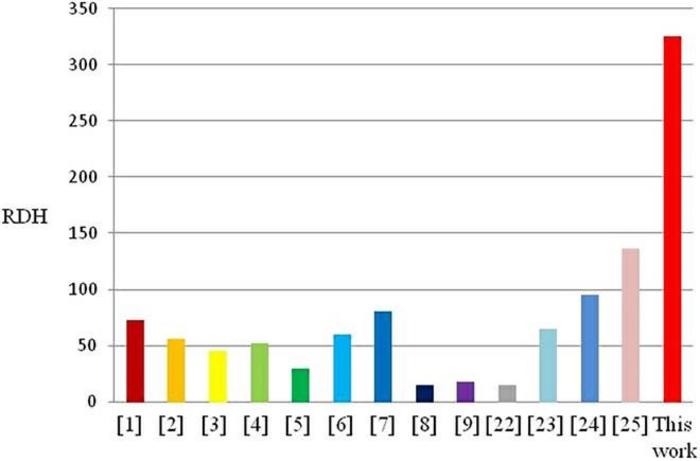
The innovative design of this actuator, described in detail in the journal Cyborg Bionic Systems, is inspired by the human wrist’s ability to perform complex movements. Unlike traditional robotic mechanisms that rely on rigid components, this soft actuator utilizes a magneto-pneumatic hybrid system combined with a Kresling origami structure. This design allows for an astonishing rotation angle of up to 239.5 degrees, far surpassing the capabilities of existing models.
Yan Xu, Kaiwen Ju, and Chao Zhang, the researchers behind this development, have leveraged the geometric intricacies of origami to create an actuator that can achieve these large rotation angles through a compact and efficient design. The actuator’s ability to mimic the human wrist’s bidirectional rotation adds a new layer of functionality to robotic systems, particularly in performing complex, precise tasks that were previously challenging.
The core of the actuator’s technology lies in its unique magneto-pneumatic hybrid driving method. This system cleverly combines magnetic and pneumatic forces to control the actuator’s movement, allowing it to maintain three steady states and handle bidirectional torsion deformation effectively. The application of this technology is not just limited to robotics but extends to various fields requiring delicate and precise manipulation, such as biomedical devices and advanced manufacturing processes.
The practical implications of this technology are vast. For instance, in soft robotic applications, such as wearable devices or assistive technology, the actuator’s flexibility and range of motion could significantly enhance user interaction and functionality. Its ability to perform under different conditions without compromising on efficiency makes it a versatile component in both industrial and consumer-oriented applications.
Experimental validations carried out by the team have shown promising results, demonstrating the actuator’s efficiency and resilience. The actuator underwent rigorous testing, including kinematic analysis and quasistatic characteristics experiments, to ensure its performance stability and reliability under various operational conditions.
One of the most notable aspects of this development is the potential customization of the actuator. Depending on the specific application, the actuator can be designed with different geometric parameters to suit particular requirements, making it a highly adaptable solution for numerous robotic systems.
Looking ahead, the research team plans to further refine this technology by enhancing its load-bearing capabilities and optimizing its energy efficiency. Such improvements could pave the way for broader applications, potentially leading to more sophisticated and autonomously functioning robotic systems.
This breakthrough marks a significant step forward in the field of robotics, offering a glimpse into the future of how machines could more closely mimic human movements and interactions. As this technology continues to evolve, it may well redefine the boundaries of what is possible in robotics and automation.
The paper, “A Wrist-Inspired Magneto-Pneumatic Hybrid-Driven Soft Actuator with Bidirectional Torsion,” was published in the journal Cyborg and Bionic Systems on Mar 28, 2024, at DOI:
Journal
Cyborg and Bionic Systems
Article Title
A Wrist-Inspired Magneto-Pneumatic Hybrid-Driven Soft Actuator with Bidirectional Torsion
Article Publication Date
28-Mar-2024
Cite Scienmag News
Denise Maddox. (June 1, 2024). Revolutionizing robotics: A breakthrough in soft actuator technology. Scienmag. https://scienmag.com/revolutionizing-robotics-a-breakthrough-in-soft-actuator-technology/
Denise Maddox. "Revolutionizing robotics: A breakthrough in soft actuator technology." Scienmag, 1 June 2024, https://scienmag.com/revolutionizing-robotics-a-breakthrough-in-soft-actuator-technology/. Accessed 5 September 2026.
Denise Maddox. "Revolutionizing robotics: A breakthrough in soft actuator technology." Scienmag. June 1, 2024. https://scienmag.com/revolutionizing-robotics-a-breakthrough-in-soft-actuator-technology/

