

Tuesday, July 28, 2026
Science
No Result
View All Result
  • Login
  • HOME
  • SCIENCE NEWS
  • CONTACT US
  • HOME
  • SCIENCE NEWS
  • CONTACT US
No Result
View All Result
Scienmag
No Result
View All Result
Home Science News Technology and Engineering

Graz Researchers’ Brain-Inspired AI Achieves Flexible Planning and Problem Solving

July 28, 2026
in Technology and Engineering
Reading Time: 2 mins read
0
Graz Researchers’ Brain-Inspired AI Achieves Flexible Planning and Problem Solving

Graz Researchers’ Brain-Inspired AI Achieves Flexible Planning and Problem Solving

65
SHARES
587
VIEWS
Share on FacebookShare on Twitter
ADVERTISEMENT

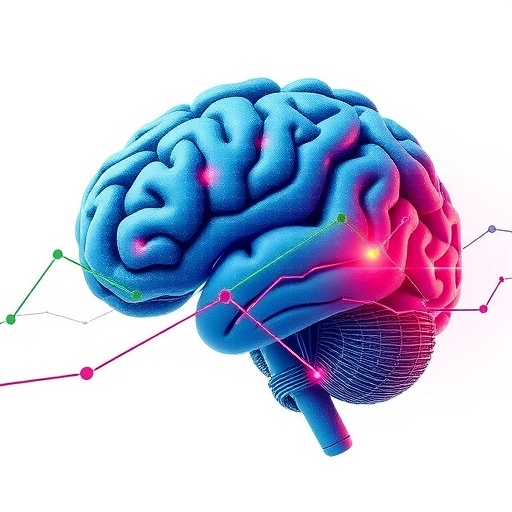
Large AI systems are getting better at reasoning and problem-solving, but their energy cost is a serious bottleneck. Training and running today’s models—especially big neural networks and large language models—can require vast computational resources. In contrast, the human brain delivers powerful cognition using remarkable efficiency, operating at roughly 20 watts. Seeking inspiration from that efficiency, researchers at Graz University of Technology, together with international partners, have built a brain-inspired AI model designed to plan flexibly while consuming substantially less energy.

The work follows the idea that neural planning does not rely on brute-force computation to reach a solution. Instead, it uses principles observed in the brain—particularly mechanisms linked to the hippocampus—to generate candidate futures and refine actions toward a goal. “The brain works in a completely different way to today’s AI systems,” explains Wolfgang Maass from TU Graz, emphasizing an algorithmic translation of biological computation.

At the core of the approach are three interacting mechanisms. First, the model forms cognitive maps, converting relationships among abstract entities into geometric structure within neural codes—effectively providing a “sense of direction.” Second, it uses stochastic neural computations that continuously propose hypothetical scenarios, enabling the system to explore without calculating every pathway. Third, it applies compositional coding, breaking down information and action plans into reusable components.

Together, these mechanisms allow the model to “imagine” possible routes and test them in imagination before committing. Rather than searching exhaustively, the system samples intermediate steps: when a randomly selected move appears to align with the goal, guided by the cognitive map, that direction is pursued. At each new position, the model again evaluates options, gradually steering toward the target while maintaining flexibility.

A key claim is adaptability. Because planning is driven by sampling from cognitive maps and compositional representations, the system can respond to changed or newly introduced situations without requiring retraining. This capability contrasts with many conventional pipelines that must be retrained to handle new environmental structures or objectives.

To demonstrate the idea, the team evaluated the model on three challenges: navigating a two-dimensional space, orienting within an abstract multi-dimensional space, and assembling or disassembling a silhouette built from modular blocks. Across tasks, the system showed goal-directed planning behavior consistent with a sampling-and-map framework.

The researchers stress that the approach is not meant to replace today’s large language models. Instead, it proposes an alternative route for applications where efficient local decision-making matters. With further development, brain-inspired planning systems could broaden AI beyond cloud-scale compute.

Such energy-aware methods could be especially valuable for robots, autonomous vehicles, and edge devices—settings where hardware constraints demand low power operation. The study was conducted with collaborations including Tsinghua University and Italy’s National Research Council.

Subject of Research: Brain-inspired neural planning and cognitive-map-based sampling
Article Title: Neural sampling from cognitive maps enables goal-directed imagination and planning
News Publication Date: 21-Jul-2026
Web References: http://dx.doi.org/10.1038/s42256-026-01254-4
References: Nature Machine Intelligence (DOI: 10.1038/s42256-026-01254-4)
Image Credits: Lunghammer – TU Graz

Keywords

Brain-inspired AI; cognitive maps; neural sampling; stochastic planning; compositional coding; energy-efficient machine intelligence

Tags: biological computation in AIbiologically inspired machine learningbrain-inspired AIcognitive map neural networksenergy-efficient artificial intelligenceflexible problem solving AIhippocampus-inspired AI mechanismsinternational research on brain-inspired AIneural code geometric structuresneural planning modelsscalable low-energy AI systemsstochastic neural computation
Share26Tweet16
Previous Post

CUDC-907 boosts temozolomide response in glioblastoma by dual PI3K/HDAC inhibition

Next Post

Low-Fat Diet and Advanced Glycation End-Products in Women’s Health Initiative Trial

Related Posts

How Accurate Must Newborn Point-of-Care Glucose Tests Be, and Why
Technology and Engineering

How Accurate Must Newborn Point-of-Care Glucose Tests Be, and Why

July 28, 2026
Stretchable Antenna Keeps Wearable Health Sensors Aligned With Human Motion
Technology and Engineering

Stretchable Antenna Keeps Wearable Health Sensors Aligned With Human Motion

July 28, 2026
Brown Bullhead Catfish Cancer Reveals Novel Transmissible Melanoma
Medicine

Brown Bullhead Catfish Cancer Reveals Novel Transmissible Melanoma

July 28, 2026
New initiative aims to secure AI systems used in scientific research
Technology and Engineering

New initiative aims to secure AI systems used in scientific research

July 28, 2026
Maternal, Neonatal Cytokine Signals in Twins Suggest Immune Dysregulation in Autism
Technology and Engineering

Maternal, Neonatal Cytokine Signals in Twins Suggest Immune Dysregulation in Autism

July 28, 2026
Researchers Create Sustainable Material From Plants to Help Body Rebuild
Technology and Engineering

Researchers Create Sustainable Material From Plants to Help Body Rebuild

July 28, 2026
Next Post
Low-Fat Diet and Advanced Glycation End-Products in Women’s Health Initiative Trial

Low-Fat Diet and Advanced Glycation End-Products in Women’s Health Initiative Trial

  • Mothers who receive childcare support from maternal grandparents show more

    Mothers who receive childcare support from maternal grandparents show more parental warmth, finds NTU Singapore study

    27656 shares
    Share 11059 Tweet 6912
  • University of Seville Breaks 120-Year-Old Mystery, Revises a Key Einstein Concept

    1061 shares
    Share 424 Tweet 265
  • Bee body mass, pathogens and local climate influence heat tolerance

    682 shares
    Share 273 Tweet 171
  • Researchers record first-ever images and data of a shark experiencing a boat strike

    546 shares
    Share 218 Tweet 137
  • Groundbreaking Clinical Trial Reveals Lubiprostone Enhances Kidney Function

    531 shares
    Share 212 Tweet 133
Science

Embark on a thrilling journey of discovery with Scienmag.com—your ultimate source for cutting-edge breakthroughs. Immerse yourself in a world where curiosity knows no limits and tomorrow’s possibilities become today’s reality!

RECENT NEWS

  • Taiwan Study Uses Cluster Analysis to Profile Elderly Emergency Patients
  • Low-Fat Diet and Advanced Glycation End-Products in Women’s Health Initiative Trial
  • Graz Researchers’ Brain-Inspired AI Achieves Flexible Planning and Problem Solving
  • CUDC-907 boosts temozolomide response in glioblastoma by dual PI3K/HDAC inhibition

Categories

  • Agriculture
  • Anthropology
  • Archaeology
  • Athmospheric
  • Biology
  • Biotechnology
  • Blog
  • Bussines
  • Cancer
  • Chemistry
  • Climate
  • Earth Science
  • Editorial Policy
  • Marine
  • Mathematics
  • Medicine
  • Pediatry
  • Policy
  • Psychology & Psychiatry
  • Science Education
  • Social Science
  • Space
  • Technology and Engineering

Subscribe to Blog via Email

Success! An email was just sent to confirm your subscription. Please find the email now and click 'Confirm Follow' to start subscribing.

Join 5,146 other subscribers

© 2025 Scienmag - Science Magazine

Welcome Back!

Login to your account below

Forgotten Password?

Retrieve your password

Please enter your username or email address to reset your password.

Log In
No Result
View All Result
  • HOME
  • SCIENCE NEWS
  • CONTACT US

© 2025 Scienmag - Science Magazine
