

Monday, August 17, 2026
Science
No Result
View All Result
  • Login
  • HOME
  • SCIENCE NEWS
  • CONTACT US
  • HOME
  • SCIENCE NEWS
  • CONTACT US
No Result
View All Result
Scienmag
No Result
View All Result
Home Science News Medicine

Brown Bullhead Catfish Cancer Reveals Novel Transmissible Melanoma

July 28, 2026
in Medicine, Technology and Engineering
Reading Time: 3 mins read
0
Brown Bullhead Catfish Cancer Reveals Novel Transmissible Melanoma

Brown Bullhead Catfish Cancer Reveals Novel Transmissible Melanoma

65
SHARES
587
VIEWS
Share on FacebookShare on Twitter
ADVERTISEMENT

blank

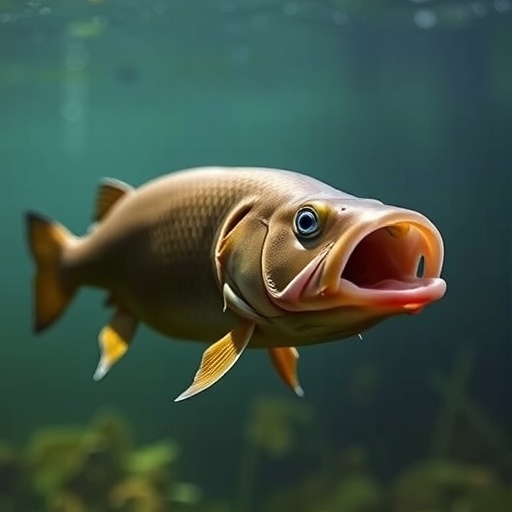
Brown bullhead catfish melanoma in Lake Memphremagog is a single clonal cancer lineage that appears to spread between individuals, according to new genetic analyses combining mitochondrial and nuclear evidence across multiple timepoints. Tumours from different fish are more closely related to one another than to their respective hosts, a pattern consistent with a transmissible cancer rather than independent, conventional malignancies arising separately. The authors describe this as the first documented case of transmissible cancer in fish and, specifically, within a freshwater ecosystem.

The study frames transmission as the overcoming of two major barriers: recurrent physical transfer of malignant cells between hosts, and evasion of the recipient’s immune defenses. While the precise route in bullheads is unknown, the paper draws parallels from other transmissible cancers. For example, dog tumours often spread through sexual transmission, while Tasmanian devil cancers are linked to biting. In bivalves, evidence supports indirect spread via the aquatic environment, where free-floating neoplastic cells may persist long enough to establish infections.

In bullheads, epidemiological timing suggests a potential long latent period. Melanomas were not reported in fish younger than reproductive age, implying that tumour establishment may require time before detection or that reproductive status changes susceptibility. The authors point to spawning aggregations in localized areas, where frequent physical contact could enable direct cellular transfer. As scaleless benthic fish, bullheads may also acquire cells from sediment through skin, mouth, or gill exposure during feeding and contact with the substrate.

Beyond contact, immune modulation is proposed as another enabling factor. Reproductive hormones can reshape fish immune responses, potentially lowering resistance during spawning. In addition, environmental stressors such as chemical pollutants could further weaken immunity at key moments, increasing the chance that transmitted cells survive and engraft.

A striking population-level signal supports rapid dissemination. By 2015, roughly 30% of bullheads carried melanoma, whereas notable levels were absent before 2012. This sudden rise suggests efficient transmission within the lake, motivating further sampling to determine when the lineage first emerged and how it spread geographically and demographically.

The immediate question is whether transmissibility translates into measurable population decline. Comparisons are instructive but not definitive: the Tasmanian devil tumour is nearly uniformly fatal and has driven drastic declines, whereas dog tumours frequently regress and bivalve cancers can persist for long periods with only localized mortality events. For brown bullheads, current data are insufficient to quantify lethality or to project longer-term demographic effects.

The authors also ask whether related clonal lineages may pre-exist in other regions of North America. Historical observations of bullheads with melanomas date back more than a century, but these could reflect the same transmissible lineage, distinct transmissible lineages, or conventional cancers that mimic melanoma morphology. Resolving this requires broader molecular surveys and molecular-clock estimates to approximate the cancer’s origin time.

Finally, the discovery raises the possibility that transmissible cancers may be more common in fish than currently recognized. Other fish species with melanistic lesions—some with proposed causes such as hybridization, others of unknown origin—may merit clonality testing. Overall, the work strengthens the case that transmissible cancers, though biologically unexpected, are now confirmed in over a dozen species and may be ecologically consequential.

Subject of Research: Transmissible cancer (clonal melanoma) in brown bullhead catfish in freshwater ecosystems

Article Title: Brown bullhead catfish melanoma represents a novel transmissible cancer

Article References: Curd, E.E., Hart, S.F.M., Lubkowitz, J. et al. Brown bullhead catfish melanoma represents a novel transmissible cancer. Nature (2026). https://doi.org/10.1038/s41586-026-10828-6

DOI: https://doi.org/10.1038/s41586-026-10828-6

Keywords: transmissible cancer; clonal melanoma; mitochondrial and nuclear evidence; fish immunity; freshwater transmission; molecular lineage; Lake Memphremagog

Tags: aquatic environment cancer transmissionBrown bullhead catfish melanomaclonal cancer lineagecomparative transmissible cancer pathwaysfish cancer epidemiologyfreshwater ecosystem cancer studiesgenetic analysis of transmissible tumorsimmune evasion in transmissible cancerslong latent period in transmissible melanomanovel case of transmissible melanomaTransmissible cancer in freshwater fishtumor spread mechanisms in fish
Share26Tweet16
Previous Post

Childhood Unpredictability Links to Mental Health Problems

Next Post

Bubble streams help sperm whales sleep deeply underwater

Related Posts

Scientists find fast-spreading genetic variants causing parasites to resist malaria drugs
Medicine

Scientists find fast-spreading genetic variants causing parasites to resist malaria drugs

August 17, 2026
VRK2 Drives Gemcitabine Resistance in Pancreatic Cancer Through TPI1-Mediated Aerobic Glycolysis
Medicine

VRK2 Drives Gemcitabine Resistance in Pancreatic Cancer Through TPI1-Mediated Aerobic Glycolysis

August 17, 2026
Smart demand management could accelerate electricity decarbonization in megacities
Technology and Engineering

Smart demand management could accelerate electricity decarbonization in megacities

August 17, 2026
PD-1 Balances Brain Viral Control and Neuroinflammation by Regulating T Cell Responses
Medicine

PD-1 Balances Brain Viral Control and Neuroinflammation by Regulating T Cell Responses

August 17, 2026
Digital Twins Accelerate Oxide Transistor Optimization, Overcoming Performance–Reliability Trade-offs
Technology and Engineering

Digital Twins Accelerate Oxide Transistor Optimization, Overcoming Performance–Reliability Trade-offs

August 17, 2026
Pilot Study Examines Personal Care Use, Social Media Engagement Among NJ Students
Medicine

Pilot Study Examines Personal Care Use, Social Media Engagement Among NJ Students

August 17, 2026
Next Post
Bubble streams help sperm whales sleep deeply underwater

Bubble streams help sperm whales sleep deeply underwater

  • Mothers who receive childcare support from maternal grandparents show more

    Mothers who receive childcare support from maternal grandparents show more parental warmth, finds NTU Singapore study

    27656 shares
    Share 11059 Tweet 6912
  • University of Seville Breaks 120-Year-Old Mystery, Revises a Key Einstein Concept

    1061 shares
    Share 424 Tweet 265
  • Bee body mass, pathogens and local climate influence heat tolerance

    682 shares
    Share 273 Tweet 171
  • Researchers record first-ever images and data of a shark experiencing a boat strike

    546 shares
    Share 218 Tweet 137
  • Groundbreaking Clinical Trial Reveals Lubiprostone Enhances Kidney Function

    531 shares
    Share 212 Tweet 133
Science

Embark on a thrilling journey of discovery with Scienmag.com—your ultimate source for cutting-edge breakthroughs. Immerse yourself in a world where curiosity knows no limits and tomorrow’s possibilities become today’s reality!

RECENT NEWS

  • Glacier-Fed Basins Worldwide Are Losing Critical Hydroclimate Records
  • Scientists find fast-spreading genetic variants causing parasites to resist malaria drugs
  • Bar-Ilan Study Finds Attention Can Regulate Acute Inflammation in Humans
  • Research Agenda for Real-World Fairness to Guide Policy and Organizations

Categories

  • Agriculture
  • Anthropology
  • Archaeology
  • Athmospheric
  • Biology
  • Biotechnology
  • Blog
  • Bussines
  • Cancer
  • Chemistry
  • Climate
  • Earth Science
  • Editorial Policy
  • Marine
  • Mathematics
  • Medicine
  • Pediatry
  • Policy
  • Psychology & Psychiatry
  • Science Education
  • Social Science
  • Space
  • Technology and Engineering

Subscribe to Blog via Email

Enter your email address to subscribe to this blog and receive notifications of new posts by email.

Join 5,150 other subscribers

© 2025 Scienmag - Science Magazine

Welcome Back!

Login to your account below

Forgotten Password?

Retrieve your password

Please enter your username or email address to reset your password.

Log In
No Result
View All Result
  • HOME
  • SCIENCE NEWS
  • CONTACT US

© 2025 Scienmag - Science Magazine

Discover more from Science

Subscribe now to keep reading and get access to the full archive.

Continue reading
