

Tuesday, July 28, 2026
Science
No Result
View All Result
  • Login
  • HOME
  • SCIENCE NEWS
  • CONTACT US
  • HOME
  • SCIENCE NEWS
  • CONTACT US
No Result
View All Result
Scienmag
No Result
View All Result
Home Science News Biology

Bubble streams help sperm whales sleep deeply underwater

July 28, 2026
in Biology
Reading Time: 2 mins read
0
Bubble streams help sperm whales sleep deeply underwater

Bubble streams help sperm whales sleep deeply underwater

65
SHARES
587
VIEWS
Share on FacebookShare on Twitter
ADVERTISEMENT

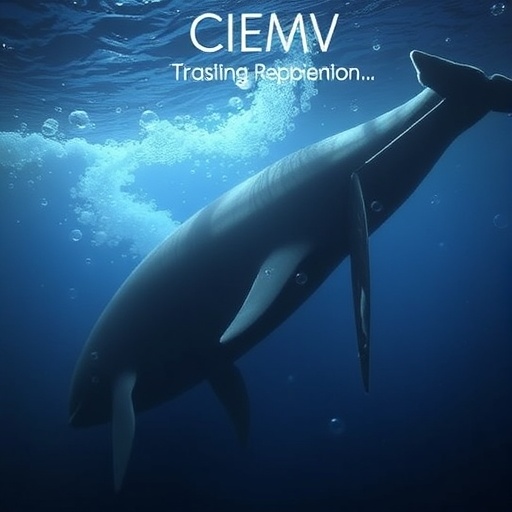
Sperm whales don’t sleep the way most animals do. Instead of drifting quietly at the surface, these massive mammals can hang suspended roughly 25 meters below, forming “sleeping columns” that look like towering structures from the boat. Researchers have long known that sperm whales can rest underwater in short bursts, typically 10–15 minutes, but the mechanics of how they avoid rising—despite buoyant head anatomy—has been a puzzle.

A sperm whale’s head takes up about a third of its total body mass and is packed with oil, wax, and air. Since these components are buoyant, scientists have wondered how the whales stay underwater without behaving like corks. The new study suggests a surprising solution: during sleep, sperm whales regulate their buoyancy by actively modulating the gas volume they carry—specifically by blowing bubbles from the blowhole.

To test this idea, the team used advanced suction-attached recording devices on 42 sperm whales around the Lofoten Islands in northern Norway. The instruments captured bubble sounds, recorded the timing and frequency of bubble release, and tracked key context variables such as whale depth and head orientation (up versus down). The recorders were later recovered after the animals surfaced.

The results show that resting depth strongly predicts bubble activity. Whales sleeping closer to the surface released bubbles about 11 times per power nap, while whales resting after deep dives of more than 200 meters produced only around three to four bubble events during their ascent-related rest. In other words: the whales blow more bubbles when they are “buoyancy-prone” to rise too quickly.

The technical logic behind this pattern is tied to pressure and oxygen supply. At greater depths, the surrounding pressure compresses air in the whale’s lungs and reduces buoyancy, meaning the animals need fewer bubble releases to prevent upward drift. Closer to the surface, air expands gradually and pushes the whale upward, so blowing bubbles releases some onboard gas and reduces lift, helping the whale stay in the right depth window.

The study also raises a biological question: is bubble blowing a purely physiological response driven by sensing buoyancy, or does it reflect a conscious strategy during sleep? Because researchers don’t yet know whether sperm whales sleep with both hemispheres fully inactive or in a partially awake state, the behavioral control behind bubble release remains uncertain.

Still, the pattern is clear—and it reframes what “sleeping underwater” means for one of the ocean’s most iconic giants. Rather than floating passively, sperm whales appear to fine-tune their internal gas balance in real time, trading small, periodic bubble releases for sustained, stable rest below the surface.

—
Subject of Research: Animals
Article Title: Buoyancy regulation through modulation of onboard gas volume by resting sperm whales (Physeter macrocephalus Linnaeus)
News Publication Date: 23-Jul-2026
Web References: https://doi.org/10.1242/jeb.251920
References: Freymond, N., Burslem, A. and Miller, P. J. O. (2026). Buoyancy regulation through modulation of onboard gas volume by resting sperm whales (Physeter macrocephalus Linnaeus). J. Exp. Biol. 229, jeb.251920. doi:10.1242/jeb.251920.
Image Credits: Stéphane Granzotto www.stephanegranzotto.com
Keywords: sperm whale, buoyancy regulation, sleeping behaviour, bubble release, onboard gas volume, underwater resting, marine mammals, Journal of Experimental Biology

Tags: acoustic monitoring of whale bubblesbubble streams in marine mammalsbuoyancy management during sleepbuoyancy regulation in sperm whalesdeep-sea animal respirationmarine mammal adaptation to deep-sea environmentmarine mammal sleep physiologysleep columns of sperm whalessperm whale head anatomy and buoyancysperm whale sleep behaviorunderwater animal buoyancy controlunderwater sleep mechanisms
Share26Tweet16
Previous Post

Brown Bullhead Catfish Cancer Reveals Novel Transmissible Melanoma

Next Post

Xi’an Jiaotong team finds temperature-dependent single-molecule magnetostrictor behavior

Related Posts

Chitosan Hydrogel Stabilizes Red Blood Cell Membranes for Environmental Sensors
Biology

Chitosan Hydrogel Stabilizes Red Blood Cell Membranes for Environmental Sensors

July 28, 2026
Nagoya Institute Scientists Identify Molecular Basis of Red-Green Color Vision
Biology

Nagoya Institute Scientists Identify Molecular Basis of Red-Green Color Vision

July 28, 2026
Rapid path to antibiotic resistance accelerates spread and treatment failures
Biology

Rapid path to antibiotic resistance accelerates spread and treatment failures

July 28, 2026
Study Finds Casdatifan Produces Durable Tumor Responses in Advanced Kidney Cancer
Biology

Study Finds Casdatifan Produces Durable Tumor Responses in Advanced Kidney Cancer

July 28, 2026
Senolytic PROTAC Slows Age-Related Intervertebral Disc Degeneration in Male Mice
Biology

Senolytic PROTAC Slows Age-Related Intervertebral Disc Degeneration in Male Mice

July 28, 2026
Nuclear Escape Accelerates as Stress Builds Inside the Atomic Nucleus
Biology

Nuclear Escape Accelerates as Stress Builds Inside the Atomic Nucleus

July 28, 2026
Next Post
Xi’an Jiaotong team finds temperature-dependent single-molecule magnetostrictor behavior

Xi'an Jiaotong team finds temperature-dependent single-molecule magnetostrictor behavior

  • Mothers who receive childcare support from maternal grandparents show more

    Mothers who receive childcare support from maternal grandparents show more parental warmth, finds NTU Singapore study

    27656 shares
    Share 11059 Tweet 6912
  • University of Seville Breaks 120-Year-Old Mystery, Revises a Key Einstein Concept

    1061 shares
    Share 424 Tweet 265
  • Bee body mass, pathogens and local climate influence heat tolerance

    682 shares
    Share 273 Tweet 171
  • Researchers record first-ever images and data of a shark experiencing a boat strike

    546 shares
    Share 218 Tweet 137
  • Groundbreaking Clinical Trial Reveals Lubiprostone Enhances Kidney Function

    531 shares
    Share 212 Tweet 133
Science

Embark on a thrilling journey of discovery with Scienmag.com—your ultimate source for cutting-edge breakthroughs. Immerse yourself in a world where curiosity knows no limits and tomorrow’s possibilities become today’s reality!

RECENT NEWS

  • Promises and pitfalls of Mediterranean climate adaptation tools
  • Stretchable Antenna Keeps Wearable Health Sensors Aligned With Human Motion
  • Study Finds Alzheimer’s P-tau217 Biomarker Weak in Preclinical Research
  • 3D-Printable Materials Heal Bodies, Enable Better Robots, Recover Critical Minerals

Categories

  • Agriculture
  • Anthropology
  • Archaeology
  • Athmospheric
  • Biology
  • Biotechnology
  • Blog
  • Bussines
  • Cancer
  • Chemistry
  • Climate
  • Earth Science
  • Editorial Policy
  • Marine
  • Mathematics
  • Medicine
  • Pediatry
  • Policy
  • Psychology & Psychiatry
  • Science Education
  • Social Science
  • Space
  • Technology and Engineering

Subscribe to Blog via Email

Enter your email address to subscribe to this blog and receive notifications of new posts by email.

Join 5,146 other subscribers

© 2025 Scienmag - Science Magazine

Welcome Back!

Login to your account below

Forgotten Password?

Retrieve your password

Please enter your username or email address to reset your password.

Log In
No Result
View All Result
  • HOME
  • SCIENCE NEWS
  • CONTACT US

© 2025 Scienmag - Science Magazine

Discover more from Science

Subscribe now to keep reading and get access to the full archive.

Continue reading
