

Tuesday, July 28, 2026
Science
No Result
View All Result
  • Login
  • HOME
  • SCIENCE NEWS
  • CONTACT US
  • HOME
  • SCIENCE NEWS
  • CONTACT US
No Result
View All Result
Scienmag
No Result
View All Result
Home Science News Medicine

Hepatitis Day 2026: Europe’s progress stalls as prevention gaps block targets

July 28, 2026
in Medicine
Reading Time: 2 mins read
0
Hepatitis Day 2026: Europe’s progress stalls as prevention gaps block targets

Hepatitis Day 2026: Europe’s progress stalls as prevention gaps block targets

65
SHARES
587
VIEWS
Share on FacebookShare on Twitter
ADVERTISEMENT

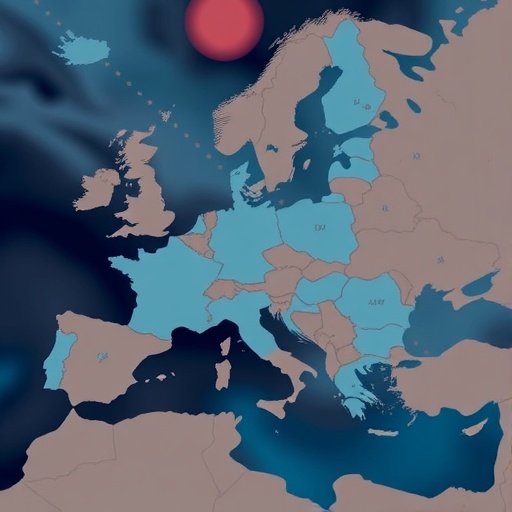
While Europe has steadily improved hepatitis B and C prevention, new analyses from the European Centre for Disease Prevention and Control (ECDC) warn that the region is unlikely to eliminate viral hepatitis as a public health threat by 2030. The issue is not the absence of effective tools, but uneven implementation and coverage across countries and risk groups. World Hepatitis Day, marked on 28 July, highlights this gap with updated epidemiological evidence.

ECDC data show that hepatitis B prevalence among children under five years is now close to zero, reflecting the impact of long-running immunisation and perinatal prevention efforts. Routine hepatitis B screening in pregnancy is established across all EU/EEA countries, helping drive mother-to-child transmission below 2%. This is a key example of prevention working at population scale.

Acute hepatitis B infections have also fallen since 2006. Among people under 25, the share of acute cases dropped from 11% in 2015 to 8% in 2024. The trend supports the role of childhood vaccination programmes and strengthened infection control. Yet the remaining burden indicates that not every pathway of transmission is fully interrupted.

For hepatitis B and C prevention, Europe relies on multiple layers: vaccination for hepatitis B, harm reduction and infection control to block transmission, early testing, and therapies that either cure hepatitis C or suppress hepatitis B. Blood safety systems, including screening and regulatory standards for blood, tissues and cells, further reduce iatrogenic risk.

Even with these measures, viral hepatitis remains a substantial health threat. ECDC estimates around five million people in the EU/EEA live with chronic hepatitis B or C, and nearly 60,000 hepatitis-related deaths occur annually. These figures underscore the need to combine prevention with timely diagnosis and linkage to care.

A major obstacle is incomplete community-level prevention. Only nine of 25 EU/EEA countries meet the WHO hepatitis B vaccination goal of 95% coverage in children, and some report recent declines. Vaccination is therefore still a bottleneck rather than a solved problem.

Hepatitis C control remains particularly dependent on addressing injecting drug use. Although opioid agonist treatment and needle and syringe programmes reduce transmission, coverage is inadequate: only seven countries meet WHO targets for distribution of sterile injection equipment. ECDC and the European Union Drugs Agency (EUDA) have emphasised prison-focused interventions, where improving healthcare could reduce ongoing transmission.

Ultimately, the technical solution is clear—vaccinate, screen, test, treat, and implement harm reduction consistently. The policy challenge is matching those interventions to local gaps, so that elimination targets are met rather than missed.

Subject of Research: Viral hepatitis prevention and control in Europe (hepatitis B and C)

Article Title: Europe may miss the 2030 viral hepatitis elimination target, ECDC warns on World Hepatitis Day

News Publication Date: 28 July (World Hepatitis Day)

Web References: https://www.ecdc.europa.eu/en/vaccination-coverage-dashboard

References:
– EU/EEA progress monitoring report for 2026: Prevention of hepatitis B and C in the European Union and European Economic Area, 2026
– ECDC Annual Epidemiological Report 2024: Hepatitis B; Hepatitis C (Stockholm: ECDC; 2026)

Image Credits: ECDC

Keywords: viral hepatitis, hepatitis B, hepatitis C, elimination targets, vaccination coverage, perinatal transmission, harm reduction, injecting drug use, blood safety, ECDC, World Hepatitis Day

Tags: Europe hepatitis preventionEuropean Centre for Disease Prevention and Controlhepatitis B and C epidemiologyhepatitis B vaccination programshepatitis C harm reduction strategiesHepatitis Day 2026hepatitis screening and testinghepatitis transmission pathwaysperinatal hepatitis B preventionprogress and gaps in hepatitis controlpublic health hepatitis initiativesviral hepatitis elimination targets
Share26Tweet16
Previous Post

How the body’s natural recycling system may reduce inflammation

Next Post

Michael Hurlston and TRUMPF to Receive 2026 Optica i4 Prize

Related Posts

Molecular Profiling and Rare Cancer Treatment Access Expand across Europe
Medicine

Molecular Profiling and Rare Cancer Treatment Access Expand across Europe

July 28, 2026
Delayed Umbilical Cord Clamping Duration Linked to Phototherapy Days in Preterm Infants
Medicine

Delayed Umbilical Cord Clamping Duration Linked to Phototherapy Days in Preterm Infants

July 28, 2026
3D-Printable Materials Heal Bodies, Enable Better Robots, Recover Critical Minerals
Medicine

3D-Printable Materials Heal Bodies, Enable Better Robots, Recover Critical Minerals

July 28, 2026
Brown Bullhead Catfish Cancer Reveals Novel Transmissible Melanoma
Medicine

Brown Bullhead Catfish Cancer Reveals Novel Transmissible Melanoma

July 28, 2026
Clonal Division Memory in Humans Splits Between Healthy Blood Formation and AML
Medicine

Clonal Division Memory in Humans Splits Between Healthy Blood Formation and AML

July 28, 2026
Family Medicine Residency Directors Say Programs Do Not Assess Self-Directed Learning Directly
Medicine

Family Medicine Residency Directors Say Programs Do Not Assess Self-Directed Learning Directly

July 28, 2026
Next Post
Michael Hurlston and TRUMPF to Receive 2026 Optica i4 Prize

Michael Hurlston and TRUMPF to Receive 2026 Optica i4 Prize

  • Mothers who receive childcare support from maternal grandparents show more

    Mothers who receive childcare support from maternal grandparents show more parental warmth, finds NTU Singapore study

    27656 shares
    Share 11059 Tweet 6912
  • University of Seville Breaks 120-Year-Old Mystery, Revises a Key Einstein Concept

    1061 shares
    Share 424 Tweet 265
  • Bee body mass, pathogens and local climate influence heat tolerance

    682 shares
    Share 273 Tweet 171
  • Researchers record first-ever images and data of a shark experiencing a boat strike

    546 shares
    Share 218 Tweet 137
  • Groundbreaking Clinical Trial Reveals Lubiprostone Enhances Kidney Function

    531 shares
    Share 212 Tweet 133
Science

Embark on a thrilling journey of discovery with Scienmag.com—your ultimate source for cutting-edge breakthroughs. Immerse yourself in a world where curiosity knows no limits and tomorrow’s possibilities become today’s reality!

RECENT NEWS

  • Low-Fat Diet and Advanced Glycation End-Products in Women’s Health Initiative Trial
  • Graz Researchers’ Brain-Inspired AI Achieves Flexible Planning and Problem Solving
  • CUDC-907 boosts temozolomide response in glioblastoma by dual PI3K/HDAC inhibition
  • Michael Hurlston and TRUMPF to Receive 2026 Optica i4 Prize

Categories

  • Agriculture
  • Anthropology
  • Archaeology
  • Athmospheric
  • Biology
  • Biotechnology
  • Blog
  • Bussines
  • Cancer
  • Chemistry
  • Climate
  • Earth Science
  • Editorial Policy
  • Marine
  • Mathematics
  • Medicine
  • Pediatry
  • Policy
  • Psychology & Psychiatry
  • Science Education
  • Social Science
  • Space
  • Technology and Engineering

Subscribe to Blog via Email

Enter your email address to subscribe to this blog and receive notifications of new posts by email.

Join 5,146 other subscribers

© 2025 Scienmag - Science Magazine

Welcome Back!

Login to your account below

Forgotten Password?

Retrieve your password

Please enter your username or email address to reset your password.

Log In
No Result
View All Result
  • HOME
  • SCIENCE NEWS
  • CONTACT US

© 2025 Scienmag - Science Magazine

Discover more from Science

Subscribe now to keep reading and get access to the full archive.

Continue reading
