


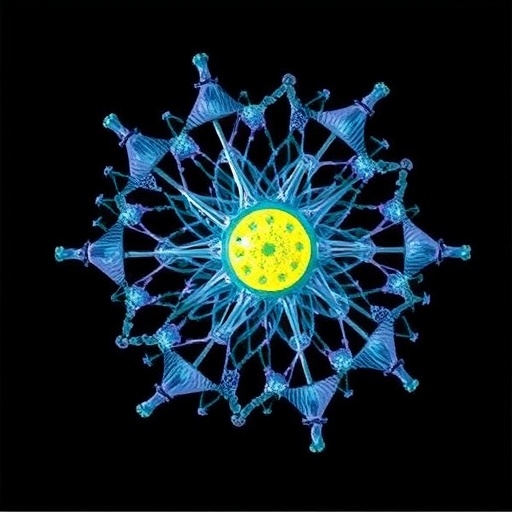
Nanoplastics, tiny plastic particles typically measuring less than 1,000 nanometers, have emerged as one of the most insidious and pervasive pollutants in aquatic ecosystems worldwide. Their microscopic size allows them to evade detection and capture by conventional water treatment methods, enabling widespread dispersal and persistence in water bodies. These contaminants pose substantial ecological risks, accumulating in aquatic organisms and potentially entering human food chains. Due to the persistent and unregulated nature of nanoplastic contamination, their effective removal remains an urgent challenge for environmental scientists and engineers striving to protect water quality and public health.
Innovative Solutions through Biohybrid Nanotechnology
A groundbreaking study recently published in Nature Water by Q. Xuan, X. Yu, Y. Feng, and colleagues proposes an ingenious solution: the development of recyclable magnetic biohybrid nanonets capable of actively capturing and removing nanoplastics from water. This technology leverages the unique properties of lysozyme amyloid fibrils (LAFs) combined with iron oxide nanoparticles (IONPs) synthesized directly on the fibril surfaces. Through this synergistic integration, the resulting nanonets exhibit pronounced magnetic responsiveness alongside abundant binding sites tailored for nanoplastic adsorption, addressing key limitations of conventional filtration systems.
Engineering Recyclable Magnetic Biohybrid Nanonets
The fabrication process for these biohybrid nanonets (designated LAF-IONPs) involves in situ growth of iron oxide nanoparticles upon the lysozyme amyloid fibrils, creating a structurally stable and magnetically active composite. The iron oxide imparts magnetic properties that empower these nanonets with active motion capabilities under an external magnetic field, significantly enhancing the encounter frequency between the nanonets and suspended nanoplastic particles. Equally critical is the fibrillar matrix that provides extensive surface area decorated with functional groups capable of engaging various chemical compositions of nanoplastics through diverse interfacial interactions.
Performance Across Diverse Environmental Conditions
A hallmark of the LAF-IONPs system is its remarkable versatility and robustness over a broad spectrum of environmental contexts. Laboratory evaluations demonstrate effective nanoplastic removal from particles ranging between 30 to 1,000 nanometers, encompassing a wide array of polymer types commonly found in natural waters. The nanonets maintain high removal efficiencies within environmentally relevant ranges of pH 7 to 9 and are resilient against challenges presented by high salinity and the presence of competing pollutants. These capabilities portend significant applicability in diverse real-world aquatic settings.
Magnetic Active Motion: A Game Changer in Water Treatment
Traditional adsorbents typically rely on passive diffusion and settling, processes that are slow and often incomplete, especially for nanoparticles. The magnetic active motion enabled by the iron oxide nanoparticles imbues the biohybrid nanonets with dynamic mobility under controlled alternating magnetic fields. This active movement profoundly increases interaction rates between the nanonets and target nanoplastics, substantially improving capture efficiency. This mechanism distinguishes LAF-IONPs from passive filtration matrices and represents a paradigm shift in nanoparticle removal technology.
Superior Removal Efficiency Validated in Real World Samples
Extensive tests conducted across an array of actual water sources—ranging from riverine to wastewater effluents—underscore the exceptional efficacy of LAF-IONPs. The nanonets consistently achieve nanoplastic removal rates between 98.0% and 99.9%, exceeding the capabilities of most existing treatment protocols. This elimination performance occurs even in complex water matrices laden with natural organic matter and inorganic ions, illustrating the robustness and practicality of this approach for real environmental challenges.
Outstanding Reusability Through Recycling Cycles
A critical barrier to sustainable nanoplastic remediation is the regenerability and reusability of the adsorbent materials employed. The study highlights that the LAF-IONPs retain over 95% of their removal capability even after 100 recycling cycles, facilitated by their magnetic recovery using a custom-designed alternating magnetic field system. This recycling capacity drastically reduces operational costs and environmental impacts compared to single-use adsorbents, presenting viable pathways for large-scale deployment and cost-efficient water treatment infrastructures.
Reduction of Biological Accumulation: Ecological and Health Implications
Beyond water decontamination, the study importantly demonstrates that treatment with LAF-IONPs leads to a 91.5% reduction in in vivo nanoplastic bioaccumulation. This finding is pivotal, suggesting that the technology not only intercepts pollutants in water but also mitigates the transfer and buildup of nanoplastics within aquatic organisms. By breaking this transmission chain, the approach holds promise for reducing the exposure risks to wildlife and humans, addressing a critical dimension of environmental health protection.
Interfacial Chemistry: The Key to Broad-spectrum Nanoplastic Capture
At the core of LAF-IONPs’ broad-spectrum binding efficacy lies the strategic exploitation of interfacial interactions such as electrostatic attraction, hydrophobic forces, and hydrogen bonding. The lysozyme amyloid fibrils present a network rich in functional groups—amino, carboxyl, and hydroxyl—that engage with diverse nanoplastic surface chemistries. These multifaceted interactions provide selectivity and stability to the adsorbent-nanoplastic complexes, ensuring capture across varied chemical compositions and environmental conditions.
Application Implications and Future Prospects
The introduction of recyclable amyloid-based magnetic nanonets sets a new benchmark in the nanoplastic remediation field, integrating nanomaterial science with biopolymer engineering. This innovation charts a clear course toward scalable technologies capable of addressing emerging contaminant challenges in water treatment. Looking ahead, the modular design principles and active removal mechanisms may be adapted for the capture of other nanoscale pollutants, including heavy metals, pharmaceuticals, and microplastics.
Potential for Integration into Existing Water Treatment Systems
While the technology is at an advanced experimental stage, its compatibility with existing infrastructures is promising. The magnetic separation process aligns well with conventional magnetic recovery techniques employed in water purification, suggesting straightforward integration pathways. By adapting current treatment plants to incorporate LAF-IONPs, municipalities and industries can rapidly enhance their capacity to address nanoplastic pollution without complete system overhauls.
Sustainability and Environmental Footprint Considerations
Environmental sustainability remains a core priority in the deployment of any new remediation technology. LAF-IONPs excel in this realm due to their recyclable nature, use of bio-derived fibrils, and minimal reliance on harsh chemicals. The stability observed throughout multiple reuse cycles indicates diminished waste generation, while the magnetic recovery process avoids secondary pollution, collectively supporting a green chemistry approach to water treatment innovation.
Broader Impact on Nanomaterial-Based Remediation Research
This work also contributes significantly to the broader field of nanomaterial-enabled environmental remediation. By blending amyloid fibril self-assembly with in situ nanoparticle synthesis, the authors demonstrate a versatile platform for fabricating multifunctional biohybrid materials. Such interdisciplinary approaches harness biological organization principles and inorganic functionalities, inspiring future developments in smart adsorbents and active filtration media.
Challenges Ahead and Research Directions
Despite these compelling advantages, challenges remain in translating lab-scale findings to commercial practices. Scaling the synthesis of uniform LAF-IONPs, optimizing magnetic field application parameters for diverse flow rates, and ensuring long-term structural stability in varying water chemistries warrant continued investigation. Further ecotoxicological assessments are needed to fully ascertain the safety profile and environmental impact of biosynthesized nanonets upon release.
A Breakthrough Blueprint for Aquatic Nanoplastic Management
In sum, the recyclable amyloid-based magnetic nanonets represent a pioneering fusion of bioengineering and nanoscience, offering an effective, active, and sustainable method for the capture and removal of elusive nanoplastic pollutants. By overcoming the intrinsic challenges imposed by nanoplastic size, diversity, and environmental resilience, this technology not only addresses an urgent global pollution problem but also inspires a new generation of tailored biohybrid materials for environmental remediation.
As concerns over nanoplastic contamination escalate globally, these findings provide a timely and innovative blueprint for equipping water treatment systems with advanced tools necessary for meeting modern environmental challenges. Continued research and development rooted in these principles promise to transform water purification strategies and safeguard aquatic ecosystems and public health in the years to come.
Cite Scienmag News
Violet Maxwell. (April 23, 2026). Reusable Amyloid Magnetic Nanonets Remove Nanoplastics. Scienmag. https://scienmag.com/reusable-amyloid-magnetic-nanonets-remove-nanoplastics/
Violet Maxwell. "Reusable Amyloid Magnetic Nanonets Remove Nanoplastics." Scienmag, 23 April 2026, https://scienmag.com/reusable-amyloid-magnetic-nanonets-remove-nanoplastics/. Accessed 3 September 2026.
Violet Maxwell. "Reusable Amyloid Magnetic Nanonets Remove Nanoplastics." Scienmag. April 23, 2026. https://scienmag.com/reusable-amyloid-magnetic-nanonets-remove-nanoplastics/


