


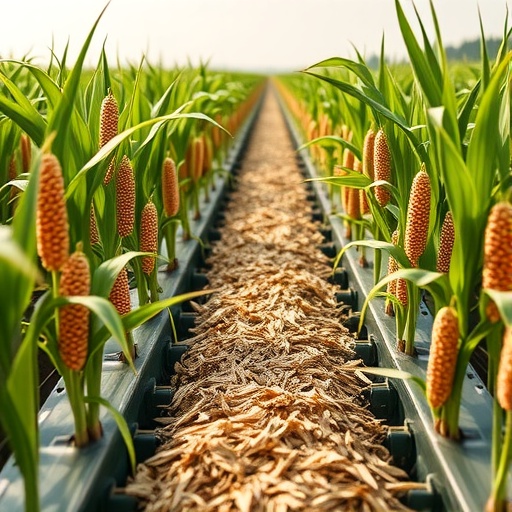
Scientists have demonstrated a new way to overcome one of agriculture’s most stubborn genetic dilemmas: improving crop resilience without sacrificing yield. In a landmark proof-of-concept study published in Cell, an international research team used pangenome-guided breeding to combine high-altitude stress tolerance with larger seeds and improved productivity in Tartary buckwheat. The work, involving researchers from 22 institutions across 10 countries, suggests that valuable genetic traits lost during domestication can be recovered and deliberately reassembled in modern crops.
The study was led by the Chinese Academy of Agricultural Sciences, with major contributions from scientists at Murdoch University’s Centre for Crop and Food Innovation in Australia. Its approach addresses a limitation that has shaped modern plant breeding for decades. Most genomics-assisted breeding programs compare crop varieties against a single reference genome and focus primarily on single-nucleotide polymorphisms, or SNPs. These are individual DNA-letter changes, but they represent only one part of genetic diversity. Large-scale structural variants, including duplicated genes, missing DNA segments and rearranged regions, can have much greater effects on plant traits yet remain invisible in a single-reference system.
To capture this hidden variation, the researchers built a graph-based pangenome for Tartary buckwheat, Fagopyrum tataricum. Rather than representing one “standard” genome, a pangenome combines the genetic information found across many individuals, including cultivated varieties, traditional landraces and wild relatives. The team assembled 16 high-quality genomes and catalogued 123,131 structural variants across the species. They also integrated genomic data from 994 accessions collected in 15 countries, creating an unusually broad map of the crop’s evolutionary and agricultural diversity.
Tartary buckwheat was selected because its wild Himalayan relatives survive environmental conditions that can severely damage most crops. Plants growing at high elevations must tolerate intense ultraviolet-B radiation, cold temperatures and other forms of physiological stress. Yet the same genetic features that help plants survive these conditions can be associated with smaller seeds or lower productivity under cultivation. This makes buckwheat an ideal test case for examining whether modern genomic tools can reunite traits that conventional breeding often treats as an unavoidable trade-off.
The pangenome revealed a gene called FtRNH in high-altitude wild plants but not in the cultivated varieties examined by the researchers. The gene is involved in repairing DNA damage caused by UV-B radiation, providing a plausible molecular explanation for the enhanced stress tolerance of wild high-altitude buckwheat. Because domestication had removed this gene from cultivated populations, breeders working only with modern varieties would have had little opportunity to identify or use it. The pangenome effectively reopened access to a piece of genetic history that had been lost from mainstream breeding material.
The researchers also identified a second genomic region, known as FtPLATZ, associated with seed-size variation. Additional copies of genes in this region, together with a small insertion in a promoter—the regulatory DNA sequence that controls gene activity—were linked to larger seeds. These variants were found among wild buckwheat and landrace accessions. By tracking the relevant DNA markers, the team crossed plants carrying the high-altitude adaptation gene with plants carrying the large-seed variants, then used marker-assisted selection to identify offspring that inherited the desired genetic combination.
The resulting candidate breeding line carried both the wild stress-adaptation allele and the seed-size-associated variants. In high-altitude field trials, the plants showed stronger growth and significantly higher yield than a standard variety while also producing larger seeds. The result is important not because it immediately represents a finished commercial cultivar, but because it demonstrates a practical route for stacking complex traits that are often separated by thousands of years of domestication and breeding history.
“Most modern breeding compares a crop’s genome against a single reference, which is like judging a language by a single dictionary,” said Professor Rajeev Varshney, director of Murdoch University’s Centre for Crop and Food Innovation and a co-corresponding author of the study. “A pangenome captures the whole vocabulary, including the words a crop lost along the way. And that’s where a lot of the useful genetics for resilience is hiding.” He added that pangenomes can help breeders identify the DNA segments underlying both stress tolerance and productivity, allowing them to stack those segments intentionally rather than accepting a simple trade-off.
The authors describe the strategy as broadly transferable. Every major food crop has wild relatives and locally adapted landraces containing genetic diversity that may be absent from elite varieties and single reference genomes. As climate change intensifies heat, drought, ultraviolet exposure, salinity and other pressures on agriculture, these overlooked genetic resources could become increasingly important. Murdoch University Deputy Vice Chancellor Research and Innovation Professor Peter Eastwood called the study a landmark demonstration of how data-led breeding can produce crops tailored to difficult growing environments, while Pro-Vice Chancellor Professor Peter Davies said it showed how genomic resources can be converted into a replicable breeding strategy. The researchers now hope that pangenome-guided methods will accelerate the development of resilient, higher-yielding crops for regions where food security is under the greatest pressure.
Web References: https://doi.org/10.1016/j.cell.2026.07.035
References: Cell, DOI: 10.1016/j.cell.2026.07.035; Article publication date: 11 August 2026
Cite Scienmag News
Alan Morgan. (August 11, 2026). Researchers show pangenome-guided breeding could boost crop yields and adaptability. Scienmag. https://scienmag.com/researchers-show-pangenome-guided-breeding-could-boost-crop-yields-and-adaptability/
Alan Morgan. "Researchers show pangenome-guided breeding could boost crop yields and adaptability." Scienmag, 11 August 2026, https://scienmag.com/researchers-show-pangenome-guided-breeding-could-boost-crop-yields-and-adaptability/. Accessed 3 September 2026.
Alan Morgan. "Researchers show pangenome-guided breeding could boost crop yields and adaptability." Scienmag. August 11, 2026. https://scienmag.com/researchers-show-pangenome-guided-breeding-could-boost-crop-yields-and-adaptability/


