


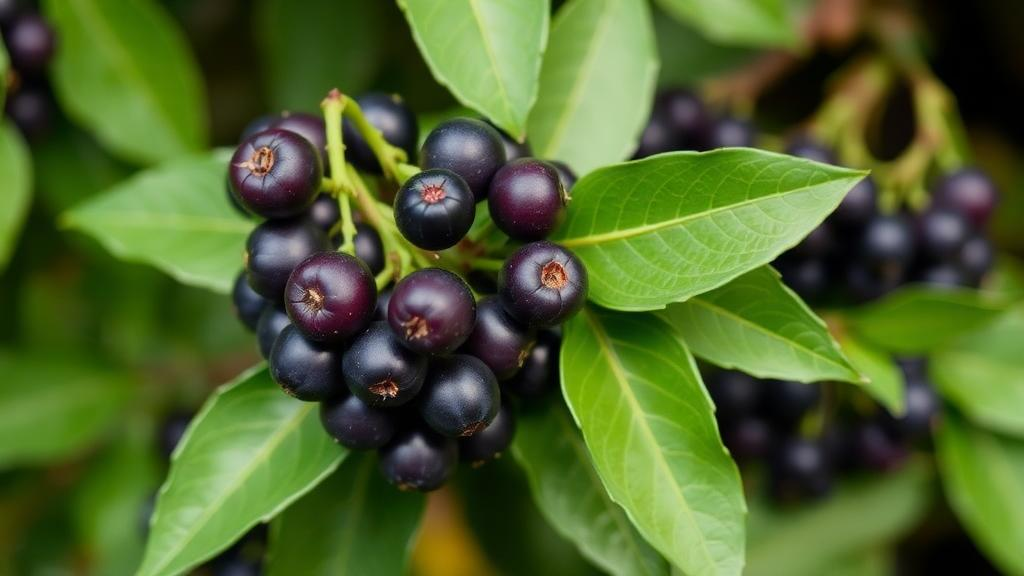
Irrigation level was the dominant influence on the biochemical and hormonal response of aronia, Aronia melanocarpa, in a study that tested the plant across both water deficit and surplus conditions. The strongest analytical signals appeared in redox-related compounds, soluble sugars, selected amino and organic acids, and hormones. Foliar osmoprotectants had selective, treatment-dependent effects: trehalose and glycine betaine were the most effective at alleviating water deficit, while 10 mM proline produced localized phytotoxicity and increased oxidative load under surplus irrigation at 120% field capacity.
The researchers evaluated six irrigation treatments corresponding to 20%, 40%, 60%, 80%, 100%, and 120% of field capacity. Each irrigation regime was tested in conjunction with separate foliar sprays of proline at 10 mM, glycine betaine at 50 mM, or trehalose at 20 mM. The reported scope was the plant’s response to these treatment combinations, with measurements focused on oxidative stress, osmotic adjustment, antioxidant defense, and hormonal balance.
The analysis targeted malondialdehyde and hydrogen peroxide as oxidative-stress markers, together with proline, glucose, fructose, and sucrose as measures associated with osmotic adjustment. It also examined four phytohormones: abscisic acid, indole-3-acetic acid, jasmonic acid, and zeatin. Statistical evaluation included preliminary variable screening, two-way analysis of variance, heatmaps, principal component analysis, and Pearson correlation analysis.
These complementary methods identified variables associated with particular treatment combinations and showed that oxidative stress markers, osmolytes, and antioxidant enzymes formed distinct but interconnected response modules. The osmoprotectant results depended strongly on water availability rather than following one uniform pattern. Trehalose and glycine betaine were most effective under water-deficit conditions, where their effects were associated with enhanced sugar-based osmotic buffering.
Proline behaved differently under surplus irrigation: the 10 mM treatment triggered localized phytotoxicity and amplified oxidative load at 120% field capacity. This contrast indicates that the same applied compound did not produce a consistent response across the irrigation gradient and that adding proline could intensify rather than reduce the measured stress response under the most excessive water treatment tested. Taken together, the measurements indicate that aronia responds to unfavorable water conditions through coordinated changes rather than a single biochemical switch.
Irrigation remained the principal driver, while osmoprotectants modified selected components of the response. Redox regulation, osmotic adjustment, antioxidant defense, and hormonal signaling were linked in the multivariate results, with changes in one part of the system occurring alongside changes in others. The study therefore provides an integrated experimental framework for understanding how aronia adjusts to contrasting irrigation regimes, while also showing that foliar osmoprotectants are not interchangeable.
Their observed effects depended on the water treatment and the particular compound applied.
Subject of Research: How irrigation level and foliar osmoprotectants affect biochemical and hormonal responses in aronia
Article Title: Integrated biochemical and hormonal reprogramming of Aronia melanocarpa under deficit and surplus irrigation: modulatory roles of osmoprotectants
Article References: Mutluay, M. K., Arıkan, Ş., Turan, M., & İpek, M. (2026). Integrated biochemical and hormonal reprogramming of Aronia melanocarpa under deficit and surplus irrigation: modulatory roles of osmoprotectants. BMC Plant Biology. https://doi.org/10.1186/s12870-026-09958-w
Image Credits: AI Generated
DOI: 10.1186/s12870-026-09958-w
Keywords: Aronia melanocarpa, irrigation stress, water deficit, surplus irrigation, osmoprotectants, trehalose, glycine betaine, proline, oxidative stress, plant hormones, Integrated, biochemical
Cite Scienmag News
Alan Morgan. (October 19, 2026). Research report: Integrated biochemical and hormonal reprogramming of Aronia melanocarpa under deficit and surplus irrigation: modulatory roles of osmoprotectants. Scienmag. https://scienmag.com/research-report-integrated-biochemical-and-hormonal-reprogramming-of-aronia-melanocarpa-under-deficit-and-surplus-irrigation-modulatory-roles-of-osmoprotectants/
Alan Morgan. "Research report: Integrated biochemical and hormonal reprogramming of Aronia melanocarpa under deficit and surplus irrigation: modulatory roles of osmoprotectants." Scienmag, 19 October 2026, https://scienmag.com/research-report-integrated-biochemical-and-hormonal-reprogramming-of-aronia-melanocarpa-under-deficit-and-surplus-irrigation-modulatory-roles-of-osmoprotectants/. Accessed 19 October 2026.
Alan Morgan. "Research report: Integrated biochemical and hormonal reprogramming of Aronia melanocarpa under deficit and surplus irrigation: modulatory roles of osmoprotectants." Scienmag. October 19, 2026. https://scienmag.com/research-report-integrated-biochemical-and-hormonal-reprogramming-of-aronia-melanocarpa-under-deficit-and-surplus-irrigation-modulatory-roles-of-osmoprotectants/


