

Friday, July 17, 2026
Science
No Result
View All Result
  • Login
  • HOME
  • SCIENCE NEWS
  • CONTACT US
  • HOME
  • SCIENCE NEWS
  • CONTACT US
No Result
View All Result
Scienmag
No Result
View All Result
Home Science News Medicine

Renal Resistive Index–Guided Blood Pressure Titration in Sepsis: Randomized Trial

July 17, 2026
in Medicine
Reading Time: 2 mins read
0
Renal Resistive Index–Guided Blood Pressure Titration in Sepsis: Randomized Trial

Renal Resistive Index–Guided Blood Pressure Titration in Sepsis: Randomized Trial

65
SHARES
587
VIEWS
Share on FacebookShare on Twitter
ADVERTISEMENT

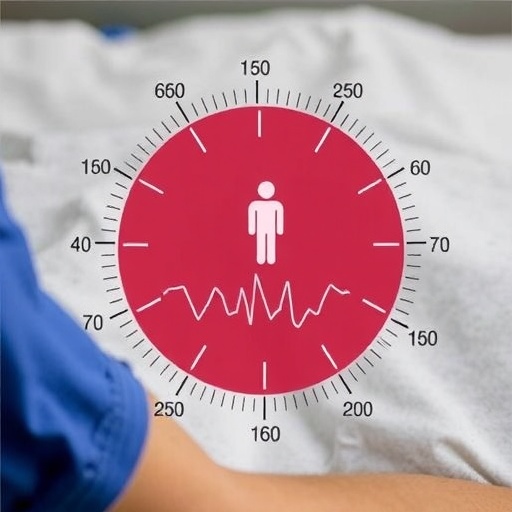
Sepsis care may be entering a more physiologic era, as researchers report results from a randomized controlled trial using renal resistive index (RRI) to guide mean arterial pressure (MAP) targets in critically ill patients. The study, published in Nature Communications, evaluated whether adjusting MAP according to Doppler-derived kidney hemodynamics could improve outcomes compared with standard fixed-pressure protocols.

Investigators enrolled participants in a prospective, single-center, single-blind, parallel-group design. The trial tested a strategy in which clinicians continually reassessed RRI at the bedside and titrated vasopressor therapy to reach an individualized MAP goal intended to optimize renal perfusion while avoiding unnecessary over-pressurization.

RRI, obtained through Doppler ultrasound, reflects downstream vascular resistance within the kidney. In practice, higher RRI values suggest impaired microvascular blood flow, prompting clinicians to consider raising MAP to restore perfusion. Conversely, lower RRI can signal that perfusion may already be adequate, potentially allowing MAP to be lowered to reduce risks associated with excessive vasopressor exposure.

The primary findings suggest that RRI-guided titration can meaningfully influence clinical trajectories in sepsis. By operationalizing a renal-specific hemodynamic indicator rather than relying solely on systemic blood pressure thresholds, the approach aims to align treatment with organ-level perfusion dynamics during a phase when sepsis pathophysiology fluctuates rapidly.

Mechanistically, the trial’s logic is straightforward: sepsis frequently disrupts the microcirculation, and kidneys are particularly vulnerable. Systemic MAP, while essential, does not always translate to consistent renal perfusion at the microvascular level. RRI offers a noninvasive window into that mismatch, enabling iterative bedside decision-making.

The team also emphasized feasibility. Doppler ultrasound assessments can be repeated serially, allowing titration protocols to adapt to changes in vascular tone, fluid status, and evolving organ dysfunction. In this trial setting, clinicians could integrate RRI readings into routine hemodynamic management without requiring invasive monitoring beyond standard critical care.

Beyond renal outcomes, the study reports broader clinical effects consistent with better-organ perfusion and potentially reduced progression to severe shock-related complications. These results support the concept that sepsis management should incorporate organ-targeted hemodynamic biomarkers alongside conventional vital sign targets.

If validated in larger multicenter studies, renal RRI guidance could refine international sepsis guidelines by introducing a measurable, kidney-focused endpoint for vasopressor titration. Such personalization may improve the balance between restoring perfusion and avoiding harm from overtreatment.

Overall, the work positions RRI as a practical biomarker candidate for precision hemodynamics in sepsis, turning an established Doppler parameter into a decision tool for MAP targets. The trial provides a compelling blueprint for future organ-directed monitoring strategies in critical care.

Subject of Research: Sepsis hemodynamic management using renal resistive index (RRI) to guide mean arterial pressure (MAP) titration.

Article Title: Renal resistive index-guided mean arterial pressure titration in sepsis: a prospective single-center, single-blind, parallel-group randomized controlled trial.

Article References: Wang, C., Li, R., Li, Q. et al. Renal resistive index-guided mean arterial pressure titration in sepsis: a prospective single-center, single-blind, parallel-group randomized controlled trial. Nat Commun (2026). https://doi.org/10.1038/s41467-026-75398-7

DOI: 10.1038/s41467-026-75398-7

Keywords: Renal resistive index; sepsis; mean arterial pressure; vasopressor titration; Doppler ultrasound; randomized controlled trial.

Tags: Doppler ultrasound in sepsisindividualized blood pressure controlkidney hemodynamics in critical illnessmean arterial pressure targetsmicrovascular renal perfusionorgan-specific hemodynamic monitoringpersonalized vasopressor therapyrenal perfusion in sepsisrenal resistive indexRRI-guided blood pressure titrationsepsis managementsepsis outcome optimization
Share26Tweet16
Previous Post

Machine Learning Predicts Bronchopulmonary Dysplasia Seven Days After Birth Using Respiratory Data

Next Post

All-optical computing advances toward 100-GHz clock speeds

Related Posts

USF Study Finds Promising Strategy to Protect Hearts in Duchenne Muscular Dystrophy
Medicine

USF Study Finds Promising Strategy to Protect Hearts in Duchenne Muscular Dystrophy

July 17, 2026
Study Finds No Link Between Acetaminophen Use in Pregnancy and Birth Outcomes
Medicine

Study Finds No Link Between Acetaminophen Use in Pregnancy and Birth Outcomes

July 17, 2026
Bootstrapped Multimodal LLM Learns Medical Knowledge for Automatic EGD Diagnosis and Reporting
Medicine

Bootstrapped Multimodal LLM Learns Medical Knowledge for Automatic EGD Diagnosis and Reporting

July 17, 2026
Considerations for Combination Therapies Aiming Disease Modification in Parkinson’s
Medicine

Considerations for Combination Therapies Aiming Disease Modification in Parkinson’s

July 17, 2026
GLP-1 Shortage Deepens in Two States as Demand Remains High
Medicine

GLP-1 Shortage Deepens in Two States as Demand Remains High

July 17, 2026
Purpose in life predicts well-being and capabilities in older Thai adults
Medicine

Purpose in life predicts well-being and capabilities in older Thai adults

July 17, 2026
Next Post
All-optical computing advances toward 100-GHz clock speeds

All-optical computing advances toward 100-GHz clock speeds

  • Mothers who receive childcare support from maternal grandparents show more

    Mothers who receive childcare support from maternal grandparents show more parental warmth, finds NTU Singapore study

    27656 shares
    Share 11059 Tweet 6912
  • University of Seville Breaks 120-Year-Old Mystery, Revises a Key Einstein Concept

    1061 shares
    Share 424 Tweet 265
  • Bee body mass, pathogens and local climate influence heat tolerance

    682 shares
    Share 273 Tweet 171
  • Researchers record first-ever images and data of a shark experiencing a boat strike

    546 shares
    Share 218 Tweet 137
  • Groundbreaking Clinical Trial Reveals Lubiprostone Enhances Kidney Function

    531 shares
    Share 212 Tweet 133
Science

Embark on a thrilling journey of discovery with Scienmag.com—your ultimate source for cutting-edge breakthroughs. Immerse yourself in a world where curiosity knows no limits and tomorrow’s possibilities become today’s reality!

RECENT NEWS

  • Smart Hydrogels and Scaffolds Engineer Microenvironments to Regenerate Tissues
  • Researchers Develop New Approaches to Tackle the PFAS Contamination Crisis
  • USF Study Finds Promising Strategy to Protect Hearts in Duchenne Muscular Dystrophy
  • How Federal Taxes Affect Local Schools and Public Services, Explained in Q&A

Categories

  • Agriculture
  • Anthropology
  • Archaeology
  • Athmospheric
  • Biology
  • Biotechnology
  • Blog
  • Bussines
  • Cancer
  • Chemistry
  • Climate
  • Earth Science
  • Editorial Policy
  • Marine
  • Mathematics
  • Medicine
  • Pediatry
  • Policy
  • Psychology & Psychiatry
  • Science Education
  • Social Science
  • Space
  • Technology and Engineering

Subscribe to Blog via Email

Enter your email address to subscribe to this blog and receive notifications of new posts by email.

Join 5,146 other subscribers

© 2025 Scienmag - Science Magazine

Welcome Back!

Login to your account below

Forgotten Password?

Retrieve your password

Please enter your username or email address to reset your password.

Log In
No Result
View All Result
  • HOME
  • SCIENCE NEWS
  • CONTACT US

© 2025 Scienmag - Science Magazine

Discover more from Science

Subscribe now to keep reading and get access to the full archive.

Continue reading
