

Wednesday, October 21, 2026
Science
No Result
View All Result
  • Login
  • HOME
  • SCIENCE NEWS
  • CONTACT US
  • HOME
  • SCIENCE NEWS
  • CONTACT US
No Result
View All Result
Scienmag
No Result
View All Result
Home Science News Technology and Engineering

Reinforcement learning curbs drag in turbulent bluff-body wakes

October 21, 2026
in Technology and Engineering
Denise Maddox
By Denise Maddox Scienmag Editorial Profile - Mechanical Engineering
Reading Time: 2 mins read
0
Reinforcement learning curbs drag in turbulent bluff-body wakes

Reinforcement learning curbs drag in turbulent bluff-body wakes

65
SHARES
587
VIEWS
Share on FacebookShare on Twitter
ADVERTISEMENT

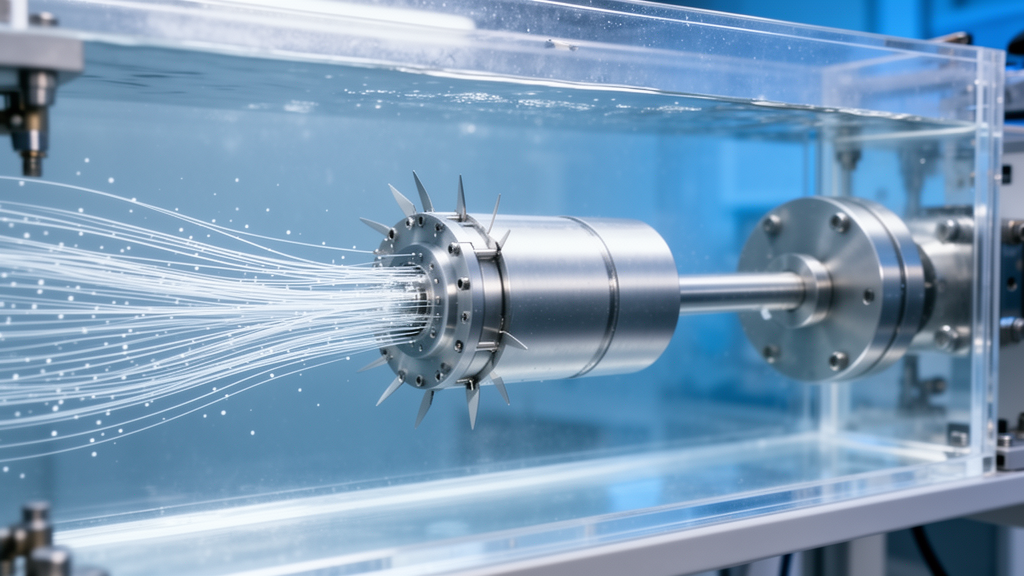
A reinforcement-learning controller developed for a wind-tunnel experiment reduced aerodynamic drag in the turbulent wake of a bluff body while also delivering net energy savings. The autonomous system, named REACT, used onboard sensors and servo-actuated surfaces and learned from sparse wind-tunnel measurements, bypassing empirical turbulence models. In the reported high-Reynolds-number environment, its state-dependent policy achieved two to four times greater performance than model-based baseline controllers.

REACT was deployed on an Ahmed-body model, a bluff body tested in the study’s wind tunnel. The experimental setup was designed to examine real-time control of turbulent wake dynamics rather than a simplified, steady-flow system. Across the reported tests, REACT discovered a policy that reduced drag and maximized energy efficiency by dynamically suppressing spatiotemporally coherent wake structures.

The researchers contrasted this dynamics-aware, state-dependent approach with standard reinforcement-learning policies that learned quasi-steady strategies oriented toward mean flow. Those baseline policies produced lower drag reduction and did not suppress the coherent instabilities identified in the turbulent-wake regime. The comparison therefore shows the measured advantage of REACT’s state-dependent control under the tested conditions, rather than a general guarantee for all turbulent-flow systems.

The controller was trained in a nondimensional state-reward space with amplitudes approximately invariant to Reynolds number, and it was conditioned on Reynolds number to provide temporal adaptation. Using this setup, the researchers report that an offline policy remained effective across Reynolds numbers from 86,400 to 518,400 without retraining. The work is an experimental demonstration in a high-Reynolds-number wind tunnel, using onboard sensing and servo-actuated surfaces to test autonomous reinforcement-learning control of a turbulent bluff-body wake.

Its reported outcomes include drag reduction, net energy savings, suppression of coherent instabilities and two-to-fourfold performance relative to model-based baselines. The authors describe the findings as a possible path toward data-driven, state-dependent control of turbulent flows, but the evidence comes from the wind-tunnel model rather than full-scale vehicles or other practical deployments. The article was shared as peer-reviewed, accepted research in Communications Engineering , with further edits possible before the final version of record.

Subject of Research: Experimental reinforcement learning for state-dependent control of turbulent bluff-body wakes

Article Title: Real-time reinforcement learning for turbulent state-dependent control in a bluff-body wake

Article References: Zhang, J., Xia, C., Jiang, X., Fumarola, I., & Rigas, G. (2026). Real-time reinforcement learning for turbulent state-dependent control in a bluff-body wake. Communications Engineering. https://doi.org/10.1038/s44172-026-00747-9

Image Credits: AI Generated

DOI: 10.1038/s44172-026-00747-9

Keywords: reinforcement learning, turbulent flow, wind tunnel, drag reduction, bluff-body wake, flow control, aerodynamics, Ahmed body, Reynolds number, machine learning, Real-time, reinforcement

Cite Scienmag News

Denise Maddox. (October 21, 2026). Reinforcement learning curbs drag in turbulent bluff-body wakes. Scienmag. https://scienmag.com/reinforcement-learning-curbs-drag-in-turbulent-bluff-body-wakes/

Denise Maddox. "Reinforcement learning curbs drag in turbulent bluff-body wakes." Scienmag, 21 October 2026, https://scienmag.com/reinforcement-learning-curbs-drag-in-turbulent-bluff-body-wakes/. Accessed 21 October 2026.

Denise Maddox. "Reinforcement learning curbs drag in turbulent bluff-body wakes." Scienmag. October 21, 2026. https://scienmag.com/reinforcement-learning-curbs-drag-in-turbulent-bluff-body-wakes/


Tags: adaptive flow control policiesaerodynamicsAhmed bodyautonomous control of turbulent flowsautonomous wind-tunnel experimentsbluff-body wakecoherent wake structure suppressioncomparison of RL-based and model-based flow controllersdrag reductionenergy-efficient flow control systemsflow controlhigh-Reynolds-number wake dynamicsMachine learningmodel-free turbulence suppressionreal-timereal-time aerodynamic optimizationreinforcementreinforcement learningReinforcement learning for aerodynamic drag reductionReynolds numbersensor-driven flow manipulationturbulence control in bluff-body wakesturbulent flowwind tunnel
Share26Tweet16
Previous Post

Confidence-aware system combines Arabic text and images to flag hateful memes

Next Post

AI analysis identifies five spatial traditions in 371,918 classical Chinese poems

Related Posts

Confidence-aware system combines Arabic text and images to flag hateful memes
Technology and Engineering

Confidence-aware system combines Arabic text and images to flag hateful memes

October 21, 2026
Copine-derived peptides advance tissue repair through programmable biomaterials
Science News

Copine-derived peptides advance tissue repair through programmable biomaterials

October 21, 2026
Weather-aware edge AI improves extreme-grid load forecasting
Science News

Weather-aware edge AI improves extreme-grid load forecasting

October 21, 2026
Machine learning predicts severe lung disease risk in extremely preterm infants
Technology and Engineering

Machine learning predicts severe lung disease risk in extremely preterm infants

October 21, 2026
Smart Glasses Could Trigger a War on Human Expression
Technology and Engineering

Smart Glasses Could Trigger a War on Human Expression

October 21, 2026
MetaGCN-CD improves community detection in heterogeneous academic networks
Technology and Engineering

MetaGCN-CD improves community detection in heterogeneous academic networks

October 21, 2026
Next Post
AI analysis identifies five spatial traditions in 371,918 classical Chinese poems

AI analysis identifies five spatial traditions in 371,918 classical Chinese poems

  • Mothers who receive childcare support from maternal grandparents show more optimized

    Mothers who receive childcare support from maternal grandparents show more parental warmth, finds NTU Singapore study

    27656 shares
    Share 11059 Tweet 6912
  • University of Seville Breaks 120-Year-Old Mystery, Revises a Key Einstein Concept

    1061 shares
    Share 424 Tweet 265
  • Bee body mass, pathogens and local climate influence heat tolerance

    682 shares
    Share 273 Tweet 171
  • Researchers record first-ever images and data of a shark experiencing a boat strike

    546 shares
    Share 218 Tweet 137
  • Groundbreaking Clinical Trial Reveals Lubiprostone Enhances Kidney Function

    531 shares
    Share 212 Tweet 133
Science

Embark on a thrilling journey of discovery with Scienmag.com—your ultimate source for cutting-edge breakthroughs. Immerse yourself in a world where curiosity knows no limits and tomorrow’s possibilities become today’s reality!

RECENT NEWS

  • Research report: Adjuvant EGFR-TKI therapy in completely resected non–small cell lung cancer with major uncommon EGFR mutations: a real-world study
  • Soybean drought resilience requires field validation across African environments
  • AI analysis identifies five spatial traditions in 371,918 classical Chinese poems
  • Reinforcement learning curbs drag in turbulent bluff-body wakes

Categories

  • Agriculture
  • Anthropology
  • Archaeology
  • Athmospheric
  • Biology
  • Biotechnology
  • Blog
  • Bussines
  • Cancer
  • Chemistry
  • Climate
  • Earth Science
  • Editorial Policy
  • Marine
  • Mathematics
  • Medicine
  • Pediatry
  • Policy
  • Psychology & Psychiatry
  • Science Education
  • Science News
  • Social Science
  • Space
  • Technology and Engineering

Subscribe to Blog via Email

Enter your email address to subscribe to this blog and receive notifications of new posts by email.

Join 5,150 other subscribers

© 2025 Scienmag - Science Magazine

Welcome Back!

Login to your account below

Forgotten Password?

Retrieve your password

Please enter your username or email address to reset your password.

Log In
No Result
View All Result
  • HOME
  • SCIENCE NEWS
  • CONTACT US

© 2025 Scienmag - Science Magazine

Discover more from Science

Subscribe now to keep reading and get access to the full archive.

Continue reading