

Friday, July 10, 2026
Science
No Result
View All Result
  • Login
  • HOME
  • SCIENCE NEWS
  • CONTACT US
  • HOME
  • SCIENCE NEWS
  • CONTACT US
No Result
View All Result
Scienmag
No Result
View All Result
Home Science News Technology and Engineering

Regolith-Polymer Composites Enable Structural Components for Space Missions

July 10, 2026
in Technology and Engineering
Reading Time: 2 mins read
0
Regolith-Polymer Composites Enable Structural Components for Space Missions

Regolith-Polymer Composites Enable Structural Components for Space Missions

65
SHARES
587
VIEWS
Share on FacebookShare on Twitter
ADVERTISEMENT

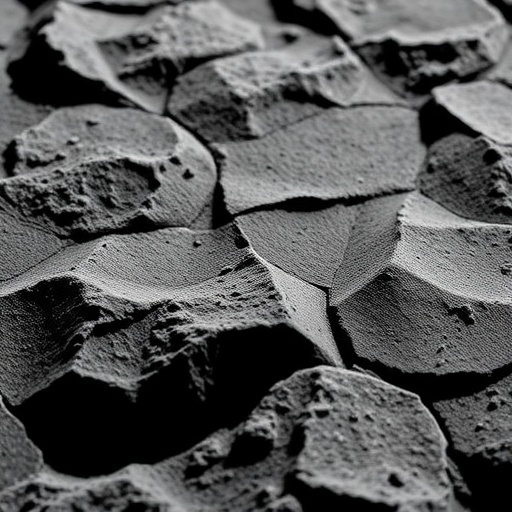
In a groundbreaking advancement poised to revolutionize space exploration, researchers have unveiled a novel composite material crafted from regolith and polymers, designed specifically for use in extraterrestrial settings. This innovative approach addresses one of the principal challenges of off-world construction: sourcing durable, structurally sound materials without relying heavily on Earth-based supply chains.

Regolith, the loose, dusty soil covering celestial bodies like the Moon and Mars, has long been recognized for its abundance and potential as a building resource. However, its direct use is limited by low structural integrity and susceptibility to environmental degradation. By integrating regolith particles with advanced polymer binders, the new composite achieves significantly enhanced mechanical properties, enabling it to function as a robust, load-bearing material capable of withstanding harsh extraterrestrial conditions.

Key to this development is the polymer matrix, which acts as a durable adhesive and protective medium. The polymers chosen exhibit remarkable resistance to extreme temperature fluctuations, ultraviolet radiation, and abrasive particles common in space environments. This synergy between regolith and polymer results not only in improved strength and durability but also in a material that can be fabricated in situ, utilizing local resources and reducing mission payloads.

The researchers demonstrated the composite’s efficacy through a series of rigorous mechanical tests, simulating both lunar and Martian gravity and surface conditions. Results showed that the material maintains structural integrity under mechanical stresses typically encountered in habitat construction and equipment housing. Furthermore, the manufacturing process is compatible with additive manufacturing techniques, such as 3D printing, opening avenues for on-demand production of complex components with minimal human intervention.

Beyond mechanical performance, the composite exhibits promising thermal insulation characteristics, critical for maintaining stable interior environments within extraterrestrial habitats. Its low thermal conductivity helps buffer against the extreme temperature swings on bodies like the Moon, where surface temperatures can vary hundreds of degrees between day and night cycles.

This advancement holds substantial promise for future human missions, where constructing infrastructure on-site is essential for sustainable exploration and colonization. By leveraging in situ resources with polymer hybridization, the cost and logistical burdens associated with transporting building materials from Earth could be drastically reduced.

Moreover, the adaptability of the regolith-polymer composite extends beyond structural components. Potential applications include radiation shielding, dust mitigation coatings, and protective casings for sensitive instruments, highlighting its multifunctional value in extraterrestrial environments.

As space agencies and private entities gear up for extended presence on the Moon, Mars, and beyond, materials technology such as this stands at the forefront of enabling humanity’s leap into deeper space. The fusion of terrestrial polymer science with planetary geology encapsulates a vision where ingenuity and resourcefulness converge to overcome the formidable challenges of building off-world.


Subject of Research: Development of regolith–polymer composite materials for structural applications in space environments.

Article Title: Regolith–polymer composites for structurally functional components in extraterrestrial environments.

Article References:

Wang, X., Alanis, J., Chen, Y. et al. Regolith–polymer composites for structurally functional components in extraterrestrial environments.
npj Adv. Manuf. (2026). https://doi.org/10.1038/s44334-026-00103-x

Image Credits: AI Generated

Tags: durable space environment compositesenvironmental resistance of space compositesextraterrestrial construction materialsin-situ resource utilization for spaceinnovative space habitat materialslow-payload space manufacturingMoon and Mars building materialsoff-world structural componentspolymer binders for space applicationsregenerative construction materials for space missionsspace regolith-polymer compositessustainable extraterrestrial infrastructure
Share26Tweet16
Previous Post

Innovative Ligand Design Enhances Nanocluster Catalyst Activity

Next Post

Environmental Changes Impact Blood Health in Dewilded Rhesus Macaques

Related Posts

AI Enhanced with Cerebellum-Like Function for Improved Learning
Technology and Engineering

AI Enhanced with Cerebellum-Like Function for Improved Learning

July 10, 2026
First Human Trial Explores Immune-Engineered Cell Therapy for Type 1 Diabetes
Technology and Engineering

First Human Trial Explores Immune-Engineered Cell Therapy for Type 1 Diabetes

July 10, 2026
Ultrafast Semiconductor Lasers Generate Self-Starting Harmonic Frequency Combs
Technology and Engineering

Ultrafast Semiconductor Lasers Generate Self-Starting Harmonic Frequency Combs

July 10, 2026
Durable CNT@Ag-MXene Sensor Resists Corrosion Under High Strain
Technology and Engineering

Durable CNT@Ag-MXene Sensor Resists Corrosion Under High Strain

July 10, 2026
Meet Professor Zhanshan Wang: A Pioneer in Light Studies
Technology and Engineering

Meet Professor Zhanshan Wang: A Pioneer in Light Studies

July 10, 2026
PolyU creates smart traffic signal system funded by Smart Traffic Fund
Technology and Engineering

PolyU creates smart traffic signal system funded by Smart Traffic Fund

July 10, 2026
Next Post
Environmental Changes Impact Blood Health in Dewilded Rhesus Macaques

Environmental Changes Impact Blood Health in Dewilded Rhesus Macaques

  • Mothers who receive childcare support from maternal grandparents show more

    Mothers who receive childcare support from maternal grandparents show more parental warmth, finds NTU Singapore study

    27656 shares
    Share 11059 Tweet 6912
  • University of Seville Breaks 120-Year-Old Mystery, Revises a Key Einstein Concept

    1061 shares
    Share 424 Tweet 265
  • Bee body mass, pathogens and local climate influence heat tolerance

    682 shares
    Share 273 Tweet 171
  • Researchers record first-ever images and data of a shark experiencing a boat strike

    546 shares
    Share 218 Tweet 137
  • Groundbreaking Clinical Trial Reveals Lubiprostone Enhances Kidney Function

    531 shares
    Share 212 Tweet 133
Science

Embark on a thrilling journey of discovery with Scienmag.com—your ultimate source for cutting-edge breakthroughs. Immerse yourself in a world where curiosity knows no limits and tomorrow’s possibilities become today’s reality!

RECENT NEWS

  • AI Enhanced with Cerebellum-Like Function for Improved Learning
  • New Discovery Promises Brighter, More Energy-Efficient Digital Displays
  • Insilico Medicine and Eli Lilly Lead 13th ARDD Meeting at Harvard
  • Study Examines If Women Truly Excel at Multitasking Compared to Men

Categories

  • Agriculture
  • Anthropology
  • Archaeology
  • Athmospheric
  • Biology
  • Biotechnology
  • Blog
  • Bussines
  • Cancer
  • Chemistry
  • Climate
  • Earth Science
  • Editorial Policy
  • Marine
  • Mathematics
  • Medicine
  • Pediatry
  • Policy
  • Psychology & Psychiatry
  • Science Education
  • Social Science
  • Space
  • Technology and Engineering

Subscribe to Blog via Email

Enter your email address to subscribe to this blog and receive notifications of new posts by email.

Join 5,146 other subscribers

© 2025 Scienmag - Science Magazine

Welcome Back!

Login to your account below

Forgotten Password?

Retrieve your password

Please enter your username or email address to reset your password.

Log In
No Result
View All Result
  • HOME
  • SCIENCE NEWS
  • CONTACT US

© 2025 Scienmag - Science Magazine

Discover more from Science

Subscribe now to keep reading and get access to the full archive.

Continue reading
