


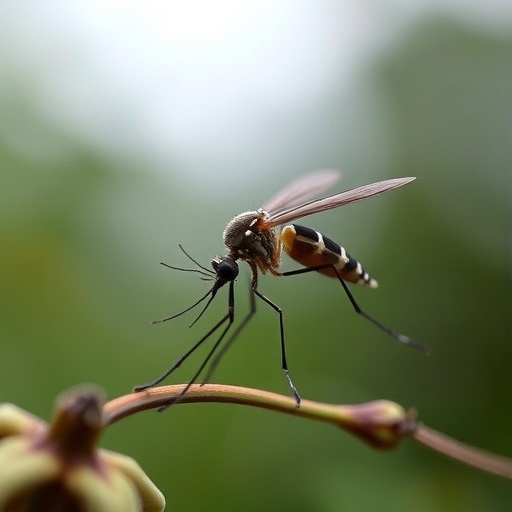
Mosquito control must become a stronger and more coordinated public-health priority as dengue, chikungunya and West Nile virus infection become increasingly established risks in Europe, according to scientists from the European Centre for Disease Prevention and Control (ECDC), the European Chemicals Agency (ECHA), the European Environment Agency (EEA) and the European Commission. In a commentary published in Eurosurveillance on 20 August 2026, the authors argue that Europe needs sustainable, evidence-based and integrated strategies to manage mosquito populations and reduce the probability that infectious diseases will spread. Their assessment, published on World Mosquito Day, links the changing epidemiology of mosquito-borne disease to a combination of environmental transformation, climate change and increased international movement of people.
Mosquitoes are biological vectors: they acquire viruses when feeding on an infected host and can later transmit those viruses through subsequent bites. The capacity of a mosquito population to sustain transmission depends on several interacting factors, including the presence of competent mosquito species, temperature, rainfall, breeding habitats, virus introduction and the availability of humans or animals that can serve as hosts. Warmer conditions can accelerate viral replication inside mosquitoes and shorten the time required for them to become infectious, while changes in rainfall and water management can create new larval habitats. More frequent international travel can also introduce viruses into areas where mosquito populations are present but local transmission has previously been limited or absent.
The European disease landscape has already demonstrated why this issue requires sustained attention. Aedes mosquitoes, which can transmit dengue and chikungunya viruses, have expanded their presence in parts of Europe, while Culex mosquitoes are important vectors of West Nile virus. The establishment of a vector does not automatically lead to an outbreak, because transmission also depends on virus circulation, weather, human behaviour and public-health preparedness. Nevertheless, when suitable mosquitoes and favourable environmental conditions coincide, imported infections can lead to local transmission. The authors therefore describe mosquito control as an essential component of outbreak prevention rather than merely a response used after disease transmission has begun.
The most direct way to reduce mosquito abundance is to eliminate or manage the stagnant water in which larvae develop. Containers, rainwater collection points, blocked drainage systems and other small pools can provide breeding sites for Aedes mosquitoes, while larger wetlands, irrigation structures and urban water systems may support other species. Where water cannot be removed, larvicides can be used to target immature mosquitoes before they emerge as adults capable of biting and transmitting pathogens. During outbreaks, adult mosquitoes may also be targeted with biocidal products. These interventions can reduce vector density rapidly, but their performance depends on local ecology, timing, coverage, application methods and repeated monitoring.
Another approach now being piloted in Europe is the sterile insect technique, or SIT. This method involves mass-rearing male mosquitoes, sterilising them and releasing them into areas where they can mate with wild females. Because the resulting eggs are infertile, repeated releases can reduce the reproductive capacity of the target population. Male mosquitoes do not bite, so the technique is designed to suppress populations without increasing the number of biting insects. SIT may offer a valuable alternative or complement to chemical control, but its effectiveness depends on accurate releases, adequate population coverage and detailed knowledge of mosquito ecology. It also requires assessment of operational costs, long-term sustainability and effects under different environmental conditions.
Chemical control remains important, yet it presents a growing scientific and regulatory challenge. Pyrethroids account for most of the substances approved for adult mosquito control and can interfere with the normal function of insect nervous systems, producing rapid knockdown or death. Their extensive use, however, raises concerns about possible effects on human health and non-target organisms, particularly when applications become broader or more frequent. Mosquito resistance is an additional threat. Genetic changes affecting insecticide target sites, increased detoxification of active compounds or behavioural changes can allow mosquitoes to survive exposure. As resistance increases, products may become less effective, forcing programmes to improve surveillance, rotate control methods and avoid unnecessary applications.
The commentary identifies major gaps in the evidence needed to decide which interventions should be used, where and at what scale. Reliable comparisons of cost-effectiveness remain limited, especially for programmes that combine larval control, adult control, environmental management, personal protection and emerging technologies. A measure that works in one setting may perform poorly elsewhere because mosquito species, housing, infrastructure, climate and community behaviour differ. Countries also vary in the biocidal products they approve and in the rules governing their use. These differences can complicate cross-border responses, procurement and the rapid deployment of control measures when vectors or viruses move across national boundaries.
Personal protection remains an important layer of prevention, even when public authorities are operating mosquito-control programmes. Repellents can reduce the likelihood of bites, while long clothing, window and door screens, and mosquito nets can create physical barriers between people and vectors. Such measures are particularly important for individuals infected with a mosquito-borne virus, because preventing additional bites can reduce the opportunity for mosquitoes to acquire the virus and pass it to others. Personal protection cannot replace population-level control, but it can reduce exposure while surveillance teams investigate transmission and authorities apply targeted interventions.
The authors argue that fragmented governance is one of the greatest obstacles to effective mosquito control. Responsibility commonly rests with ministries of health, although municipal authorities may lead local operations, and ministries responsible for agriculture, the environment, transport or urban development may also influence mosquito habitats and disease risk. Control plans are frequently designed below the national level and implemented by private contractors, creating potential differences in capacity and performance. ECDC surveys conducted in 2020 and 2025 found that 20 of 29 countries reported active mosquito-control measures, with most focusing on larvae. However, the absence of a political perception that mosquito-borne diseases represent an immediate priority can limit investment in surveillance, laboratory capacity, trained personnel and long-term prevention.
At the European level, the response involves institutions with different but complementary responsibilities. ECDC and the European Food Safety Authority provide scientific guidance and surveillance expertise for human and animal health, while ECHA evaluates biocidal substances and products used for mosquito control. The EEA contributes environmental and climate information that can help identify changing conditions and assess risk, and the European Commission supports the implementation of health legislation, vector surveillance, public-health measures, coordination and research funding. The scientists call for these activities to be connected through a One Health framework that includes public health, veterinary medicine, environmental protection and urban planning. By combining information on human cases, animal infections, mosquito abundance, insecticide resistance, climate and land use, Europe could detect emerging risks earlier and select interventions that reduce disease transmission while protecting ecosystems and communities.
News Publication Date:
20 August 2026
Web References:
https://doi.org/10.2807/1560-7917.ES.2026.31.33.2600306
References:
Briet et al., “Strengthening mosquito control to manage emerging mosquito-borne diseases,” Eurosurveillance, published 20 August 2026. DOI: 10.2807/1560-7917.ES.2026.31.33.2600306
Cite Scienmag News
Ophelia Keating. (August 21, 2026). World Mosquito Day 2026: EU scientists urge mosquito control as diseases rise. Scienmag. https://scienmag.com/world-mosquito-day-2026-eu-scientists-urge-mosquito-control-as-diseases-rise/
Ophelia Keating. "World Mosquito Day 2026: EU scientists urge mosquito control as diseases rise." Scienmag, 21 August 2026, https://scienmag.com/world-mosquito-day-2026-eu-scientists-urge-mosquito-control-as-diseases-rise/. Accessed 3 September 2026.
Ophelia Keating. "World Mosquito Day 2026: EU scientists urge mosquito control as diseases rise." Scienmag. August 21, 2026. https://scienmag.com/world-mosquito-day-2026-eu-scientists-urge-mosquito-control-as-diseases-rise/


