

Friday, July 31, 2026
Science
No Result
View All Result
  • Login
  • HOME
  • SCIENCE NEWS
  • CONTACT US
  • HOME
  • SCIENCE NEWS
  • CONTACT US
No Result
View All Result
Scienmag
No Result
View All Result
Home Science News Medicine

Environmental Changes Impact Blood Health in Dewilded Rhesus Macaques

July 10, 2026
in Medicine
Reading Time: 2 mins read
0
Environmental Changes Impact Blood Health in Dewilded Rhesus Macaques

Environmental Changes Impact Blood Health in Dewilded Rhesus Macaques

65
SHARES
587
VIEWS
Share on FacebookShare on Twitter
ADVERTISEMENT

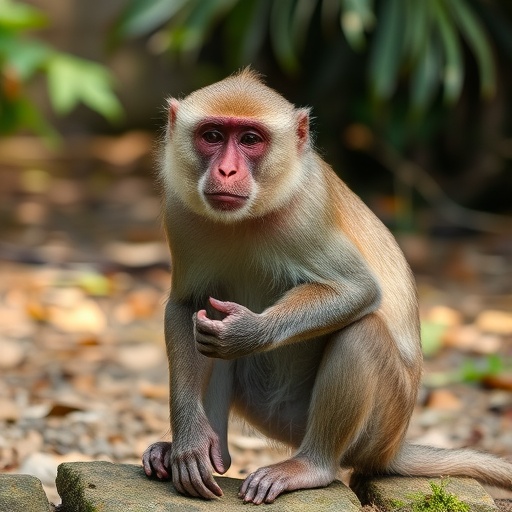
In a groundbreaking study set to reshape our understanding of primate biology and conservation, researchers have unveiled the profound hematological changes that occur when rhesus macaques are transitioned from wild to captive environments. This process, commonly referred to as “dewilding,” involves the gradual removal of animals from their natural habitats, often for rehabilitation, research, or conservation purposes. The research, published in Nature Communications, provides an unprecedented look at how environmental shifts during dewilding affect the blood chemistry and immune function of these primates.

Rhesus macaques, widely studied for their physiological and behavioral parallels to humans, serve as a crucial model for understanding the impact of environmental stressors on health. The team, led by Smith, Kiwanuka, and Pessenda, focused on tracking hematological parameters as macaques transitioned from wild living conditions to controlled environments. Their findings are compelling: alterations in white blood cell counts, red blood cell morphology, and key biochemical markers indicate systemic physiological stress.

One of the most striking observations was the significant reduction in lymphocyte concentrations, a critical component of the adaptive immune response. This suggests that the removal from a natural ecosystem and subsequent exposure to novel captive conditions can compromise immune defenses. Additionally, changes in red blood cell indices hinted at the onset of microcytic anemia in some individuals, potentially linked to altered nutrition and reduced physical activity typically associated with enclosure living.

The study also delved into the mechanistic underpinnings of these changes. Environmental factors such as altered pathogen exposure, dietary shifts, and reduced social interactions were considered primary drivers. Particularly noteworthy was the correlation between reduced ultraviolet (UV) light exposure in captivity and vitamin D metabolism, influencing hematopoiesis and immune cell function. This nuanced approach allowed the researchers to piece together a complex web of environmental impacts on blood physiology.

Technically, the team utilized flow cytometry and high-throughput hematology analyzers to provide a detailed cellular profile. Coupled with biochemical assays, this multifaceted methodology ensured both quantitative and qualitative data integrity. The longitudinal design of the study, spanning several months of dewilding, enabled the capture of dynamic hematological trajectories rather than static snapshots.

These findings have broad implications, not only for primate conservation strategies but also for biomedical research reliant on primate models. Understanding how captivity-induced hematological shifts can confound experimental outcomes urges a reevaluation of animal welfare and experimental design protocols. Moreover, this research highlights the need for adaptive management strategies in sanctuaries and zoos to mitigate health risks associated with dewilding.

As conservation efforts increasingly focus on rehabilitating and relocating wildlife, insights gained from this study underscore the importance of monitoring physiological health beyond behavioral assessments. The hematological markers identified could serve as valuable biomarkers for assessing the well-being and resilience of animals undergoing environmental transitions.

Ultimately, the work by Smith and colleagues opens new avenues for interdisciplinary research, blending ecology, immunology, and veterinary medicine. It is a stark reminder of the intricate connections between environment and physiology, emphasizing that even subtle habitat changes can ripple through an organism’s biology with profound consequences.


Subject of Research: Hematological effects of environmental change during dewilding in rhesus macaques

Article Title: Hematological consequences of environmental change during dewilding of rhesus macaques

Article References:
Smith, A., Kiwanuka, K., Pessenda, G. et al. Hematological consequences of environmental change during dewilding of rhesus macaques. Nat Commun (2026). https://doi.org/10.1038/s41467-026-75260-w

Image Credits: AI Generated

Tags: Blood chemistry changes in dewilded animalsCaptive vs wild primate physiologyConservation-related stress in rhesus macaquesDewilding effects on blood healthEffects of environmental change on blood cell morphologyEnvironmental stress on primatesHematological markers in primate adaptationImpact of habitat transition on immune functionPrimate conservationPrimate model for environmental health researchRhesus macaque hematologySystemic physiological stress in captive wildlife
Share26Tweet16
Previous Post

Regolith-Polymer Composites Enable Structural Components for Space Missions

Next Post

Temperature Fluctuations Have Greater Impact Than Previously Believed

Related Posts

Representations of the intrinsic value of information in mouse orbitofrontal cortex
Medicine

Representations of the intrinsic value of information in mouse orbitofrontal cortex

July 30, 2026
Ferroptotic propagation: from single-cell execution to tissue-scale death programs
Medicine

Ferroptotic propagation: from single-cell execution to tissue-scale death programs

July 30, 2026
Residential proximity to major roadways and prevalent diabetes in older adults: a cross-sectional study based on CLHLS
Medicine

Residential proximity to major roadways and prevalent diabetes in older adults: a cross-sectional study based on CLHLS

July 30, 2026
Overestimations in the cyclization efficiency of small, restriction enzyme-digested DNA fragments
Medicine

Overestimations in the cyclization efficiency of small, restriction enzyme-digested DNA fragments

July 30, 2026
Sulfated polysaccharides target RANK Lys97 to inhibit osteoclast differentiation and reverse osteoporosis
Medicine

Sulfated polysaccharides target RANK Lys97 to inhibit osteoclast differentiation and reverse osteoporosis

July 30, 2026
Regulation of RNA transcript elongation in metazoans and its relevance to disease
Medicine

Regulation of RNA transcript elongation in metazoans and its relevance to disease

July 30, 2026
Next Post
Temperature Fluctuations Have Greater Impact Than Previously Believed

Temperature Fluctuations Have Greater Impact Than Previously Believed

  • Mothers who receive childcare support from maternal grandparents show more

    Mothers who receive childcare support from maternal grandparents show more parental warmth, finds NTU Singapore study

    27656 shares
    Share 11059 Tweet 6912
  • University of Seville Breaks 120-Year-Old Mystery, Revises a Key Einstein Concept

    1061 shares
    Share 424 Tweet 265
  • Bee body mass, pathogens and local climate influence heat tolerance

    682 shares
    Share 273 Tweet 171
  • Researchers record first-ever images and data of a shark experiencing a boat strike

    546 shares
    Share 218 Tweet 137
  • Groundbreaking Clinical Trial Reveals Lubiprostone Enhances Kidney Function

    531 shares
    Share 212 Tweet 133
Science

Embark on a thrilling journey of discovery with Scienmag.com—your ultimate source for cutting-edge breakthroughs. Immerse yourself in a world where curiosity knows no limits and tomorrow’s possibilities become today’s reality!

RECENT NEWS

  • Ancient DNA reveals Ice Age humans preferred female mammoths
  • Public research and development money unlocks private investment and lasting economic growth
  • Satellite mapping reveals global inequities in lake water quality: over one-third of lakes fail to meet good water quality standards
  • One million euros allocated to six EUniWell study programmes on the way towards the Joint European Degree Label

Categories

  • Agriculture
  • Anthropology
  • Archaeology
  • Athmospheric
  • Biology
  • Biotechnology
  • Blog
  • Bussines
  • Cancer
  • Chemistry
  • Climate
  • Earth Science
  • Editorial Policy
  • Marine
  • Mathematics
  • Medicine
  • Pediatry
  • Policy
  • Psychology & Psychiatry
  • Science Education
  • Social Science
  • Space
  • Technology and Engineering

Subscribe to Blog via Email

Success! An email was just sent to confirm your subscription. Please find the email now and click 'Confirm Follow' to start subscribing.

Join 5,147 other subscribers

© 2025 Scienmag - Science Magazine

Welcome Back!

Login to your account below

Forgotten Password?

Retrieve your password

Please enter your username or email address to reset your password.

Log In
No Result
View All Result
  • HOME
  • SCIENCE NEWS
  • CONTACT US

© 2025 Scienmag - Science Magazine
