


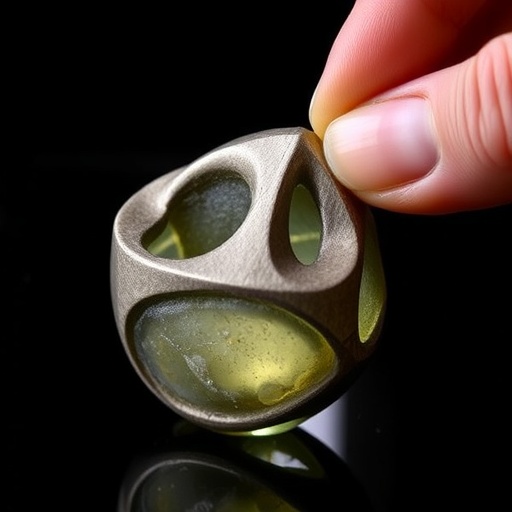
In the realm of archaeological science, obsidian hydration dating has emerged as a crucial technique in determining the chronological context of artifacts. This method relies on the principle that obsidian—a naturally occurring volcanic glass—absorbs water over time at a rate that can be measured. The process involves assessing the hydration layer that forms on the surface of obsidian artifacts following their exposure to the environment. Despite its utility, the calibration procedures and methodologies have been subject to ongoing scrutiny and improvement, which is now further highlighted in a recent correction by Liritzis and Andronache. Their correction sheds new light on the nuanced calibration of obsidian hydration dating using aged high temperature and long-term low temperature hydrated samples.
Understanding obsidian hydration dating requires an appreciation for its foundational principles. The rate of water absorption is influenced by various factors including temperature, humidity, and the specific characteristics of the obsidian itself, like its chemical composition and the environmental conditions it has experienced. This intrinsic variability can complicate the calibration process, as the same piece of obsidian might exhibit different hydration rates depending on these external factors. Hence, researchers must adopt meticulous calibration techniques to ensure accurate dating.
The initial empirical studies established a general rate of hydration, often approximating around 1.0 to 3.0 microns per thousand years, but this simplicity masks a world of complexity. Various factors can skew this data, such as the conditions under which the obsidian was formed and how it has been stored or exposed to the elements over millennia. Discrepancies in hydration rates necessitate a deeper investigation into sample conditions, which is where Liritzis and Andronache’s research comes into play. Their study emphasizes not only the inherent variability of obsidian samples but also the need for tailored calibration protocols that account for these conditions.
Their poignant correction addresses previous assumptions that may have led to simplified models in understanding hydration dating processes. They advocate for a more rigorous and nuanced approach to calibration that reflects the diverse environments in which obsidian artifacts have been situated over time. By incorporating data from both high-temperature and long-term low-temperature hydrated samples, their work seeks to refine existing models of hydration dating.
The authors’ correction is particularly timely, as the revelations indicate a shifting paradigm in the calibration methodologies that researchers have traditionally relied upon. Rather than adopting a one-size-fits-all approach, they argue for methodologies that respect the unique historical and environmental contexts of each sample. Such tailored approaches promise to greatly enhance the accuracy of dating results and, consequently, the interpretations derived from archaeological findings.
In practical terms, this means collectors, archaeologists, and conservationists must remain vigilant and informed about the origins of their obsidian samples and the environments in which those samples have spent their existence. The intricate interplay of temperature, humidity, and time has wrought unique characteristics on each sample that must be meticulously documented for accurate dating. Therefore, the correction by Liritzis and Andronache holds vital implications for the field, prompting a rethink of existing practices and a more attentive approach to sample analysis.
The findings also serve a broader purpose, fostering a dialogue among scholars on the importance of methodological transparency in archaeological research. As the discipline continues to evolve, recognizing the limitations and potential for improvement in established techniques will be essential for advancing our understanding of past human behaviors, migrations, and technological innovations. By refining obsidian hydration dating, researchers can contribute more effectively to the reconstruction of historical timelines and cultural narratives.
Furthermore, the impact of such calibration improvements cannot be understated, as accurate datings directly influence our understanding of the human past. Inaccurate or overly generalized calibrations can lead to significant misinterpretations, skewing our grasp of archaeological timelines and cultural connections. The correction emphasizes that even established scientific methods must be subject to ongoing refinement and critical re-evaluation.
Equally important is the collaborative aspect of archaeological research that Liritzis and Andronache’s study reinforces. Their work exemplifies how interdisciplinary dialogue can yield fruitful results, merging geochemistry, archaeology, and environmental science. This intersectional approach not only enhances methodological rigor but also encourages researchers to share knowledge, foster innovative techniques, and develop best practices for future studies.
Looking forward, the implications of the correction extend beyond just obsidian hydration dating. Establishing rigorous and adaptable methodologies may inspire similar initiatives across other forms of archaeological dating. This ripple effect can lead to a broader reassessment of how archaeologists approach the dating of artifacts, maximizing the accuracy of results and the reliability of archaeological interpretations.
In essence, Liritzis and Andronache’s correction stands as a pivotal contribution to both the scholarly community and the practical field of archaeology. It emphasizes a continual quest for precision within scientific inquiry, offering a path forward for refining techniques that are essential for unraveling the complexities of human history. As the field progresses, it is crucial that researchers remain committed to enhancing methods, ensuring that the narratives we construct from our findings are as close to the realities of the past as possible.
In this era of rapid scientific advancement, the need for innovation and adaptation in archaeological methodologies is more pressing than ever. By building upon the foundations laid by previous research while also embracing new insights, scholars can ensure that archaeological science remains a reliable lens through which we can examine our shared history.
Thus, as we reflect upon the work of Liritzis and Andronache, it becomes clear that each contribution adds a layer of depth to our understanding of past societies and the artifacts they left behind. With ongoing efforts to improve standards and enhance accuracy, the field stands poised to better understand the intricacies of human activity within historical contexts, crafting a brighter, more informed future for archaeological research.
Liritzis, I., Andronache, I. Correction to: Further investigation of calibration for obsidian hydration dating using aged high temperature and long-term low temperature hydrated samples.
Archaeol Anthropol Sci 18, 26 (2026). https://doi.org/10.1007/s12520-025-02387-0
Cite Scienmag News
Courtney Benton. (January 20, 2026). Refining Obsidian Hydration Dating Techniques. Scienmag. https://scienmag.com/refining-obsidian-hydration-dating-techniques/
Courtney Benton. "Refining Obsidian Hydration Dating Techniques." Scienmag, 20 January 2026, https://scienmag.com/refining-obsidian-hydration-dating-techniques/. Accessed 4 September 2026.
Courtney Benton. "Refining Obsidian Hydration Dating Techniques." Scienmag. January 20, 2026. https://scienmag.com/refining-obsidian-hydration-dating-techniques/


