

Wednesday, July 15, 2026
Science
No Result
View All Result
  • Login
  • HOME
  • SCIENCE NEWS
  • CONTACT US
  • HOME
  • SCIENCE NEWS
  • CONTACT US
No Result
View All Result
Scienmag
No Result
View All Result
Home Science News Medicine

Quality Improvement Project Enhances Neonatology Research Experience for Families

July 15, 2026
in Medicine, Pediatry
Reading Time: 2 mins read
0
Quality Improvement Project Enhances Neonatology Research Experience for Families

Quality Improvement Project Enhances Neonatology Research Experience for Families

65
SHARES
587
VIEWS
Share on FacebookShare on Twitter
ADVERTISEMENT

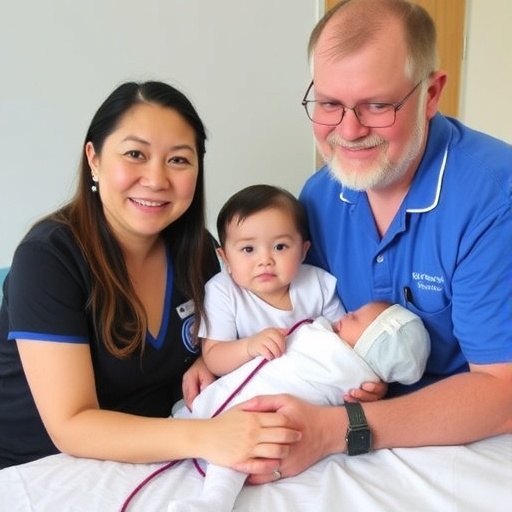
Neonatology studies face a stubborn bottleneck: enrolling families at the exact moment when medical decisions must be made quickly—and when consent is often emotionally complex. In a quality-improvement project described in J Perinatology, a team focused on how the research experience itself can be streamlined, with the goal of reducing participation barriers and limiting bias created by who is able to join.

Time-limited decision-making can funnel families into “either-or” pathways—consent is requested when options feel overwhelming, or it is deferred because the clinical situation is still evolving. That delay can unintentionally exclude eligible parents who may need time to process information, thereby skewing samples toward those with greater bandwidth.

Another challenge is consent complexity. Neonatal research involves high stakes, detailed protocols, and uncertainty that may persist for weeks. When researchers use process-heavy approaches—lengthy discussions, fragmented steps, or unclear timelines—families may interpret participation as a burden rather than an opportunity for contribution.

The quality improvement effort examined the neonatology research workflow from a family-centered perspective. Rather than treating enrollment as a purely administrative task, the team optimized the experience by redesigning how information is delivered and how support is coordinated across the clinical and research teams.

Technically, the project emphasized operational improvements that can be tracked over time—such as standardizing key steps, aligning messaging with family comprehension, and reducing friction between bedside care and research participation. These adjustments aim to make consent feel less like a one-time event and more like a guided process that fits the realities of neonatal care.

Importantly, the researchers argue that these procedural refinements can help counter selection bias. If enrollment barriers decrease, the likelihood increases that families who might otherwise decline—or be missed—are represented in study cohorts.

In viral science news, this shift matters beyond neonatology: it highlights a broader lesson for clinical research. Consent is not only a legal requirement; it is also a moment of communication design, shaped by time pressure, workload, and emotional context.

The work underscores that improving “how research feels” can improve “who research includes.” In neonatal settings, where the clock is unforgiving, careful workflow engineering may be as consequential as the science itself.

Subject of Research: Neonatology research enrollment, consent complexity, and selection bias reduction through quality improvement.

Article Title: A quality improvement project to optimize the neonatology research experience for families.

Article References: Castellanos, M.B., Baca-Arzaga, A., Mourão, M.L. et al. A quality improvement project to optimize the neonatology research experience for families. J Perinatol (2026). https://doi.org/10.1038/s41372-026-02809-4

Image Credits: AI Generated

DOI: https://doi.org/10.1038/s41372-026-02809-4

Keywords:

Tags: clinical and research team coordinationconsent process optimization in neonatal studiesemotional complexity in neonatal consentfamily-centered research workflowimproving family communication in neonatal researchNeonatology research enrollment barriersoperational improvements in neonatal researchpatient experience enhancement in neonatal studiesquality improvement in neonatal researchreducing bias in neonatal research participationstreamlining neonatal research procedurestiming challenges in neonatal clinical trials
Share26Tweet16
Previous Post

SwRI Study Links Asteroid Collision to 800 Million-Year-Old Meteor Showers

Next Post

SIRT5-SUCLG2 Desuccinylation Axis Delays Ovarian Aging Through Mitochondrial-Epigenetic Control

Related Posts

Researchers Improve Allergy Testing to Detect Antibodies Behind Reactions
Medicine

Researchers Improve Allergy Testing to Detect Antibodies Behind Reactions

July 15, 2026
Regulatory Hurdles Undermine Cell Therapy Approvals: Lessons from IND and BLA Failures
Medicine

Regulatory Hurdles Undermine Cell Therapy Approvals: Lessons from IND and BLA Failures

July 15, 2026
Machine Learning Method Widens Accurate Use of Martin-Hopkins LDL Risk Equation
Medicine

Machine Learning Method Widens Accurate Use of Martin-Hopkins LDL Risk Equation

July 15, 2026
SIRT5-SUCLG2 Desuccinylation Axis Delays Ovarian Aging Through Mitochondrial-Epigenetic Control
Medicine

SIRT5-SUCLG2 Desuccinylation Axis Delays Ovarian Aging Through Mitochondrial-Epigenetic Control

July 15, 2026
Day After Mass Shooting Sees Rise in Traffic Accidents
Medicine

Day After Mass Shooting Sees Rise in Traffic Accidents

July 15, 2026
Accelerometer Study Compares 24-H Movement Patterns Across Prediabetes and Diabetes
Medicine

Accelerometer Study Compares 24-H Movement Patterns Across Prediabetes and Diabetes

July 15, 2026
Next Post
SIRT5-SUCLG2 Desuccinylation Axis Delays Ovarian Aging Through Mitochondrial-Epigenetic Control

SIRT5-SUCLG2 Desuccinylation Axis Delays Ovarian Aging Through Mitochondrial-Epigenetic Control

  • Mothers who receive childcare support from maternal grandparents show more

    Mothers who receive childcare support from maternal grandparents show more parental warmth, finds NTU Singapore study

    27656 shares
    Share 11059 Tweet 6912
  • University of Seville Breaks 120-Year-Old Mystery, Revises a Key Einstein Concept

    1061 shares
    Share 424 Tweet 265
  • Bee body mass, pathogens and local climate influence heat tolerance

    682 shares
    Share 273 Tweet 171
  • Researchers record first-ever images and data of a shark experiencing a boat strike

    546 shares
    Share 218 Tweet 137
  • Groundbreaking Clinical Trial Reveals Lubiprostone Enhances Kidney Function

    531 shares
    Share 212 Tweet 133
Science

Embark on a thrilling journey of discovery with Scienmag.com—your ultimate source for cutting-edge breakthroughs. Immerse yourself in a world where curiosity knows no limits and tomorrow’s possibilities become today’s reality!

RECENT NEWS

  • Novel Prognostic Biomarker and Oncogenic Driver Identified in Colorectal Cancer
  • ROS Dynamics Controlled by Polyoxometalate-Functionalized Fe3O4 Nanozyme for Infected Wound Healing
  • Researchers Improve Allergy Testing to Detect Antibodies Behind Reactions
  • Warming Seas Drive Marine Fish to Expand Ranges and Migrate Deeper in Europe

Categories

  • Agriculture
  • Anthropology
  • Archaeology
  • Athmospheric
  • Biology
  • Biotechnology
  • Blog
  • Bussines
  • Cancer
  • Chemistry
  • Climate
  • Earth Science
  • Editorial Policy
  • Marine
  • Mathematics
  • Medicine
  • Pediatry
  • Policy
  • Psychology & Psychiatry
  • Science Education
  • Social Science
  • Space
  • Technology and Engineering

Subscribe to Blog via Email

Enter your email address to subscribe to this blog and receive notifications of new posts by email.

Join 5,146 other subscribers

© 2025 Scienmag - Science Magazine

Welcome Back!

Login to your account below

Forgotten Password?

Retrieve your password

Please enter your username or email address to reset your password.

Log In
No Result
View All Result
  • HOME
  • SCIENCE NEWS
  • CONTACT US

© 2025 Scienmag - Science Magazine

Discover more from Science

Subscribe now to keep reading and get access to the full archive.

Continue reading
