


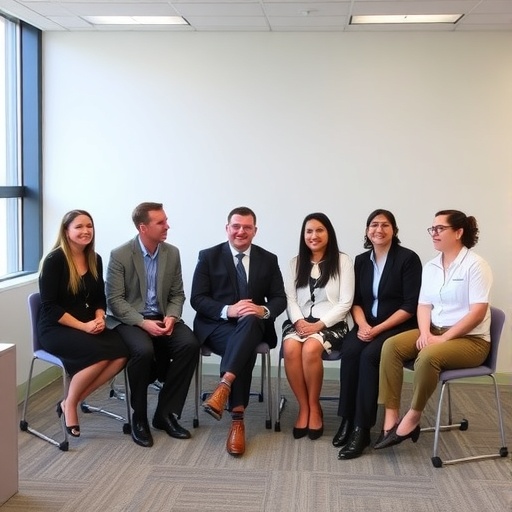
North Carolina is launching a statewide effort to expand suicide prevention and mental health training across its colleges, universities and public workforce. A new contract from the North Carolina Department of Health and Human Services (NCDHHS) will provide $464,290 to the University of North Carolina at Chapel Hill School of Social Work for a project designed to increase access to Mental Health First Aid, an evidence-based program that teaches people how to recognize and respond to mental health and substance use challenges.
The initiative, titled “Building Capacity and Expanding Access to Suicide Prevention Training for NC Colleges and Universities,” will be led by Alicia Freeman, manager of UNC’s campus-based Mental Health First Aid program, and Paul Lanier, the school’s L. Richardson Preyer Distinguished Chair for Strengthening Families. The contract begins in July and runs through June 2027, creating a multi-year platform for training campus communities and NCDHHS employees in early identification, crisis response and connections to professional care.
Mental Health First Aid is designed to function as an immediate, community-level intervention rather than a substitute for clinical treatment. Participants learn to identify behavioral and emotional signals associated with depression, anxiety, psychosis, substance use and suicidal thoughts. They are also taught how to approach someone in distress, assess whether an immediate crisis is present, provide initial support and guide the individual toward emergency or ongoing professional services. The model is intended to extend the reach of formal mental health systems by equipping non-specialists to act during the critical period before clinical help becomes available.
The focus on colleges and universities reflects the distinctive mental health demands of emerging adulthood. Students between 18 and 25 are navigating a period marked by major changes in identity, social relationships, financial circumstances and educational or employment pathways. These transitions can coincide with the onset or intensification of mental health conditions, while students may face barriers including stigma, limited awareness of services and shortages of campus counseling resources. “College is such a pivotal transition and peak time of development for students ages 18–25,” Freeman said, describing mental health literacy as a mechanism for reducing stigma and encouraging help-seeking.
During the first year, the project aims to deliver at least 50 Mental Health First Aid sessions to North Carolina colleges and universities. The program intends to reach at least 15 institutions, train 600 participants and prepare at least 20 new instructors capable of sustaining the work beyond the initial contract period. Five additional training sessions will be offered specifically to NCDHHS employees, with a target of at least 100 participants. Expanding the instructor base is a key technical component of the project because it allows campuses and state agencies to develop local training capacity rather than relying exclusively on a central provider.
The UNC team will collaborate with the National Alliance on Mental Illness to promote the training across the state. NAMI leaders are expected to engage students and campus communities at UNC system institutions and North Carolina community colleges, helping connect educational outreach with local mental health support networks. The project is intended to serve faculty, staff and students, while also contributing to broader prevention efforts involving young people and adults in all 100 North Carolina counties.
UNC’s School of Social Work has partnered with the National Council for Mental Wellbeing as a Mental Health First Aid program site since 2015. Since the summer of 2022, the UNC campus-based program has delivered 223 trainings to more than 3,418 people. A follow-up survey developed by the team last year produced one of the first university-based assessments of how trainees use the program after completing it. According to the National Council for Mental Wellbeing, 98% of respondents said they would recommend the training to others.
The survey findings also suggested that trainees were applying the skills in real campus settings, according to Lanier. This is significant for suicide prevention because crises often become visible first to peers, instructors, residence-life personnel, advisers or other community members rather than to clinicians. Increasing the number of people who can recognize warning signs and initiate a safe, informed conversation may improve the probability that a person in crisis is connected with appropriate care. The training does not replace risk assessment by qualified professionals, but it can help shorten the time between the emergence of warning signs and contact with support services.
NCDHHS officials say the project aligns with the state’s mental health and substance use priorities, including efforts to improve access to care, strengthen crisis response and expand the behavioral health workforce. Kelly Crosbie, assistant secretary of the department’s Division of Mental Health, Developmental Disabilities and Substance Use Services, said the program would bring proven training to people positioned to reach young adults experiencing crisis. The initiative also supports objectives in North Carolina’s 2026–30 Suicide Prevention Action Plan, including community-helper education and mental health training for college-age populations, as well as goals in the state’s Black Youth Suicide Prevention Action Plan for young adults ages 18 to 24. Freeman’s previous recognition as the National Council for Mental Wellbeing’s 2026 Mental Health First Aid Coordinator of the Year further underscores the experience behind the statewide expansion.
Web References: https://www.ncdhhs.gov/; https://ssw.unc.edu/; https://mentalhealthfirstaid.org/; https://www.nami.org/; https://www.thenationalcouncil.org/; https://www.ncdhhs.gov/divisions/mhddsus; https://mentalhealthfirstaid.org/case-study/university-north-carolina-unc/
References: North Carolina Department of Health and Human Services; UNC School of Social Work; National Council for Mental Wellbeing; National Alliance on Mental Illness.
Cite Scienmag News
Glenn Wilkins. (August 4, 2026). State contract expands UNC team’s mental health training efforts. Scienmag. https://scienmag.com/state-contract-expands-unc-teams-mental-health-training-efforts/
Glenn Wilkins. "State contract expands UNC team’s mental health training efforts." Scienmag, 4 August 2026, https://scienmag.com/state-contract-expands-unc-teams-mental-health-training-efforts/. Accessed 3 September 2026.
Glenn Wilkins. "State contract expands UNC team’s mental health training efforts." Scienmag. August 4, 2026. https://scienmag.com/state-contract-expands-unc-teams-mental-health-training-efforts/


