


Cryo-electron microscopy has transformed structural biology by allowing scientists to visualize proteins and other biological machines at near-atomic resolution. Yet the technique has a deceptively fragile point of failure: the brief moment when a sample encounters the air–water interface. A new study introduces a strategy designed to shield proteins from that exposure by enclosing them inside engineered protein shells called “nanocrates.” The approach could help researchers obtain more complete and reliable three-dimensional structures from molecules that are otherwise damaged, unevenly distributed or trapped in unfavorable orientations during sample preparation.
In cryo-electron microscopy, purified molecules are suspended in a thin layer of liquid and rapidly frozen into a glass-like state known as vitreous ice. This preserves the sample without forming the damaging ice crystals produced by conventional freezing. Before vitrification, however, the protein solution must be spread across a very thin film. That process creates extensive contact between the molecules and the air–water interface, the boundary separating the liquid from the surrounding air. For many proteins, this interface is not chemically or physically neutral. Molecules may migrate toward it, partially unfold, become damaged or attach to the surface in ways that restrict their orientation.
The consequences can be severe for image processing. Cryo-electron microscopy reconstructs a three-dimensional structure by combining thousands or millions of two-dimensional particle images captured from different viewing angles. If a protein adopts only a narrow range of orientations, some surfaces may never be observed clearly. This phenomenon, known as preferred orientation, can leave gaps in the reconstruction and limit the final resolution. Uneven sample distribution can also reduce the number of usable particles, while molecular damage may produce a mixture of intact and altered structures that complicates classification. In effect, the air–water interface can introduce artifacts before the electron microscope even begins collecting data.
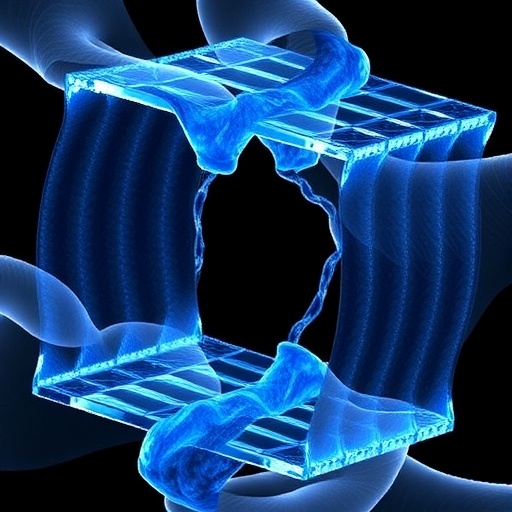
The researchers’ solution is to package target proteins inside highly hydrophilic protein shells. These shells are described as structurally homogeneous and stable, properties that are central to the method’s proposed protection mechanism. Rather than allowing the molecule of interest to interact directly with the air–water boundary, the nanocrate presents a more water-compatible exterior. The shell acts as a physical buffer around its cargo, potentially reducing disruptive interfacial contacts while keeping the target protein enclosed in a defined environment. Because the nanocrate itself is a protein structure, it can also serve as a recognizable component during particle imaging and computational analysis.
The concept is not simply to hide a protein inside a container, but to create a package compatible with the entire cryo-electron microscopy workflow. The researchers describe procedures for loading or “packaging” target proteins, acquiring images of the resulting particles and reconstructing their structures from those images. This integration is important because any protective enclosure must remain stable during sample preparation, withstand rapid freezing and preserve enough structural information about its cargo for reconstruction. The nanocrate must also be sufficiently consistent from particle to particle; otherwise, variations in the shell could make alignment and classification more difficult rather than easier.
To demonstrate the method, the team selected three proof-of-principle targets, each representing a different structural biology challenge. The first was apoferritin, a widely used benchmark for high-resolution cryo-electron microscopy. Its inclusion tests whether enclosing a protein in a nanocrate can still support detailed reconstruction rather than sacrificing resolution for protection. The second target was thyroglobulin, chosen because it has presented a known preferred-orientation problem. If nanocrate packaging changes how the molecule interacts with the air–water interface, it could broaden the distribution of views available for reconstruction. The third was 7,8-dihydroneopterin aldolase, a protein whose structure had not previously been characterized by cryo-electron microscopy, providing a test of whether the approach can open access to new targets.
Apoferritin serves as a particularly revealing experiment because high-resolution cryo-electron microscopy places stringent demands on every stage of the workflow. At that scale, small variations in particle integrity, motion, orientation and image quality can affect the quality of the final map. A successful nanocrate experiment with apoferritin therefore suggests that the shell can protect its cargo without preventing the collection of detailed structural information. The result is significant not because apoferritin itself is an unsolved biological mystery, but because it tests whether encapsulation is compatible with the precision expected from modern cryo-electron microscopy.
Thyroglobulin addresses a different and widespread problem. Large or asymmetric proteins can settle against the air–water interface in a limited set of poses, causing thousands of apparently useful images to contain nearly the same projection. Computational methods can sometimes compensate for this imbalance, but they cannot fully recover views that were never recorded. By surrounding thyroglobulin with a hydrophilic, stable shell, the researchers sought to alter the interfacial behavior of the entire particle. The experiment therefore examines whether a target that naturally tends to lie in preferred orientations can be presented to the microscope in a more diverse set of views, improving the completeness of the reconstruction.
The final demonstration, involving 7,8-dihydroneopterin aldolase, highlights the broader promise of the technology. Many proteins remain difficult to study because they are sensitive to interfaces, too small or unstable under conventional preparation conditions, or resistant to producing the varied particle views needed for a reliable map. Encapsulation could offer a general strategy for reducing one major source of sample-preparation stress. The method will still need to be evaluated across a wider range of proteins and experimental conditions, and the relationship between the nanocrate, its cargo and image-processing performance will be important to establish. Nevertheless, the three examples present a coherent case: by turning vulnerable proteins into protected composite particles, nanocrates may help cryo-electron microscopy move beyond the limitations imposed by the air–water interface.
Cite Scienmag News
Jason Bradley. (August 25, 2026). Protein nanocrates overcome air–water interface artifacts in cryo-EM. Scienmag. https://scienmag.com/protein-nanocrates-overcome-air-water-interface-artifacts-in-cryo-em/
Jason Bradley. "Protein nanocrates overcome air–water interface artifacts in cryo-EM." Scienmag, 25 August 2026, https://scienmag.com/protein-nanocrates-overcome-air-water-interface-artifacts-in-cryo-em/. Accessed 3 September 2026.
Jason Bradley. "Protein nanocrates overcome air–water interface artifacts in cryo-EM." Scienmag. August 25, 2026. https://scienmag.com/protein-nanocrates-overcome-air-water-interface-artifacts-in-cryo-em/


