Monday, November 2, 2026
Science
No Result
View All Result
  • Login
  • HOME
  • SCIENCE NEWS
  • CONTACT US
  • HOME
  • SCIENCE NEWS
  • CONTACT US
No Result
View All Result
Scienmag
No Result
View All Result
Home Science News Biology

Prodigiosin Shields Stem Cells From Hypoxia Damage in Cell Study

October 29, 2026
in Biology
Drew Townsend
By Drew Townsend Scienmag Editorial Profile - Cell Biology
Reading Time: 2 mins read
0
Prodigiosin Shields Stem Cells From Hypoxia Damage in Cell Study

Prodigiosin Shields Stem Cells From Hypoxia Damage in Cell Study

65
SHARES
587
VIEWS
Share on FacebookShare on Twitter
ADVERTISEMENT

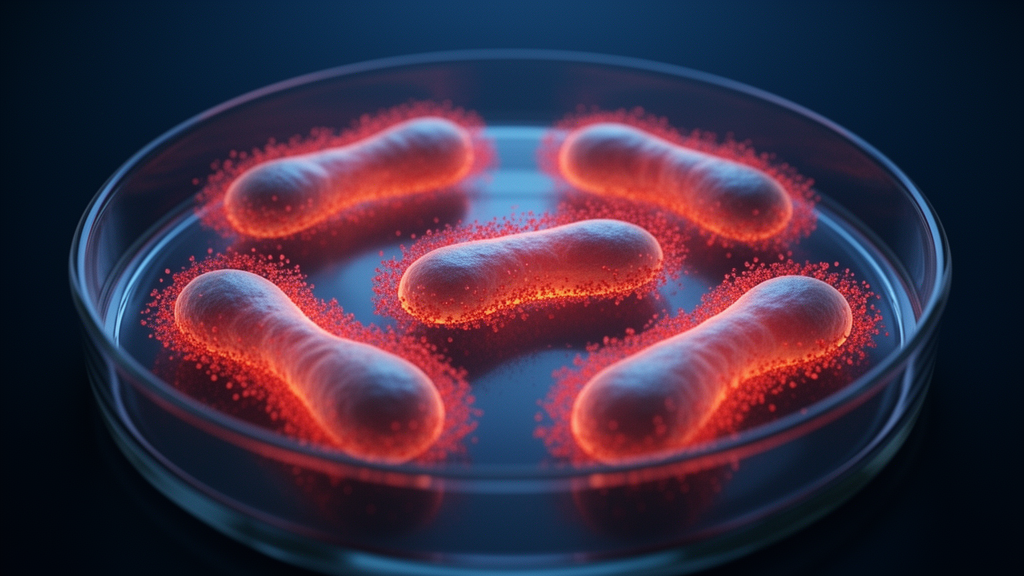
Bone marrow-derived mesenchymal stem cells (BMSCs) are a mainstay of regenerative medicine, but they often die quickly after transplantation because implanted tissue is starved of oxygen. A new cell-culture study reports that prodigiosin protected BMSCs from chemically induced hypoxic injury, apparently by acting on HIF-1α/YAP-associated signaling.

Researchers at Zhujiang Hospital, Southern Medical University, cultured BMSCs and confirmed their identity by flow cytometry. To mimic a hypoxic microenvironment, they exposed the cells to cobalt chloride (CoCl2, 100 micromolar for 24 hours), a standard chemical method for inducing hypoxia-like stress in vitro. This exposure reduced cell viability, increased apoptosis, promoted accumulation of reactive oxygen species (ROS), and raised HIF-1α expression.

The hypoxic stress also shifted the cells toward cell death at the protein level: the ratio of phosphorylated YAP to total YAP (p-YAP/YAP) decreased, while the pro-apoptotic proteins Bax and active caspase-3 increased. These markers were measured by Western blot, with apoptosis assessed by Annexin V/PI staining and DAPI staining, ROS by DHE fluorescence, and viability by CCK-8 assay.

When the cells were treated with prodigiosin at 20 nanomolar, the drug alleviated the CoCl2-induced cytotoxicity. Treated cells showed less ROS accumulation, reduced apoptosis, and a partial restoration of the p-YAP/YAP ratio, suggesting that prodigiosin’s protective effect may involve reactivating YAP signaling under hypoxic stress.

To probe the pathway further, the team used two independent interventions. They treated cells with verteporfin (0.5 micromolar), a YAP inhibitor, and in separate experiments knocked down HIF-1α using siRNA. Both interventions reduced hypoxia-induced apoptosis, which the authors interpret as evidence that HIF-1α/YAP-associated signaling participates in BMSC injury under hypoxic stress.

The findings, published in Frontiers in Systems Biology, are strictly preliminary with respect to therapy. The work was conducted entirely in cultured cells exposed to a chemical hypoxia mimic, not in living tissue or patients, and the abstract does not report tests of prodigiosin in animal models or transplantation settings. Statistical analysis used ANOVA or unpaired t-tests with a significance threshold of P < 0.05.

The authors frame the result as a step toward improving stem cell survival in hypoxic regenerative environments, where poor engraftment limits therapeutic efficacy.

For now, the reported result is a measurable protective effect in a cell model: less oxidative stress, fewer apoptotic cells, and partially restored YAP phosphorylation when prodigiosin was present during chemically induced hypoxia.

Subject of Research: Prodigiosin's protective effect on hypoxia-stressed bone marrow-derived mesenchymal stem cells in cell culture

Article Title: Prodigiosin protects bone marrow-derived mesenchymal stem cells from hypoxia-induced apoptosis by modulating HIF-1α/YAP-associated signaling

Article References: Liu, Y., Xu, H., Li, Z., & Zhu, L. (2026). Prodigiosin protects bone marrow-derived mesenchymal stem cells from hypoxia-induced apoptosis by modulating HIF-1α/YAP-associated signaling. Frontiers in Systems Biology, 6, Article 1947639. https://doi.org/10.3389/fsysb.2026.1947639

Image Credits: AI Generated

DOI: 10.3389/fsysb.2026.1947639

Keywords: prodigiosin, mesenchymal stem cells, hypoxia, apoptosis, HIF-1α, YAP, reactive oxygen species, cobalt chloride, verteporfin, regenerative medicine, cell culture, protects

Cite Scienmag News

Drew Townsend. (October 29, 2026). Prodigiosin Shields Stem Cells From Hypoxia Damage in Cell Study. Scienmag. https://scienmag.com/prodigiosin-shields-stem-cells-from-hypoxia-damage-in-cell-study/

Drew Townsend. "Prodigiosin Shields Stem Cells From Hypoxia Damage in Cell Study." Scienmag, 29 October 2026, https://scienmag.com/prodigiosin-shields-stem-cells-from-hypoxia-damage-in-cell-study/. Accessed 2 November 2026.

Drew Townsend. "Prodigiosin Shields Stem Cells From Hypoxia Damage in Cell Study." Scienmag. October 29, 2026. https://scienmag.com/prodigiosin-shields-stem-cells-from-hypoxia-damage-in-cell-study/


Tags: antioxidative properties of prodigiosinapoptosisapoptosis suppression in hypoxic conditionscellcell culturecellular response to hypoxia in vitrochemical induction of hypoxia in cell studiescobalt chlorideHIF-1αHIF-1α/YAP signaling in stem cell survivalhypoxiahypoxia-induced cell damage preventionmesenchymal stem cellsprodigiosinProdigiosin protective effects on mesenchymal stem cellsprotectsreactive oxygen speciesreactive oxygen species reduction in stem cellsRegenerative Medicineregenerative medicine strategies for oxygen-starved tissuesrole of YAP signaling in cell viabilitystem cell transplantation challenges and solutionsverteporfinYAP
Share26Tweet16
Previous Post

Cerium Oxide and Nitric Oxide Donor Woven into Bacterial Cellulose Nanofibers

Next Post

River Yamuna Bacterium Removes Most Amoxicillin in Lab Test

Related Posts

Microbial Sources and Stress Shape the Hidden Endophytes of an Invasive Plant
Biology

Microbial Sources and Stress Shape the Hidden Endophytes of an Invasive Plant

October 30, 2026
Firebreaks Leave Lasting Scars in Grasslands While Wildfire Heals Fast
Biology

Firebreaks Leave Lasting Scars in Grasslands While Wildfire Heals Fast

October 30, 2026
Hidden Peptides in Non-Coding RNAs Reshape Cardiovascular Biology
Biology

Hidden Peptides in Non-Coding RNAs Reshape Cardiovascular Biology

October 30, 2026
Phage K Holin’s C-Terminal Region Shapes Antibacterial Activity, Study Finds
Biotechnology

Phage K Holin’s C-Terminal Region Shapes Antibacterial Activity, Study Finds

October 30, 2026
Computational screen flags five natural compounds that bind a tuberculosis virulence enzyme
Chemistry

Computational screen flags five natural compounds that bind a tuberculosis virulence enzyme

October 30, 2026
Antifungal liver injury study pinpoints KDR as shared hepatotoxicity target
Biology

Antifungal liver injury study pinpoints KDR as shared hepatotoxicity target

October 30, 2026
Next Post
River Yamuna Bacterium Removes Most Amoxicillin in Lab Test

River Yamuna Bacterium Removes Most Amoxicillin in Lab Test

  • Mothers who receive childcare support from maternal grandparents show more optimized

    Mothers who receive childcare support from maternal grandparents show more parental warmth, finds NTU Singapore study

    27656 shares
    Share 11059 Tweet 6912
  • University of Seville Breaks 120-Year-Old Mystery, Revises a Key Einstein Concept

    1061 shares
    Share 424 Tweet 265
  • Bee body mass, pathogens and local climate influence heat tolerance

    682 shares
    Share 273 Tweet 171
  • Researchers record first-ever images and data of a shark experiencing a boat strike

    546 shares
    Share 218 Tweet 137
  • Groundbreaking Clinical Trial Reveals Lubiprostone Enhances Kidney Function

    531 shares
    Share 212 Tweet 133
Science

Embark on a thrilling journey of discovery with Scienmag.com—your ultimate source for cutting-edge breakthroughs. Immerse yourself in a world where curiosity knows no limits and tomorrow’s possibilities become today’s reality!

RECENT NEWS

  • Trademarks Meet Patents in New Method to Spot Technology Opportunities
  • Reddit self-declarations offer auditable labels for demographic inference
  • Scots pine needles map trace element pollution in Polish industrial town
  • Dual-blockchain scheme secures vehicle handovers without pre-shared keys

Categories

  • Agriculture
  • Anthropology
  • Archaeology
  • Athmospheric
  • Biology
  • Biotechnology
  • Blog
  • Bussines
  • Cancer
  • Chemistry
  • Climate
  • Earth Science
  • Editorial Policy
  • Marine
  • Mathematics
  • Medicine
  • Pediatry
  • Policy
  • Psychology & Psychiatry
  • Science Education
  • Science News
  • Social Science
  • Space
  • Technology and Engineering

Subscribe to Blog via Email

Enter your email address to subscribe to this blog and receive notifications of new posts by email.

Join 5,150 other subscribers

© 2025 Scienmag - Science Magazine

Welcome Back!

Login to your account below

Forgotten Password?

Retrieve your password

Please enter your username or email address to reset your password.

Log In
No Result
View All Result
  • HOME
  • SCIENCE NEWS
  • CONTACT US

© 2025 Scienmag - Science Magazine

Discover more from Science

Subscribe now to keep reading and get access to the full archive.

Continue reading