


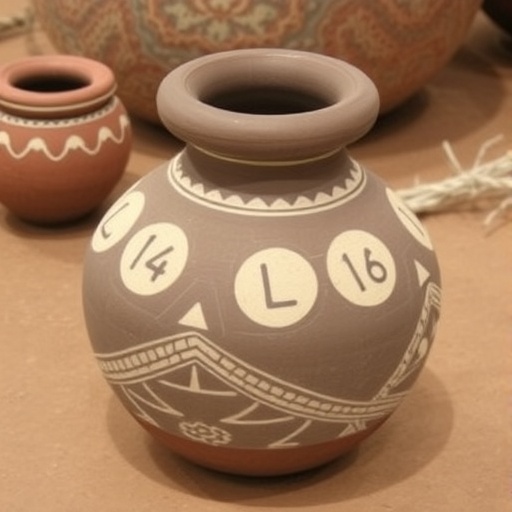
In a thought-provoking exploration of the evolving landscape of everyday materials, a recent study from Lower Casamance, Senegal, highlights a significant shift from traditional pottery to contemporary alternatives such as metal, glass, and plastic containers. This transformation is the focus of the research led by Debels et al., encapsulated in their work titled “Replacement in Progress: Ethnoarchaeological Insights on Disappearing Pottery in Favour of Metal, Glass, and Plastic Containers in Lower Casamance, Senegal (Twentieth–Twenty-first Century AD).” The study sheds light on how these changes impact cultural identity, historical continuity, and the ecological environment in this region.
The researchers undertook an ethnoarchaeological approach, blending anthropology and archaeology to investigate how modern practices intersect with historical traditions. Ethnoarchaeology enables researchers to understand how the material culture of societies evolves while retaining connections to the past. In this context, the disappearing use of pottery opens a dialogue about what it means for local communities in terms of heritage and identity.
Pottery has long served as a fundamental component of daily life in many cultures, providing vessels for cooking, storage, and ceremonial purposes. Within the sociocultural framework of Lower Casamance, these handmade items are steeped in tradition, often produced using local clay and crafted through generational techniques. However, as the study suggests, the advent of metal, glass, and plastic containers is diminishing the demand for pottery, leading to a generational disconnect from these artisanal practices.
The research team’s findings indicate that the shift towards more modern materials is not merely a matter of convenience but is also influenced by economic factors, globalization, and the change in lifestyles among local populations. As communities engage more with the global economy, they are increasingly adopting materials that are perceived as modern or efficient. This change fosters a new cultural narrative in which traditional pottery is sidelined.
Interestingly, this transition raises questions about sustainability and ecological impact. While metal, glass, and plastic are often seen as more durable than clay, the environmental footprint of their production and disposal cannot be overlooked. The researchers note an urgent need for dialogues surrounding sustainable practices that honor cultural traditions while addressing contemporary environmental concerns.
Additionally, the study delves into the socio-political landscape of Lower Casamance, where varying degrees of access to materials and resources can dictate which forms of containers become prevalent in households. The advent of inexpensive plastic containers, for instance, coincides with issues of poverty and globalization, which influence consumers’ choices in this region. Consequently, the social fabric of the community is changing, with implications for craftsmanship, workmanship, and community cohesion.
As the researchers compile their data, they underscore the importance of documenting these shifts; such records may serve as critical historical benchmarks that define cultural transitions. The insights gleaned from local artisans and community members reveal their perceptions of this change, often characterized by nostalgia for traditional pottery, yet also an acknowledgment of the need to adapt to modern realities.
Further, the displacement of pottery can affect social practices and traditions. Pottery is often involved in communal activities, from crafting to rituals and even transactions. The decline of pottery use may gradually alter these long-standing social customs, leading to a transformation in social interactions and community identity. The researchers argue that as pottery becomes less prominent, so too does the associated knowledge and cultural practices that have defined generations.
Importantly, the decline of pottery marks not only a loss of items but also a loss of stories, skills, and meanings embedded within those objects. Pottery, often passed down within families, symbolizes history and continuity. As younger generations gravitate toward modern containers, the students of local artistry risk severing ties with their cultural heritage, which holds both tangible and intangible value in shaping identities.
To aid future research and cultural retention efforts, the team advocates for community engagement initiatives that aim to revitalize traditional pottery production. Workshops, educational programs, and exhibitions can help to rekindle interest among youths, linking them with historical practices while also embracing innovations in design and function.
While the study captures the displacement of pottery in Senegal, it resonates with broader global conversations on cultural preservation amid modernization. It invites further research into how various cultures are negotiating the fine line between tradition and modernity, especially in regions undergoing rapid change.
In essence, the work of Debels et al. provokes important questions about craftsmanship, identity, and sustainability in a rapidly evolving world. By recounting the narratives of declining pottery usage in Lower Casamance, it offers a unique lens through which we can examine what constitutes cultural heritage and how societies adapt, resist, or embrace change.
As this research tells us, the story of pottery in Lower Casamance is not merely about the materials; it is about the lives intertwined with these objects, their histories, and the evolving landscape of identity in the face of globalization and modernization. Understanding these dynamics has never been more crucial for cultural studies, anthropology, and archaeology.
Cite Scienmag News
Courtney Benton. (January 30, 2026). Pottery Decline in Lower Casamance: Ethnoarchaeological Insights. Scienmag. https://scienmag.com/pottery-decline-in-lower-casamance-ethnoarchaeological-insights/
Courtney Benton. "Pottery Decline in Lower Casamance: Ethnoarchaeological Insights." Scienmag, 30 January 2026, https://scienmag.com/pottery-decline-in-lower-casamance-ethnoarchaeological-insights/. Accessed 3 September 2026.
Courtney Benton. "Pottery Decline in Lower Casamance: Ethnoarchaeological Insights." Scienmag. January 30, 2026. https://scienmag.com/pottery-decline-in-lower-casamance-ethnoarchaeological-insights/


