


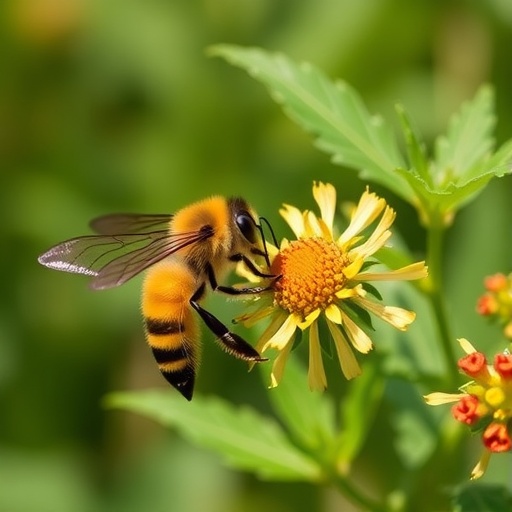
In the realm of ecological research, a groundbreaking study published in Nature in 2026 underscores the indispensable network of interactions that sustain both biodiversity and human wellbeing. The focal point of this newest research is the intricate web of trophic and non-trophic interactions that interconnect species across ecosystems, culminating in tangible benefits for human populations. This comprehensive framework, established by Timberlake, Sapkota, Saville, and their colleagues, exemplifies the integral role of pollinators in supporting not just the natural world but also the nutrition and economic stability of vulnerable communities worldwide.
At the heart of this research lies the recognition that species do not exist in isolation; instead, each organism is embedded within a complex matrix of relationships that influence ecosystem integrity and function. Pollinators, such as bees, butterflies, and other insects, are critical agents in these networks, affecting plant reproduction, agricultural productivity, and ultimately, human nutrition. Timberlake and colleagues quantify these linkages, shedding light on the otherwise underappreciated contributions of diverse ecosystem components to human health and income, especially in socioeconomically marginalized regions.
The study elucidates a sequential mapping of interactions that trace the flow of benefits from pollinators through the food web, reaching human communities. This progression highlights how pollination services amplify crop yields and enhance the nutritional quality of food staples, thereby supporting the dietary needs of people reliant on natural ecosystems. This connection between ecological processes and human welfare emphasizes the necessity of preserving pollinator habitats not just for biodiversity’s sake but also for public health.
Moreover, the research tackles the concept of ecosystem services with a quantitative lens, transforming what has often been a theoretical construct into a measurable and predictive system. By applying a practical, data-driven framework, the study bridges the gap between ecological theory and policy implementation. It provides stakeholders—including conservationists, policymakers, and agricultural practitioners—with actionable insights to leverage ecosystem functions that bolster both biodiversity and human livelihoods.
A particularly compelling aspect of the analysis is its focus on vulnerable communities, many of which reside in regions where subsistence agriculture heavily depends on pollinator activity. In these settings, crop diversification and nutritional outcomes are tightly linked to healthy ecosystems. The research documents how the decline of pollinator populations can have cascading effects on food security, protein availability, and income generation, outlining a global challenge with deep social and economic implications.
Importantly, the study incorporates multifaceted trophic interactions—both the direct roles pollinators play in plant reproduction and the indirect influences mediated through interconnected species. These non-trophic interactions, which include habitat modification and mutualistic relationships, form underexplored dimensions that reinforce ecosystem stability. By broadening the analytical scope, the authors advocate for holistic conservation strategies that recognize and protect these dynamic interdependencies.
The authors also delve into methodological innovations, utilizing network theory and ecological modeling to capture the complexity of these interactions at multiple scales. This integrative approach not only facilitates a more rigorous understanding of ecosystem functioning but also aids in predicting how environmental changes—in particular, habitat loss and climate disruptions—might destabilize these essential linkages. Such predictive capacity is crucial for developing resilient food systems under future global change scenarios.
From a practical standpoint, the findings emphasize that sustaining pollinator diversity should be a priority in agricultural development and environmental management plans. Enhanced pollinator networks contribute not only to crop yields but also provide diversification of income sources through diversified cropping systems and increased availability of nutritious foods rich in micronutrients. This evidence supports the adoption of ecosystem-based adaptation strategies that simultaneously target conservation goals and socio-economic development.
Furthermore, the research presents compelling economic arguments for biodiversity conservation, framing pollinator support as a form of natural capital investment. This perspective urges governments and development agencies to integrate ecosystem services into economic planning, recognizing the cost-effectiveness of preserving natural systems for long-term human welfare. It highlights the potential for ecological stewardship to serve as a foundation for sustainable development that is both inclusive and equitable.
A key takeaway from Timberlake et al.’s work is the intricate interdependence between ecosystem health and human resilience. The study presents cross-disciplinary evidence signaling that interventions protecting pollinators and their habitats can have far-reaching benefits beyond conservation, encompassing public health improvements and poverty alleviation. This multifaceted impact elevates such ecosystems from ancillary resources to indispensable pillars of societal wellbeing.
In synthesis, the research offers an unprecedented, holistic map of how pollinators underpin critical social and ecological dynamics. This framework lays groundwork for future research agendas aiming to refine ecosystem service quantification and deploy nature-based solutions in response to urgent global challenges. Through scientifically grounded, practical insights, it provides a hopeful vision where human prosperity and biodiversity conservation coalesce in mutually reinforcing ways.
Overall, this study stands as a clarion call to recognize and preserve the synergy between biodiversity and human welfare. By illuminating the vital role of pollinators and related ecosystem functions, it advocates for immediate and sustained actions to safeguard natural systems that support humanity’s nutrition and economic livelihood, especially for those most at risk. The transformative potential of such an integrated ecological approach marks a significant leap forward in our collective efforts to foster healthier, more equitable societies in harmony with the natural world.
Cite Scienmag News
Daisy Hatcher. (May 7, 2026). Pollinators Boost Nutrition, Income in Vulnerable Communities. Scienmag. https://scienmag.com/pollinators-boost-nutrition-income-in-vulnerable-communities/
Daisy Hatcher. "Pollinators Boost Nutrition, Income in Vulnerable Communities." Scienmag, 7 May 2026, https://scienmag.com/pollinators-boost-nutrition-income-in-vulnerable-communities/. Accessed 3 September 2026.
Daisy Hatcher. "Pollinators Boost Nutrition, Income in Vulnerable Communities." Scienmag. May 7, 2026. https://scienmag.com/pollinators-boost-nutrition-income-in-vulnerable-communities/


