


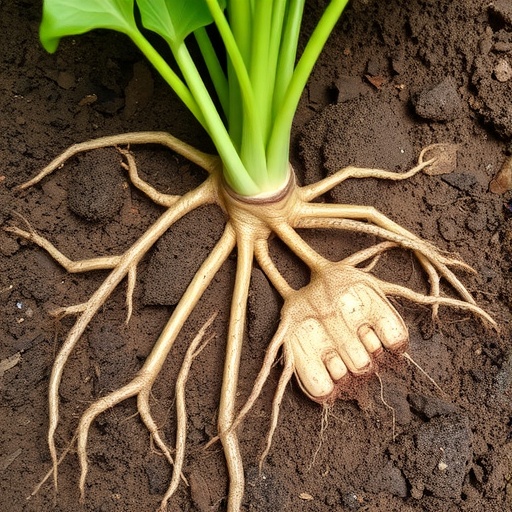
Researchers have uncovered a novel plant tropism—termed saprotropism—that guides roots to actively avoid zones of decaying plant matter. This discovery, led by scientists at the Institute of Science and Technology Austria (ISTA) and Northwest A&F University in China, reveals how roots sense the chemical landscape shaped by microbial decomposition to navigate the soil environment. Unlike classical tropisms such as phototropism or gravitropism, saprotropism involves roots bending away from rotting plant tissues but intriguingly not from decomposing animal matter.
The study shows that roots treat decaying plant material as a biologically hostile environment, inhibiting growth and activating defense pathways. This avoidance strategy parallels animal behavior, where rotten food is instinctively shunned due to microbial threats. Using experimental setups including a vertical split-agar system, researchers demonstrated that roots respond to acidic microenvironments created by fungi breaking down plant residues. Specifically, fungal metabolites acidify the soil locally, establishing pH gradients that roots detect before direct contact.
Mechanistically, exposure to asymmetric acidification alters the distribution of abscisic acid (ABA) within root tip cells. This hormonal gradient rearranges the cytoskeleton and growth patterns, driving the root to curve away from the decay source. Unlike other well-known tropisms, saprotropism operates independently of auxin, emphasizing a unique signaling pathway. The reversible nature of the response correlates with the decomposition stage; as plant matter fully mineralizes and acidification dissipates, roots cease to avoid the once hostile zone.
This phenomenon has been observed not only in the model plant Arabidopsis thaliana but also across diverse crops including rapeseed, tomato, and wheat, implying a widespread adaptive trait. The researchers highlight the agricultural implications: excessive retention of undecomposed crop residues could generate extensive toxic zones that overwhelm root navigation, fostering root diseases by increasing pathogen exposure. Deciphering the molecular mechanisms behind saprotropism could pave the way for breeding crops with enhanced decay avoidance, offering a proactive defense strategy against soilborne pathogens.
By reading the subtle chemical cues left by microbial decomposition, plants demonstrate remarkable environmental awareness. Saprotropism expands the known repertoire of plant sensing and response mechanisms, underscoring the complexity of belowground ecological interactions. This breakthrough not only deepens fundamental understanding of plant-soil-microbe dynamics but also holds promise for advancing sustainable agricultural practices in the face of global food security challenges.
Cite Scienmag News
Alan Morgan. (July 9, 2026). Plant Roots Avoid Rot by Steering Clear of Infected Areas. Scienmag. https://scienmag.com/plant-roots-avoid-rot-by-steering-clear-of-infected-areas/
Alan Morgan. "Plant Roots Avoid Rot by Steering Clear of Infected Areas." Scienmag, 9 July 2026, https://scienmag.com/plant-roots-avoid-rot-by-steering-clear-of-infected-areas/. Accessed 4 September 2026.
Alan Morgan. "Plant Roots Avoid Rot by Steering Clear of Infected Areas." Scienmag. July 9, 2026. https://scienmag.com/plant-roots-avoid-rot-by-steering-clear-of-infected-areas/


