


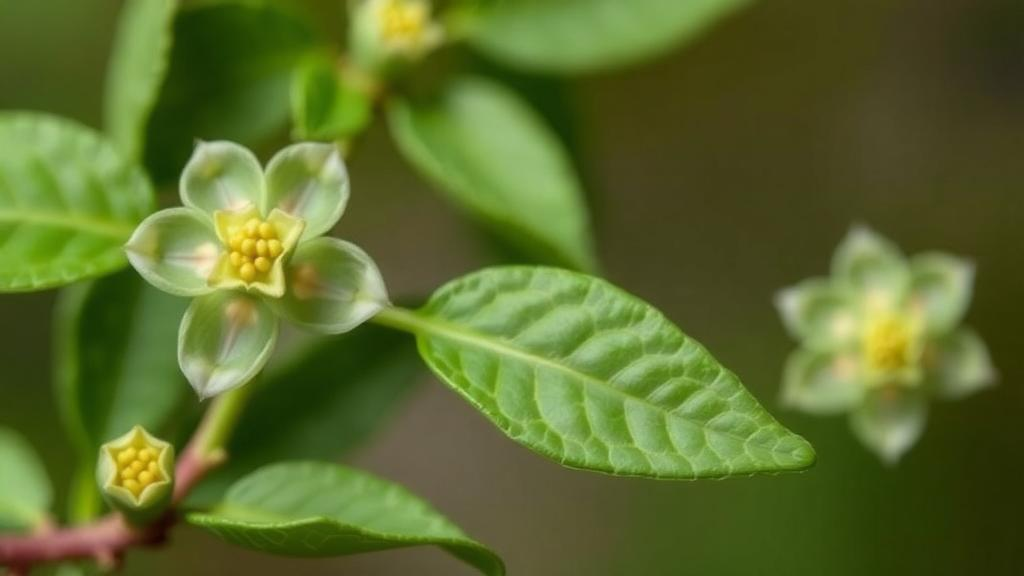
A 70% ethanolic extract of the leaves of Ardisia elliptica, a plant known in Indonesia as lampeni, inhibited two enzymes involved in breaking down the skin’s structural support network in laboratory tests. Researchers prepared separate extracts from leaves, flowers and fruits, then measured the ability of each to neutralize reactive radicals and interfere with collagenase and elastase, enzymes associated with the degradation of collagen and elastin. The leaf extract performed best overall. Its half-maximal inhibitory concentration, or IC50, was 104.11 ± 11.20 micrograms per milliliter for collagenase and 294.67 ± 8.52 micrograms per milliliter for elastase. The collagenase result was statistically comparable to epigallocatechin gallate, or EGCG, used as a positive control, although the plant extract was less effective against elastase.
The finding matters because collagen and elastin help skin retain strength and elasticity. Reactive oxygen species generated by environmental pressures such as ultraviolet radiation and pollution can both suppress production of these proteins and activate enzymes that break them down. As this network deteriorates, wrinkles, sagging and loss of elasticity become more likely. Most plant-based anti-aging strategies therefore target two related mechanisms: scavenging reactive species and limiting the activity of matrix-degrading enzymes. The new work brought those approaches together by pairing chemical profiling, controlled enzyme assays and molecular docking for Ardisia elliptica extracts prepared by ultrasound-assisted extraction followed by maceration.
Leaves contained the greatest concentration of measured phenolic compounds, with 214.72 ± 1.98 milligrams of gallic acid equivalents per gram of extract, compared with 201.23 ± 5.66 for flowers and 35.30 ± 2.57 for fruits. They also had the highest total flavonoid content, at 5.46 ± 0.26 milligrams of quercetin equivalents per gram. Those measurements tracked with antioxidant performance. The leaf extract produced IC50 values of 54.22 ± 2.21 micrograms per milliliter in the DPPH radical-scavenging assay and 43.73 ± 0.64 micrograms per milliliter in the ABTS assay. In both tests, a lower value means less extract was required to achieve 50% inhibition. Ascorbic acid was more effective in these antioxidant assays, but the leaf extract still displayed strong to very strong activity under the classifications used by the researchers.
Because the leaves combined high phenolic and flavonoid levels with the strongest antioxidant results, the researchers selected that extract for detailed testing against collagenase and elastase. In the collagenase assay, the plant extract was about as effective as EGCG, a well-known polyphenol frequently investigated as a reference inhibitor in skin-related laboratory studies. Its IC50 was slightly lower than the EGCG value of 111.11 ± 3.50 micrograms per milliliter, although the difference was not statistically significant. This potency also exceeded that reported in an earlier investigation of an ethanolic Ardisia elliptica extract, which had a collagenase IC50 of 157.78 micrograms per milliliter. By contrast, EGCG remained substantially more potent against elastase, with an IC50 of 57.99 ± 3.44 micrograms per milliliter.
The study nevertheless provides direct experimental evidence that the leaf extract can inhibit elastase, a response the authors noted had not previously been assessed for Ardisia elliptica. Its lower potency than EGCG does not erase the broader significance of the result: a multicomponent plant extract displayed a measurable inhibitory effect against both enzymes under the assay conditions. Such activity may arise from several constituents acting together rather than from a single exceptionally potent molecule. The extract contains a mixture of fatty acids, fatty-acid derivatives, flavonoids, phenolic compounds and other metabolites, so its overall effect cannot be assigned to one component without further separation, concentration measurements and controlled testing.
Liquid chromatography coupled with Orbitrap high-resolution mass spectrometry tentatively identified 17 compounds in the leaf extract, with database matching confidence levels ranging from 80% to 100%. The profile included alpha-linolenic acid, monoolein, linoleoyl glycerol, gallic acid, bilobol, erucamide, D-alpha-tocopherol, hyperoside and trifolin. The researchers selected candidates for docking using their mass-spectrometry match scores, accurate-mass measurements, isotope patterns and previously reported biological activities. They also acknowledged an important limitation: the annotations were not confirmed against authentic reference standards, and the concentrations of individual constituents were not quantified. Those steps will be essential if the results progress from bulk-extract testing toward formulation and mechanistic studies.
Molecular docking offered a residue-level view of how the candidate compounds might engage the enzymes. Bilobol, alpha-linolenic acid and monoolein produced the strongest predicted collagenase-binding scores, at minus 131, minus 121 and minus 119, respectively, compared with minus 128 for EGCG and minus 139 for the native ligand. Bilobol formed hydrogen bonds with several residues in the collagenase active site, including Asn180, Leu181, Ala182, Glu219 and His218, while also making hydrophobic contacts with His218 and Leu181. Alpha-linolenic acid interacted with His218, and monoolein with Asn180. More negative docking scores in this system indicate more stable predicted binding, but they remain computational estimates rather than direct measurements of inhibitory potency.
For elastase, monoolein, bilobol and erucamide ranked first, with MolDock scores of minus 139, minus 133 and minus 129. EGCG scored minus 122, while the elastase native ligand scored minus 78. Monoolein formed hydrogen bonds with a group of active-site residues that included Cys220 and Ser217, and hydrophobic interactions with Cys220 and His57. Bilobol and erucamide also contacted Cys220, a residue also seen in the native ligand complex. EGCG bound through a different pattern, including a hydrogen bond with Ser195 and a hydrophobic interaction with His57. The docking protocol was validated by redocking the crystallographic ligands, producing root-mean-square deviations of 1.87 angstroms for collagenase and 1.35 angstroms for elastase, both below the researchers’ two-angstrom acceptance threshold.
The convergence of three analytical approaches—phytochemical profiling, in vitro testing and docking—supports Ardisia elliptica leaves as a candidate for further development in phytocosmetics, although the work remains at an early stage. The results do not demonstrate that an extract will prevent wrinkles in people, and the enzyme assays were performed under controlled laboratory conditions. They also do not establish the absorption, stability or long-term safety of a topical preparation. Future work should confirm the molecular identities and quantities of the active constituents, test the extract in cellular skin models, assess formulation stability and investigate potential irritant effects. Even so, the study identifies a reproducible signal: a familiar medicinal plant contains a chemically diverse mixture with antioxidant, anti-collagenase and anti-elastase activity, offering a concrete starting point for products intended to support the skin’s extracellular matrix.
Subject of Research: In vitro antioxidant, collagenase-inhibitory and elastase-inhibitory assessment of Ardisia elliptica leaf extract with molecular docking.
Article Title: Anti-collagenase and anti-elastase activities of Ardisia elliptica Thunb. extract: in vitro and molecular docking insights
Article References: Rosidah, I., Ngatinem, N., Subiantoro, A. H., Kusumaningrum, S., Firdayani, F., Wibowo, A. E., & Mun’im, A. (2026). Anti-collagenase and anti-elastase activities of Ardisia elliptica Thunb. extract: in vitro and molecular docking insights. Pharmacia, 73, Article e193264. https://doi.org/10.3897/pharmacia.73.e193264
Image Credits: AI Generated
DOI: 10.3897/pharmacia.73.e193264
Keywords: Ardisia elliptica, plant extract, skin aging, collagenase inhibition, elastase inhibition, antioxidants, molecular docking, phytochemicals, phytocosmetics, lipid compounds, Anti-collagenase, anti-elastase
Cite Scienmag News
Beatrice Stafford. (October 19, 2026). Plant Extract Shows Dual Potential Against Skin-Aging Enzymes. Scienmag. https://scienmag.com/plant-extract-shows-dual-potential-against-skin-aging-enzymes/
Beatrice Stafford. "Plant Extract Shows Dual Potential Against Skin-Aging Enzymes." Scienmag, 19 October 2026, https://scienmag.com/plant-extract-shows-dual-potential-against-skin-aging-enzymes/. Accessed 19 October 2026.
Beatrice Stafford. "Plant Extract Shows Dual Potential Against Skin-Aging Enzymes." Scienmag. October 19, 2026. https://scienmag.com/plant-extract-shows-dual-potential-against-skin-aging-enzymes/


