


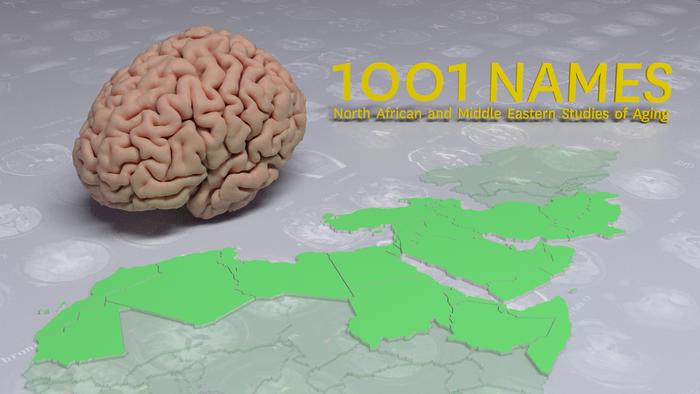
A new study led by Neda Jahanshad, PhD, a researcher at the USC Mark and Mary Stevens Neuroimaging and Informatics Institute (Stevens INI), is set to illuminate the underexplored domain of brain aging and risk for Alzheimer’s disease and related dementias (ADRD) among Middle Eastern and North African (MENA) adults in the United States. Addressing this research gap is important because this population is projected to significantly influence global dementia prevalence.

Credit: USC Stevens INI
A new study led by Neda Jahanshad, PhD, a researcher at the USC Mark and Mary Stevens Neuroimaging and Informatics Institute (Stevens INI), is set to illuminate the underexplored domain of brain aging and risk for Alzheimer’s disease and related dementias (ADRD) among Middle Eastern and North African (MENA) adults in the United States. Addressing this research gap is important because this population is projected to significantly influence global dementia prevalence.
The study, ADRD Risk Factors in Middle Eastern and North African Immigrants in the U.S., marks a groundbreaking effort to understand the mechanisms behind the high rates of ADRD among MENA immigrants—a growing and often overlooked community.
“Individuals from the MENA regions are nearing 10% of the global population and over 3% in the U.S., yet they remain significantly underrepresented in health studies. This gap in data can lead to health-related misunderstandings, misdiagnoses, and overall disparities in health care outcomes,” explains Dr. Jahanshad, who is also an associate professor of neurology at the Keck School of Medicine of USC. “The lack of a MENA category in U.S. Census data to date has complicated the issue by hampering the tracking of brain health and Alzheimer’s risk levels within this demographic.”
The study will concentrate on the Los Angeles area, home to one of the largest MENA populations outside their home countries. Through both remote surveys and in-person assessments, the study seeks to evaluate the prevalence of ADRD risk factors in relation to daily living, different types of stress, genetics, and brain health.
The study will survey 120 MENA individuals who are 55+ years old and proficient in English and at least one other language, including Arabic, Armenian, Farsi, or Hebrew, to examine factors that may contribute to ADRD risk. Some focus areas include education, social factors, lifestyle habits such as diet and exercise, medical history, and genetic risk.
Researchers will then conduct detailed MRI-based brain imaging and cognitive assessments on a subset of participants to gain deeper insights into key brain regions, cognitive ability, and vascular burden—the cumulative effect of various factors that contribute to the dysfunction of the vascular system. Collecting and investigating brain changes in the MENA population for the first time is a crucial step in understanding neurological health within this demographic, as ethnoracial backgrounds and underlying additional pathologies can influence the pattern of changes. The research team stresses the importance of conducting cognitive assessment tests by experts fluent in the languages spoken in MENA countries and familiar with the cultural nuances, which is vital for ensuring the validity and appropriateness of these assessments.
“Cognitive tests designed primarily for Western populations may not accurately capture the cognitive abilities of individuals from MENA backgrounds due to language, education, and cultural context differences. This pilot data can then be used to modify existing cognitive tests or develop new assessments that are more culturally and linguistically appropriate for MENA populations,” states Dr. Nasim Sheikh-Bahaei, MD, PhD, a double board-certified clinician scientist in internal medicine and neuroradiology at USC and the study’s co-PI.
“The richness of the MENA culture and the diversity within this group pose unique opportunities for research. This research is notably timely now that MENA is added as a separate and recognized race in the U.S. for the first time on the most recent racial revision published by The White House. We believe this study will fill a significant void in our understanding of ADRD risk factors worldwide and highlight the importance of culturally sensitive health research,” says Dr. Nasim Sheikh-Bahaei.
The study’s outcomes could revolutionize approaches to ADRD risk, leading to more targeted interventions and support for MENA immigrants. The researchers also invite community engagement and look forward to sharing findings that could have wide-reaching implications for public health strategies and policies. “Our study may also provide crucial insights into how gender differences and social determinants of health, like discrimination and immigration-related stressors, impact MENA participants’ brain and vascular health, with an overarching goal of enhancing the well-being and health care services provided to this community,” notes Arpana Gupta, PhD of the UCLA David Geffen School of Medicine, also a co-principal investigator.
“Dr. Jahanshad’s work is bringing crucial awareness to overlooked health differences in brain aging research, which is one of the Institute’s most important commitments. We are thrilled to add this study to our suite of research initiatives on diverse brain health, says Stevens INI Director Arthur W. Toga, PhD. “I am particularly pleased that this study can directly impact MENA members of our community right here in Los Angeles.”
“We hope this pilot project, supported by the Alzheimer’s Association, will be a stepping stone to help us expand our future research projects in this area. More extensive research will be required to gain a comprehensive understanding of the effect of race, culture, genetics, immigration, and language barriers on cognitive assessments and various risk factors for developing Alzheimer’s disease or Alzheimer’s disease-related dementias in the MENA population. This all necessitates substantial funding from federal and philanthropic sources, which we will work to receive,” says Dr. Jahanshad.
Arousiak V. Maraian, MD, of the Keck School of Medicine of USC, is also a co-PI on the study. This study is partially supported by an Alzheimer’s Association research grant (AARG-23-1150420).
For more information on this study or to participate, please contact:
Neda Jahanshad, PhD
neda.jahanshad@ini.usc.edu
Cite Scienmag News
Cassandra Pierce. (April 16, 2024). Pioneering study targets Alzheimer’s disease risk factors among Californians from the Middle East and North Africa. Scienmag. https://scienmag.com/pioneering-study-targets-alzheimers-disease-risk-factors-among-californians-from-the-middle-east-and-north-africa/
Cassandra Pierce. "Pioneering study targets Alzheimer’s disease risk factors among Californians from the Middle East and North Africa." Scienmag, 16 April 2024, https://scienmag.com/pioneering-study-targets-alzheimers-disease-risk-factors-among-californians-from-the-middle-east-and-north-africa/. Accessed 4 September 2026.
Cassandra Pierce. "Pioneering study targets Alzheimer’s disease risk factors among Californians from the Middle East and North Africa." Scienmag. April 16, 2024. https://scienmag.com/pioneering-study-targets-alzheimers-disease-risk-factors-among-californians-from-the-middle-east-and-north-africa/

