


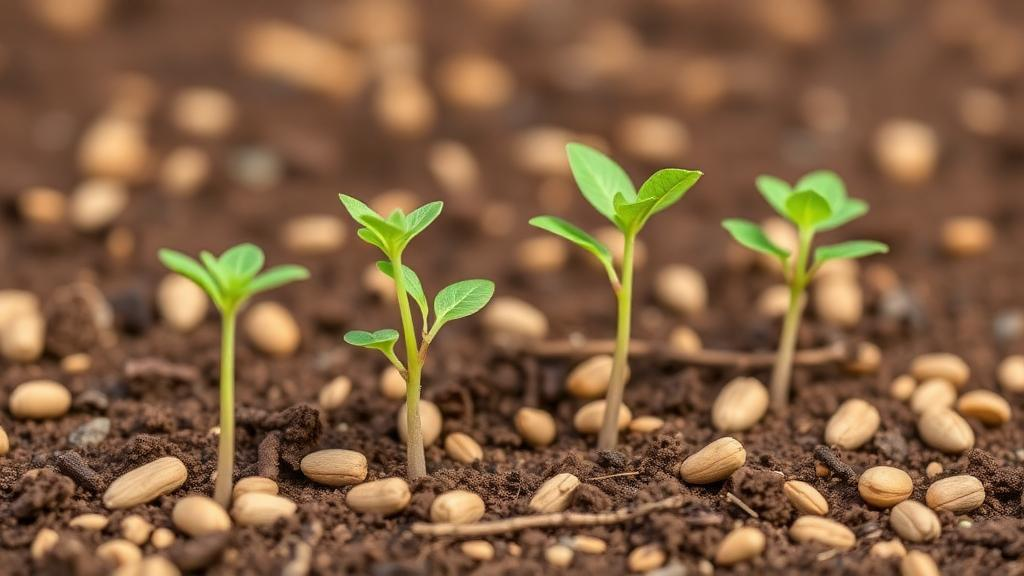
Selenium is one of those elements that plants cannot live without but cannot tolerate in excess. In tiny amounts it is an essential micronutrient for human diets, which is why selenium-enriched crops are increasingly promoted in regions where soils are deficient. Push the concentration too high, however, and the same element turns toxic, stunting roots, bleaching leaves and scrambling the finely tuned metabolic networks that keep a seedling alive. A new study published in BMC Plant Biology has now mapped, in remarkable molecular detail, how young peanut plants cope when selenium levels cross that dangerous threshold, and the answer centers on an ancient chemical assembly line that plants have used for hundreds of millions of years to defend themselves: the phenylpropanoid biosynthesis pathway.
The research team, led by Feng Zhang and Yanyan Wang of Guangdong Ocean University together with colleagues at South China Agricultural University and the Zhanjiang Academy of Agricultural Sciences, subjected peanut seedlings to high selenium stress and then interrogated the plants with two complementary high-throughput technologies. Transcriptome sequencing revealed which genes were switched on or off in roots and leaves, while metabolomic profiling catalogued the small molecules whose concentrations rose or fell in response. By overlaying the two datasets, the researchers could trace causal threads from gene activity through enzyme function to the chemical end products that ultimately determine whether a cell survives. The approach, known as integrated multi-omics, is rapidly becoming the gold standard for decoding stress responses in crops, because neither gene expression nor metabolite abundance alone tells the full story.
The physiological damage caused by excess selenium was unmistakable. Seedlings exposed to toxic concentrations showed significantly inhibited root growth, with measurable reductions in total root length and root surface area, the two parameters that govern how effectively a plant explores the soil for water and nutrients. Leaf area also shrank, curtailing the photosynthetic surface available to fuel growth. At the cellular level, the selenium treatment threw the antioxidant enzyme system out of balance in both organs. When the balance of enzymes such as superoxide dismutase and peroxidase is disrupted, reactive oxygen species accumulate unchecked, and one of the most reliable fingerprints of that damage is malondialdehyde, or MDA, a breakdown product of lipid peroxidation. MDA levels climbed in both roots and leaves, confirming that selenium stress was literally oxidizing the fatty membranes that enclose every cell.
Selenium also wreaked havoc on the plant’s mineral nutrition. The researchers documented disturbances in the absorption and transport of essential ions, including zinc, iron and boron, three micronutrients that peanut plants need for enzyme function, chlorophyll synthesis and cell wall construction. This kind of ionic interference is a classic feature of heavy metal and metalloid toxicity: the transporters that normally ferry beneficial ions across root membranes can be hijacked or competitively inhibited by chemically similar toxic elements, and once the ionome is destabilized, downstream metabolism begins to unravel. The finding has practical implications for selenium biofortification programs, because it suggests that simply adding more selenium to soil or irrigation water risks creating secondary deficiencies that could compromise both yield and nutritional quality.
Beneath these visible symptoms, the molecular data revealed the scale of the plant’s emergency response. Transcriptomic analysis identified 3,578 differentially expressed genes in roots and 1,331 in leaves, a striking asymmetry that makes sense given that roots are the first point of contact with selenium in the growth medium. The affected genes clustered around three major functional themes: antioxidant regulation, ion transport and secondary metabolism. Meanwhile, metabolomic analysis detected 582 differentially abundant metabolites in leaves and 846 in roots, spanning amino acids, fatty acids and phenolic compounds. The sheer number of coordinated changes underscores that selenium toxicity is not a single-hit injury but a systemic challenge that reorganizes a large fraction of the plant’s metabolic economy.
When the researchers ran enrichment analyses on both datasets, one pathway stood out in both roots and leaves: phenylpropanoid metabolism. This pathway is one of the most versatile chemical factories in the plant kingdom. It begins with the amino acid phenylalanine, which the enzyme phenylalanine ammonia-lyase, or PAL, converts into cinnamic acid by stripping off an ammonia group. That deamination step is widely regarded as the committed gateway into the pathway, and from cinnamic acid a cascade of hydroxylations, methylations, ligations and reductions branches outward to produce an astonishing diversity of compounds: lignin that stiffens cell walls, flavonoids that screen ultraviolet light, coumarins that deter herbivores, and a broad arsenal of phenolic acids that quench reactive oxygen species. In the selenium-stressed peanut seedlings, this assembly line was visibly revved up.
The transcriptomic data pinpointed exactly which gears of the pathway were turning. Key biosynthetic genes, including PAL, cinnamyl alcohol dehydrogenase, known as CAD, and 4-coumarate-CoA ligase, or 4CL, were differentially expressed under high selenium stress. Each of these enzymes occupies a strategic position: PAL controls entry into the pathway, 4CL activates cinnamic acid derivatives by attaching coenzyme A, preparing them for downstream branching, and CAD catalyzes the final reduction steps that feed into lignin biosynthesis. The coordinated regulation of these genes translated into measurable shifts in pathway metabolites, with compounds such as cinnamic acid and coumaroylquinic acid changing in abundance in the stressed tissues. Coumaroylquinic acid, a phenolic acid ester, belongs to the class of antioxidants that plants mobilize to neutralize the reactive oxygen species generated by abiotic stress, and its accumulation alongside the upregulated biosynthetic genes suggests a direct defensive function.
The logic of this response is elegant. Selenium toxicity, like that of many excess metals, inflicts much of its damage indirectly through oxidative stress: the element disrupts electron transport chains and enzyme active sites, causing cells to overproduce reactive oxygen species that attack DNA, proteins and membranes. Rather than relying solely on its enzymatic antioxidant system, which the study showed had been thrown off balance, the plant appears to compensate by flooding its tissues with non-enzymatic phenolic antioxidants manufactured by the phenylpropanoid pathway. These molecules can donate electrons or hydrogen atoms to stabilize free radicals, and some can also chelate metal ions, potentially reducing the mobility of selenium itself within tissues. In parallel, increased flux toward lignin precursors may reinforce cell walls in roots, helping to seal off the point of entry and maintain structural integrity while growth slows.
For agricultural scientists, the study offers more than a mechanistic curiosity. Peanuts are a staple oilseed and food legume grown across vast areas of Asia and Africa, and they are one of the crops targeted for selenium biofortification because selenium-enriched peanut products could help address dietary selenium deficiency in human populations. Understanding which genes and metabolites confer tolerance to selenium excess gives breeders molecular markers they can use to select varieties that accumulate beneficial amounts of selenium in seeds without suffering toxicity in vegetative tissues. The authors explicitly frame their findings as a theoretical foundation for breeding selenium-tolerant peanut varieties, and the specific candidates they identified, from PAL and 4CL to the accumulating phenolic metabolites, provide a concrete starting point for marker-assisted selection or even gene editing approaches.
The work also adds to a growing body of evidence that the phenylpropanoid pathway functions as a universal stress hub in plants, recruited not only against pathogens and herbivores but against abiotic insults ranging from drought and salinity to heavy metal contamination. What makes this study particularly valuable is its tissue-resolved design: by analyzing roots and leaves separately, the researchers captured the division of labor within a single plant, where roots mount the larger transcriptional response while both organs converge on the same defensive chemistry. As climate variability and soil chemistry changes push crops into more marginal growing conditions, decoding these internal defense circuits will become ever more important, and the humble peanut, it turns out, has been running one of the most sophisticated chemical defense programs in biology all along.
Subject of Research: Molecular response of the phenylpropanoid biosynthesis pathway in peanut seedlings under high selenium stress
Article Title: The mechanism of the phenylpropanoid biosynthesis pathway in peanut seedlings responding to high Se stress
Article References: Zhang, F., Wang, Y., Liang, Z., Chen, T., Feng, E., Zhang, R., Xie, Q., Hu, H., Xue, Y., & Liu, Y. (2026). The mechanism of the phenylpropanoid biosynthesis pathway in peanut seedlings responding to high Se stress. BMC Plant Biology. https://doi.org/10.1186/s12870-026-10042-6
Image Credits: AI Generated
DOI: 10.1186/s12870-026-10042-6
Keywords: peanut, selenium toxicity, phenylpropanoid biosynthesis, transcriptomics, metabolomics, oxidative stress, antioxidant enzymes, Arachis hypogaea, plant stress responses, secondary metabolism, ion transport, malondialdehyde
Cite Scienmag News
Alan Morgan. (October 7, 2026). Peanut Seedlings Deploy Phenylpropanoid Pathway to Fight Selenium Overload. Scienmag. https://scienmag.com/peanut-seedlings-deploy-phenylpropanoid-pathway-to-fight-selenium-overload/
Alan Morgan. "Peanut Seedlings Deploy Phenylpropanoid Pathway to Fight Selenium Overload." Scienmag, 7 October 2026, https://scienmag.com/peanut-seedlings-deploy-phenylpropanoid-pathway-to-fight-selenium-overload/. Accessed 7 October 2026.
Alan Morgan. "Peanut Seedlings Deploy Phenylpropanoid Pathway to Fight Selenium Overload." Scienmag. October 7, 2026. https://scienmag.com/peanut-seedlings-deploy-phenylpropanoid-pathway-to-fight-selenium-overload/


