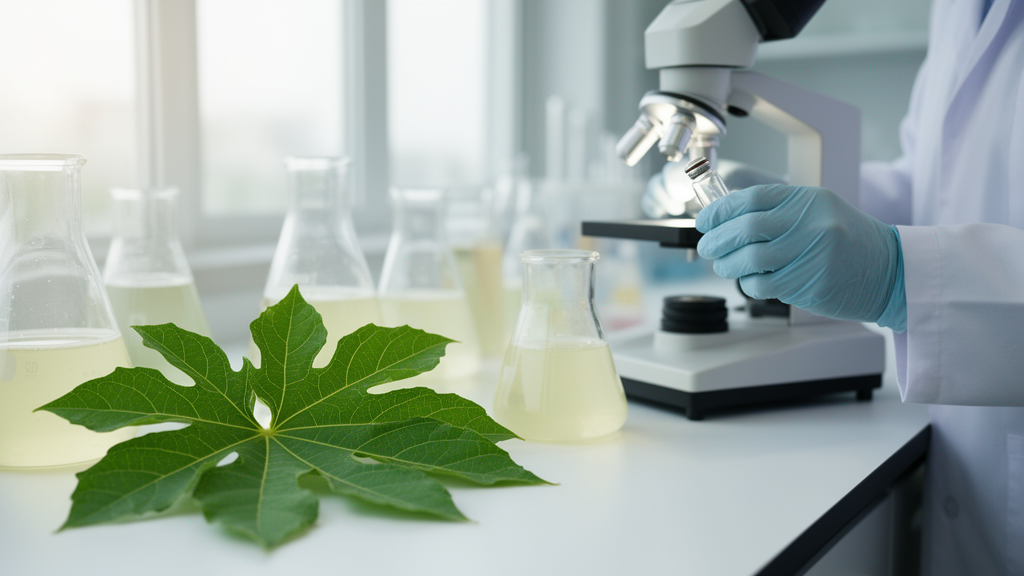
Long valued in traditional medicine across Asia, Africa, and Latin America, the papaya tree may be hiding one of its most potent secrets in its leaves. A new study published in the Journal of Cancer Research and Clinical Oncology has revealed that extracts prepared from Carica papaya leaves can significantly suppress the development of breast cancer in laboratory rats, acting through a remarkable combination of immune-boosting, anti-inflammatory, and antioxidant mechanisms. The findings, which combine classical animal experiments with modern computational molecular docking, point toward a promising plant-based candidate for future cancer chemoprevention and immunotherapy strategies.
The research, led by Doris Olachi Alilonu and colleagues at the Toxicology and Immunotherapy Research Unit of Alex-Ekwueme Federal University in Nigeria, focused on two distinct preparations from papaya leaves: a simple aqueous extract (AqCE) and a flavonoid-rich extract (FRE). Flavonoids are a diverse class of plant secondary metabolites known for their antioxidant and anti-inflammatory properties, and the team wanted to determine whether concentrating these compounds would enhance the protective effect against carcinogenesis.
To model breast cancer, the researchers used 7,12-dimethylbenz[a]anthracene, or DMBA, a well-established carcinogen that reliably induces mammary tumors in female Wistar rats. Thirty-five adult female rats were divided into seven groups: a vehicle control receiving 1% Tween 80, a DMBA-only disease group, a DMBA group treated with the standard chemotherapy drug cyclophosphamide at 20 mg/kg, and four treatment groups receiving either the aqueous extract at 250 or 500 mg/kg or the flavonoid-rich extract at 150 or 300 mg/kg. All treatments were delivered by oral gavage twice weekly over a 17-week experimental period, a design that allowed the researchers to observe both tumor development and the effects of concurrent extract administration.
The results were striking. DMBA exposure caused a significant drop in CD4+ T-cell counts, a key indicator of weakened cellular immunity, while simultaneously elevating the activity of two immunosuppressive enzymes: tryptophan 2,3-dioxygenase (TDO) and indoleamine 2,3-dioxygenase (IDO). These enzymes break down the essential amino acid tryptophan, and their upregulation is a well-known strategy by which tumors escape immune surveillance. By depleting tryptophan in the tumor microenvironment, TDO and IDO effectively starve cytotoxic T cells of the fuel they need to attack cancer cells, creating a shield of immune tolerance around the growing tumor.
Both papaya leaf extracts reversed this immunosuppressive cascade. Rats treated with AqCE or FRE showed restored CD4+ counts, reduced TDO and IDO activity, and normalized levels of pro-inflammatory cytokines that had been elevated by DMBA. The extracts also corrected the oxidative stress imbalance caused by the carcinogen, bringing antioxidant parameters back toward baseline values. Perhaps most importantly for the clinical picture, the extracts significantly reduced tumor biomarkers that DMBA had driven upward, indicating a measurable dampening of the malignant process itself.
Histopathological examination provided visual confirmation of these biochemical findings. Mammary tissue from DMBA-exposed rats showed the hallmarks of severe invasive ductal carcinoma, the most common form of breast cancer in humans. In contrast, tissue from rats co-treated with the papaya leaf extracts displayed markedly attenuated malignant changes, with mammary architecture largely preserved. This structural protection suggests that the extracts are not merely masking biomarker changes but are genuinely interfering with the carcinogenic process at the tissue level.
To understand which specific molecules might be responsible, the team performed phytochemical profiling of the flavonoid-rich extract and identified five bioactive flavonoids. They then used molecular docking, a computational technique that predicts how small molecules fit into the active sites of target proteins, to test whether these flavonoids could interact with TDO and IDO. The docking results suggested stable and energetically favorable binding of the papaya flavonoids to both enzymes, consistent with potential inhibitory activity. This computational evidence provides a plausible molecular explanation for the reduced TDO and IDO activity observed in the treated animals and offers a rational starting point for future drug design efforts.
The multi-targeted nature of the observed effects is what makes this study particularly compelling. Rather than hitting a single pathway, the papaya leaf extracts appear to simultaneously bolster immune competence, suppress inflammatory signaling, restore antioxidant balance, inhibit immunosuppressive enzyme activity, and reduce tumor burden. This broad-spectrum profile mirrors the kind of holistic intervention that chemoprevention researchers have long sought, and it aligns with the growing interest in natural products as sources of structurally novel bioactive compounds.
The authors suggest that their findings position Carica papaya leaf extracts as potential candidates for plant-based immunotherapy, a field that has exploded in prominence with the success of immune checkpoint inhibitors but still faces challenges related to cost, accessibility, and side effects. A readily available agricultural byproduct with immunomodulatory and chemopreventive properties could offer a complementary or adjunctive approach, particularly in regions where papaya is widely cultivated and conventional therapies remain financially out of reach for many patients.
Nevertheless, important caveats remain. This study was conducted in a rodent model over a defined timeframe, and the doses used in rats cannot be directly translated to human consumption without careful dose-ranging and safety studies. The identity and pharmacokinetics of the five quantified flavonoids in vivo, their bioavailability after oral gavage, and their long-term toxicity profile all require further investigation. Clinical trials in humans would be the necessary next step before any recommendation regarding papaya leaf preparations could be made for cancer prevention or treatment. Still, the convergence of in vivo efficacy, histological protection, and computational mechanistic support makes this work a noteworthy addition to the expanding literature on dietary phytochemicals and cancer immunology, and it underscores how traditional ethnobotanical knowledge can guide the discovery of modern therapeutic leads.
Subject of Research: Chemopreventive and immunomodulatory effects of Carica papaya leaf extracts against DMBA-induced breast cancer in rats
Article Title: Aqueous and flavonoid-rich Carica papaya leaf extracts modulate 7, 12-dimethylbenz[a]anthracene-induced breast carcinogenesis in rats: roles of oxidative stress, inflammation, and in silico docking
Article References: Aqueous and flavonoid-rich Carica papaya leaf extracts modulate 7, 12-dimethylbenz[a]anthracene-induced breast carcinogenesis in rats: roles of oxidative stress, inflammation, and in silico docking. (n.d.). https://doi.org/10.1007/s00432-026-06622-6
Image Credits: AI Generated
DOI: 10.1007/s00432-026-06622-6
Keywords: Carica papaya, breast cancer, chemoprevention, flavonoids, DMBA, immunotherapy, indoleamine 2,3-dioxygenase, tryptophan 2,3-dioxygenase, oxidative stress, inflammation, molecular docking, natural products
Cite Scienmag News
Nathaniel Bowman. (October 15, 2026). Papaya Leaf Flavonoids Show Multi-Target Chemopreventive Effects Against Breast Cancer in Rats. Scienmag. https://scienmag.com/papaya-leaf-flavonoids-show-multi-target-chemopreventive-effects-against-breast-cancer-in-rats/
Nathaniel Bowman. "Papaya Leaf Flavonoids Show Multi-Target Chemopreventive Effects Against Breast Cancer in Rats." Scienmag, 15 October 2026, https://scienmag.com/papaya-leaf-flavonoids-show-multi-target-chemopreventive-effects-against-breast-cancer-in-rats/. Accessed 15 October 2026.
Nathaniel Bowman. "Papaya Leaf Flavonoids Show Multi-Target Chemopreventive Effects Against Breast Cancer in Rats." Scienmag. October 15, 2026. https://scienmag.com/papaya-leaf-flavonoids-show-multi-target-chemopreventive-effects-against-breast-cancer-in-rats/