


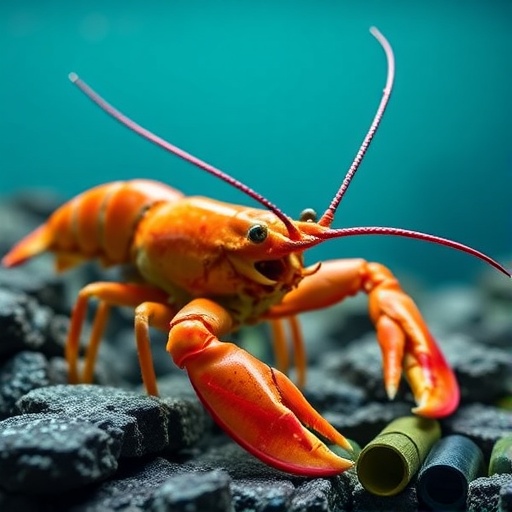
Recent groundbreaking research from the University of Gothenburg has revealed compelling evidence that common human analgesics can mitigate pain responses in Norway lobsters (Nephrops norvegicus), signaling a monumental shift in our understanding of decapod crustacean neurophysiology and welfare. These findings extend the ethical conversation surrounding crustacean treatment, particularly in fisheries, by suggesting that these animals may experience pain in a manner analogous to vertebrates, which demands urgent reassessment of current commercial and scientific handling practices.
As crustacean consumption continues to rise worldwide, welfare considerations have increasingly impacted legislation. Already, nations such as Norway, New Zealand, and Austria have prohibited the traditional practice of boiling crustaceans alive, citing moral and ethical concerns. The United Kingdom is contemplating similar prohibitions. This regulatory landscape has propelled research into humane alternatives, among which electrical stunning has become a focus due to its potential to render crustaceans insensible before death. However, the precise welfare effects of such interventions have remained murky, necessitating methodical inquiry.
The University of Gothenburg team, led by Professor Lynne Sneddon, employed rigorous experimental protocols to illuminate the behavioral and physiological responses of Norway lobsters when subjected to noxious electric stimuli. Their observations highlight a distinct, measurable reaction wherein the lobsters rapidly flip their tails in an apparent escape response—a behavior indicative of discomfort or pain. Crucially, this reaction was significantly attenuated or abolished when the lobsters were pre-treated with analgesics commonly used in human medicine.
In a detailed exploration of pharmacological impacts, the researchers administered two different analgesics: aspirin, delivered via injection, and lidocaine, dissolved directly into the aquatic environment. Each compound demonstrated unique effects consistent with pain mitigation. Aspirin administration prompted increased grooming behaviors involving the lobsters’ legs and claws—a potential stress indicator—yet simultaneously reduced tail-flip frequency in response to shock. Lidocaine treatment yielded fewer side effects and correspondingly diminished escape behaviors. The differential profiles of these drugs underscore the complexity of nociception and analgesia in crustaceans and hint at varied underlying neurochemical pathways.
These results not only affirm that analgesic drugs designed for vertebrates can modulate pain-related behaviors in crustaceans but also imply evolutionary conservation of certain elements of nociceptive processing across distant taxa. The pharmacodynamic similarities suggest that Norway lobsters possess neurophysiological machinery sensitive to opioid or non-opioid pathways targeted by these drugs. Such parallels challenge the traditional notion that invertebrates lack the capacity for pain perception and demand a re-examination of their inclusion in animal welfare legislation.
The immediate practical implications of this work extend to fisheries and food industries, where current slaughtering methods often cause prolonged suffering due to insufficient stunning or analgesia. The demonstration that electric shocks, if improperly administered, inflict significant distress on lobsters calls for optimized parameters and humane protocols guided by evidence-based assessments. These refinements could dramatically reduce animal suffering while maintaining product quality, aligning commercial viability with ethical responsibility.
Furthermore, the ethical ramifications stretch beyond culinary practices. Crustaceans have long been utilized as model organisms in neurobiological and toxicological experiments, yet they are frequently excluded from animal research welfare regulations. This study not only fosters scientific impetus for including decapods under protective legal frameworks but also advocates for the integration of analgesic strategies in laboratory procedures to minimize pain during experimental manipulations.
The research hinges on quantitative behavioral assays, which provide an objective substrate for interpreting complex sensory experiences in animals that cannot communicate verbally. By correlating drug administration with behavior modulation, the team has pioneered a methodological paradigm for decoding the subjective phenomenon of pain in invertebrates. This approach paves the way for further investigations into the molecular and cellular mechanisms underpinning nociception in crustaceans.
Understanding the intricate biology of pain perception in these animals will also contribute to comparative physiology, shedding light on the evolutionary roots of nociceptive systems. Investigations into receptor types, neurotransmitter involvement, and signal transduction pathways may reveal commonalities shared with mammals, enriching our grasp of neural function and pain modulation.
Despite these advances, the study acknowledges the necessity for further research to characterize the full spectrum of analgesic efficacy across multiple species and stimuli intensities. Elucidating optimal dosages, delivery methods, and combinations of analgesic compounds will be vital for developing standardized welfare protocols that can be widely adopted.
The findings reported in Scientific Reports underscore a growing consensus that ethical treatment of non-vertebrate animals is both scientifically justified and societally demanded. As seafood consumption constitutes a major global protein source, embedding humane considerations into harvesting and processing industries not only reflects moral progress but also enhances sustainability and consumer trust.
In summary, this research transcends disciplinary boundaries, blending neurophysiology, pharmacology, animal welfare, and food science to confront long-standing practices surrounding crustacean handling. The demonstration that Norway lobsters’ pain behaviors are modifiable through human analgesics substantiates the premise that these creatures possess sensory experiences warranting compassion, thereby catalyzing shifts in policy, industry standards, and scientific methodologies for the betterment of animal welfare on a global scale.
Cite Scienmag News
Violet Maxwell. (April 13, 2026). Painkillers Block Pain Signals in Norway Lobsters, New Study Finds. Scienmag. https://scienmag.com/painkillers-block-pain-signals-in-norway-lobsters-new-study-finds/
Violet Maxwell. "Painkillers Block Pain Signals in Norway Lobsters, New Study Finds." Scienmag, 13 April 2026, https://scienmag.com/painkillers-block-pain-signals-in-norway-lobsters-new-study-finds/. Accessed 3 September 2026.
Violet Maxwell. "Painkillers Block Pain Signals in Norway Lobsters, New Study Finds." Scienmag. April 13, 2026. https://scienmag.com/painkillers-block-pain-signals-in-norway-lobsters-new-study-finds/


