


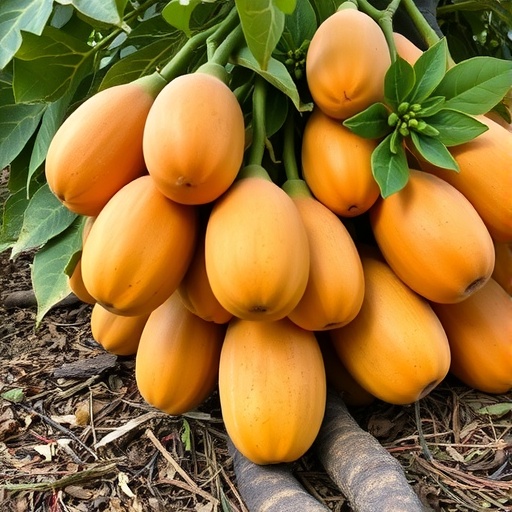
The papaya, that sweet orange-fleshed fruit sitting unassumingly in supermarket produce aisles across the tropics, is enjoying a moment of scientific stardom. A newly published comprehensive review argues that Carica papaya — the botanical name for the papaya tree, native to southern Mexico and northern South America — could become one of the most powerful tools available to humanity in the race to achieve the United Nations Sustainable Development Goals. The paper, published in the journal Current Research in Biotechnology, weaves together hundreds of studies to make a striking claim: from the fruit’s pulp to its seeds, leaves, flowers, peel, and even its latex, virtually every tissue of the papaya plant harbors compounds and materials that can address hunger, disease, water scarcity, and fossil fuel dependence simultaneously. What was once treated largely as agricultural waste may soon be feeding people, purifying drinking water, and powering vehicles.
The scale of the opportunity is enormous. Papaya is now cultivated extensively throughout tropical and subtropical regions, with India ranking as the world’s largest producer and Mexico as the leading exporter. Although papaya contributed only about 4 percent of the global export market for major tropical fruits in 2023, its economic significance is considerable: its wholesale price ranked second among major tropical fruits, and its average price rose 7 percent year-on-year during the first nine months of 2023, reaching 1,329 US dollars per tonne. Global production is projected to reach 16.6 million tonnes by 2029. Yet for every tonne of fruit consumed, a substantial fraction is discarded. Papaya seeds and peel typically account for roughly 8.5 percent and 12 percent of the total fruit, respectively — a stream of byproduct biomass that most processors throw away, and one that the review’s authors say represents a largely untapped resource.
Part of the reason the papaya is so nutritionally compelling lies in the sheer density of its biochemistry. Laboratory analyses compiled in the review show that papaya leaves contain crude protein levels of about 25.75 grams per 100 grams, along with iron at 22.82 milligrams, potassium at over 407 milligrams, and zinc at just over 7 milligrams per 100 grams. The seeds, often spit out and forgotten, are remarkably rich in fat — between roughly 21 and 60 grams per 100 grams — as well as potassium levels exceeding 743 milligrams per 100 grams and calcium concentrations that can reach 8,435 milligrams per 100 grams. The peel carries vitamin C at 126.2 milligrams per gram, and the ripe fruit itself supplies vitamins A, C, E, and K, alongside a full complement of essential amino acids including leucine, lysine, isoleucine, and phenylalanine. This is not a fruit of incidental nutritional value; it is a compact biochemical factory.
Beyond macronutrients and minerals, papaya tissues brim with specialized phytochemicals. The review catalogs an impressive array of flavonoids — catechin, rutin, naringenin, kaempferol, quercetin, and luteolin in the leaves; myricetin and rhoifolin in the fruit and peel; and even a prenylated naringenin derivative and a trimethoxystilbene compound in the seeds. Phenolic acids such as gallic acid, chlorogenic acid, caffeic acid, ferulic acid, and ellagic acid are distributed throughout the plant. These molecules are the pharmacological engine behind papaya’s documented antioxidant, anti-inflammatory, anticancer, antidiabetic, anti-dengue, and antimicrobial properties, and they explain why traditional medical systems across Asia, Africa, and the Americas have long turned to papaya leaves and latex as remedies. Modern science, it turns out, is only now catching up with folk wisdom.
The first of the review’s four pillars maps directly onto Sustainable Development Goal 2 — Zero Hunger. The authors document how papaya-derived ingredients can be engineered into functional foods designed to combat micronutrient deficiencies, a pressing problem for populations that rely heavily on processed staples. One particularly vivid example involves bread: substituting 5 to 10 percent papaya seed flour into white bread formulations produced textural properties comparable to the untreated control, suggesting that a bakery staple could quietly become a delivery vehicle for seed-derived protein, fiber, and minerals. Across other formulations, increasing papaya seed flour content enhanced oil absorption capacity from 0.62 to 1.23 grams per gram and foaming capacity from 14.54 to 19.88 percent — functional attributes prized by food technologists. Papaya leaves, flowers, and pulp can similarly enrich everything from beverages to snacks, turning nutritional fortification into a byproduct-driven circular economy rather than an added cost.
The second pillar, aligned with SDG 3 on Good Health and Well-Being, ventures into nanotechnology. The review evaluates how papaya biomass — particularly its extracts, rich in reducing sugars, phenolics, and enzymes — can serve as a green, eco-friendly medium for synthesizing metallic nanoparticles. Conventional nanoparticle synthesis often relies on toxic chemical reductants and stabilizers; plant-mediated synthesis replaces these with biodegradable biomolecules, and papaya’s abundant phytochemistry makes it an ideal candidate. Silver, gold, and other metal nanoparticles produced this way have shown antimicrobial and biomedical potential in experimental studies, opening a path toward cheaper, safer production of nanomaterials in settings where industrial chemical infrastructure is limited. It is a striking example of a food crop’s waste stream becoming feedstock for advanced materials science.
Water purification, the third pillar and a direct answer to SDG 6, may be the most surprising application of all. The review details how papaya-derived carbon dots — nanoscale fluorescent carbon particles — along with papaya-based biochar and bio-adsorbents, can capture contaminants from water and wastewater. Biochar, produced by heating plant residues in low-oxygen conditions, possesses a porous architecture well suited to adsorbing heavy metals and organic pollutants, while carbon dots offer both adsorption and detection capabilities that could help monitor water quality. In regions where papaya processing generates tonnes of peel and seed waste, converting that waste into water-treatment media closes two loops at once: it diverts refuse from landfills and deploys it against a resource crisis that disproportionately affects the very tropical regions where papaya grows.
The fourth pillar targets SDG 7, Affordable and Clean Energy, through biodiesel. Papaya seeds, with their high fat content of up to roughly 60 grams per 100 grams, are a plausible oil feedstock for transesterification — the chemical process that converts vegetable oils into fatty acid methyl esters, the constituents of biodiesel. The review emphasizes that papaya residues could contribute to decentralized biofuel production in producing countries, reducing pressure on food-based oil crops and offering rural communities an energy revenue stream built from material previously destined for compost or dumpsites. Together with the food and water applications, this paints a picture of what the authors call circular bioeconomy strategies: systems in which greater resource efficiency, environmental benefits, and new livelihood opportunities emerge simultaneously for communities and industries alike.
None of this arrives without caveats, and the review is careful to confront them. Papaya contains compounds that demand scrutiny — notably benzyl isothiocyanate in the seeds and the proteolytic enzyme papain in the latex — and the authors devote attention to toxicity and safety considerations that must be resolved before large-scale incorporation into foods, feeds, and therapeutics. Dosing, processing methods, and species-specific sensitivity all matter. The authors also stress that realizing the papaya’s potential will require optimal management, and they point to agroforestry — the integration of trees with crops and sometimes livestock — as the land-use context in which papaya cultivation can deliver its fullest benefits, achieving a Land Equivalent Ratio greater than one that underpins the concept of sustainable intensification.
The scientific community’s interest is measurable. A heatmap analysis of research output shows North America, India, and Brazil leading publications on papaya science, and the annual and cumulative counts of papaya-related articles indexed in the Web of Science between 1991 and 2024 show a steady, accelerating climb. The review’s authors searched Google Scholar, EBSCO, Scopus, PubMed, and Web of Science using terms spanning “papaya,” “functional foods,” “metallic nanoparticles,” “carbon dots,” “biochar,” “bio-adsorbent,” “biodiesel,” and “toxicity,” including only English-language experimental studies. What emerges is a field moving from folklore and isolated chemistry toward an integrated vision of a single crop serving food security, medicine, environmental remediation, and energy. If even a fraction of that vision materializes, the papaya — long celebrated for its flavor and modestly for its enzymes — may earn a far grander reputation: as one of the developing world’s most versatile instruments of sustainable development.
Cite Scienmag News
Sloane Callahan. (September 3, 2026). Turning papaya waste into value: a path toward sustainability goals. Scienmag. https://scienmag.com/turning-papaya-waste-into-value-a-path-toward-sustainability-goals/
Sloane Callahan. "Turning papaya waste into value: a path toward sustainability goals." Scienmag, 3 September 2026, https://scienmag.com/turning-papaya-waste-into-value-a-path-toward-sustainability-goals/. Accessed 11 September 2026.
Sloane Callahan. "Turning papaya waste into value: a path toward sustainability goals." Scienmag. September 3, 2026. https://scienmag.com/turning-papaya-waste-into-value-a-path-toward-sustainability-goals/


