


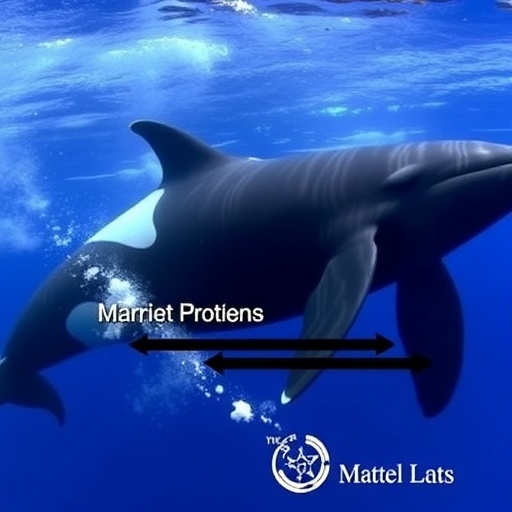
Over the past seven years, an unprecedented study has brought to light startling fluctuations in the health of Hawai‘i’s endangered insular false killer whales, revealing deeply concerning trends that may signify a looming crisis for this already fragile population. Researchers observed some individuals losing up to nearly 25% of their body weight within mere months, highlighting severe nutritional stress likely linked to environmental changes. This groundbreaking research, recently published in the journal Endangered Species Research, marks the first time quantitative data has definitively connected the physical decline of this elusive species to ecosystem disturbances, thus offering critical insights into the multifaceted challenges threatening their survival.
The collaborative effort uniting the Pacific Whale Foundation (PWF), the Marine Mammal Research Program (MMRP) at the University of Hawai‘i at Mānoa’s Hawai‘i Institute of Marine Biology, and the Okinawa Churashima Foundation represents a merging of cutting-edge technology and cross-institutional expertise. Employing high-resolution drone photogrammetry, scientists meticulously tracked 68 individual false killer whales—roughly half the known population—between 2019 and 2025. This innovative methodology allowed for precise, non-invasive measurements of body volume and mass, enabling researchers to monitor nuanced physiological changes over time with unprecedented accuracy. The approach, calibrated against 3D scans of captive whales in Okinawa, attests to an impressive 3% margin of error, lending robustness to the conclusions drawn.
One of the most alarming revelations of the study was the dramatic loss of 28% body mass—equivalent to around 500 pounds—by a single whale within just ten weeks. This rapid depletion of energy reserves underscores the extreme vulnerability of these mammals to nutritional stress. Population-wide metrics also hit record lows; the Body Condition Index (a quantifiable measure of health reflecting fat stores and muscle mass) plummeted in 2020, coinciding temporally with a severe marine heatwave. This environmental anomaly, marked by elevated ocean temperatures, directly affected prey availability and the metabolic demands of the whales, illustrating the cascading effects of climate change on marine apex predators.
Delving deeper into the drivers of this decline, lead author Jens Currie points to interspecies competition, particularly between false killer whales and human fisheries targeting the same high-energy pelagic fish such as ‘ahi (yellowfin tuna) and mahimahi. This overlap in dietary preferences raises the specter of prey limitation, pushing these whales onto what Currie describes as a “thin metabolic margin.” The chronic stress induced by diminished food supplies could potentially hasten their path towards extinction, emphasizing the urgent need to investigate anthropogenic impacts on prey abundance and distribution.
The study’s findings go beyond individual health metrics to reveal disparities within the whale population itself. Whales categorized as “Cluster 1″—a social group characterized by their expansive ranging across Hawaiian waters—exhibited significant fluctuations in body condition. This suggests that the energetic cost of traversing large oceanic distances intensifies physical strain, disproportionately affecting some social groups more than others. Such intrapopulation variability offers vital clues for targeted conservation strategies, which must account for behavioral ecology and habitat use to be effective.
Technological rigor underpins the study’s credibility. Researchers validated their drone-based photogrammetric measurements by cross-referencing with detailed 3D scans of whales housed and cared for at the Okinawa Churashima Foundation. This calibration ensured that aerial imagery could reliably translate into estimates of weight and volume, a key innovation distinguishing this work from previous observational studies reliant on less precise methods. This exactitude allows conservationists to track health trends in near real-time, pinpointing which individuals and locales are under greatest duress.
The interdisciplinary collaboration underscores a wider research paradigm shift in marine conservation, where trans-Pacific partnerships leverage diverse expertise and resources to address shared ecological crises. As Lars Bejder, MMRP Director and co-author, notes, the precision delivered by these methods is pivotal to formulating effective responses. Meanwhile, Nozomi Kobayashi from the Okinawa Churashima Foundation emphasizes the inspiring synergy between captive animal research and wild population recovery efforts, exemplifying how science can transcend geographic and institutional boundaries.
Beyond ecological metrics, the plight of Hawaii’s false killer whales carries profound cultural significance. These whales represent a unique insular population, finely adapted to the coastal ecosystems of the region and integral to Native Hawaiian heritage. Their status as apex predators means their loss would reverberate through marine food webs, but equally poignant is the loss felt by Hawaiian communities. As cultural advisor Kaʻapuni articulates, the disappearance of these animals equates to the fading of living “libraries” of indigenous knowledge, deepening the cultural erosion already felt across the islands.
This multidimensional importance amplifies urgency around understanding and mitigating the stressors these whales face. Climate change, with its alteration of ocean temperatures and currents, has spawned more frequent and intense marine heatwaves, directly impacting prey availability. Concurrently, bycatch and entanglement in fishing gear, along with pollution, compound the threats. For the false killer whales of Hawai‘i, whose diet predominantly consists of large pelagic fish, these overlapping pressures may be synergistically undermining their resilience and reproductive success, intensifying their risk of extinction.
The study’s establishment of baseline health data represents a pivotal foundation for future monitoring and management efforts. With the population currently declining at an approximate rate of 3.5% annually, the need for immediate, informed interventions is critical. Ongoing surveillance using the drone photogrammetry techniques pioneered here will empower stakeholders to detect early signs of distress and respond with tailored conservation measures, potentially including adjustments to fisheries management to ensure adequate prey availability.
Moreover, this research sets a precedent for employing technology-driven wildlife health assessments in marine mammals globally. Non-invasive, high-precision methodologies combined with longitudinal studies can illuminate complex ecological dynamics, guiding policy frameworks that balance human economic interests with biodiversity preservation. For Hawai‘i’s false killer whales, a species teetering on the brink, such science-enabled stewardship could mean the difference between extinction and survival.
In sum, this seven-year investigation intricately connects nutritional stress, environmental change, and social behavior to the physical health of one of the world’s smallest and most imperiled whale populations. Its groundbreaking technological approach, multinational collaboration, and integration of ecological and cultural perspectives present a comprehensive blueprint for addressing marine mammal conservation challenges amid a rapidly shifting planet. The study stands as a clarion call for urgent, science-based action to safeguard the future of Hawai‘i’s false killer whales and the ocean ecosystems they inhabit.
Web References:
- https://doi.org/10.3354/esr01505
- https://www.int-res.com/journals/esr/articles/esr01505
- https://pacificwhale.org
- https://www.mmrphawaii.org
- https://www.himb.hawaii.edu
- https://churashima.okinawa/en/ocrc/
References:
Currie, J. et al. (2024). Body condition differs among social clusters and across years in endangered false killer whales in Hawai‘i. Endangered Species Research. https://doi.org/10.3354/esr01505
Cite Scienmag News
Daisy Hatcher. (June 4, 2026). Nutritional Stress and Rising Ocean Temperatures Endanger Hawaiʻi’s Last False Killer Whales. Scienmag. https://scienmag.com/nutritional-stress-and-rising-ocean-temperatures-endanger-hawai%ca%bbis-last-false-killer-whales/
Daisy Hatcher. "Nutritional Stress and Rising Ocean Temperatures Endanger Hawaiʻi’s Last False Killer Whales." Scienmag, 4 June 2026, https://scienmag.com/nutritional-stress-and-rising-ocean-temperatures-endanger-hawai%ca%bbis-last-false-killer-whales/. Accessed 3 September 2026.
Daisy Hatcher. "Nutritional Stress and Rising Ocean Temperatures Endanger Hawaiʻi’s Last False Killer Whales." Scienmag. June 4, 2026. https://scienmag.com/nutritional-stress-and-rising-ocean-temperatures-endanger-hawai%ca%bbis-last-false-killer-whales/


