


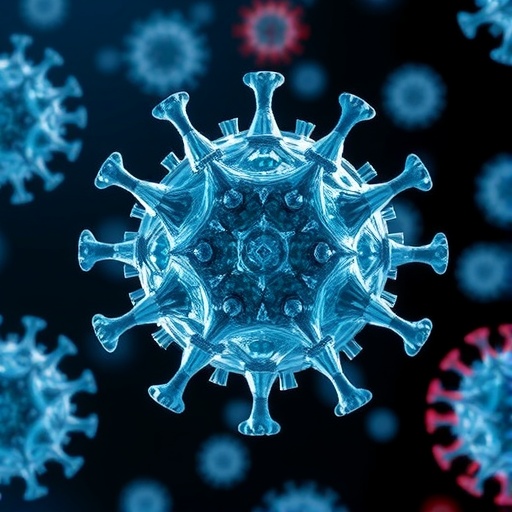
In a landmark achievement for vaccine science, researchers at the University of Cambridge and their spin-out company DIOSynVax have successfully completed the first human clinical trial of a universal vaccine targeting Sarbeco coronaviruses, the broad group that includes SARS-CoV-2 and related bat viruses with pandemic potential. This pioneering trial demonstrates the vaccine’s safety and establishes a promising platform for broad-spectrum viral protection using cutting-edge artificial intelligence (AI) techniques to design its active component.
Unlike conventional vaccines that rely on antigens from identified virus strains, this novel vaccine harnesses an AI-designed “super-antigen” crafted from extensive genetic sequence data compiled globally on Sarbeco coronaviruses. This super-antigen incorporates conserved features across known and potential viral variants, enabling it to elicit immune responses not only against SARS-CoV-2 but also related coronaviruses circulating in animal populations that have yet to spill over into humans. This universal design aims to outpace viral evolution and prepare humanity for future outbreaks without the need for frequent reformulations.
The Phase I clinical trial enrolled 39 healthy volunteers aged 18 to 50 at the National Institute for Health and Care Research (NIHR) Clinical Research Facilities in Southampton and Cambridge. The vaccine was delivered via a needle-free DNA delivery approach using a microfluidic jet injector, which projects the vaccine into the skin without a traditional needle. This technology offers an alternative to needle-based injections, potentially improving patient acceptance and facilitating rapid mass immunization campaigns by simplifying administration logistics.
Safety was the foremost endpoint of this initial trial, and researchers reported no significant side effects or adverse events among volunteers. Furthermore, robust immune responses were detected post-vaccination, with T-cell and antibody activity targeting a range of Sarbeco viruses demonstrated through immunological assays. This represents a crucial validation of the AI-driven antigen design and confirms that computer-simulated vaccine components can effectively stimulate broad and durable immunity in humans.
The implications of this trial reach far beyond coronaviruses alone. The design paradigm employed could be adapted to other families of viruses such as Influenza and Ebola, which also pose constant pandemic threats due to their rapid mutation and zoonotic potential. By preemptively targeting conserved antigenic regions across viral groups, this strategy promises to transform vaccine development from a reactive and strain-specific approach into one that is proactive and “future-proof.”
Professor Jonathan Heeney, who led the research at Cambridge’s Department of Veterinary Medicine, emphasized that this trial marks the first time a vaccine designed entirely by computer simulation has been tested safely in humans. He highlighted how this innovation could finally break the frustrating cycle of vaccine updates chasing viral mutants, akin to a dog chasing its own tail, by providing broad-spectrum and lasting protection that is less susceptible to viral escape mutations.
The trial also showcased the benefits of the needle-free administration system. The microfluidic jet delivery not only eliminates needle-associated pain and anxiety but may also expedite large-scale vaccination efforts, particularly in settings where traditional injections are logistically challenging, such as remote or resource-limited regions. This delivery modality could thus be a game-changer for global vaccination coverage.
Building on positive preclinical animal studies that demonstrated strong immune responses against diverse coronaviruses, this human trial lays a critical foundation for advancing to larger Phase II trials. The next phase will evaluate the vaccine’s immunogenicity and protective efficacy across more diverse populations to validate its broad applicability and durability of immune memory at scale.
Amid ongoing concerns about emerging viral variants globally and zoonotic spillovers, experts caution that current vaccine platforms often lag behind rapidly evolving pathogens, necessitating frequent updates and revaccination campaigns. This universal vaccine approach may shift the paradigm, offering simultaneous protection against numerous existing and potential future viral variants, thereby increasing pandemic preparedness substantially.
Professor Saul Faust from the University of Southampton, the trial’s chief investigator, underscored the transformative potential of universal vaccines. By developing these ahead of viral outbreaks, humanity could potentially avert large-scale crises, reduce disruption from lockdowns, and mitigate economic damage. This proactive immunization strategy could save millions of lives worldwide by staying ahead of viruses rather than reacting to their emergence.
Professor Marian Knight, representing NIHR Infrastructure, lauded the trial’s success as a pivotal leap, enabled by collaborative efforts between the life sciences sector and world-class clinical research facilities. The partnership model exemplifies how academia, commercial innovation, and public health systems can synergize to accelerate translational research from bench to bedside efficiently and safely.
Funding from Innovate UK propelled this research, which forms part of DIOSynVax’s broader pipeline of digitally optimized vaccines targeting multiple viral threats including seasonal influenza, hemorrhagic fevers, and coronavirus families. This convergence of AI, genomic surveillance data, and novel vaccine platforms heralds a new era in vaccinology, aligning technology with urgent global health needs.
The universal coronavirus vaccine’s success represents both a scientific breakthrough and a beacon of hope, signaling the dawn of vaccines designed not only to respond to current viral threats but to anticipate and neutralize those on the horizon. As the world continues to grapple with the impact of pandemics, such innovations offer a resilient and adaptable arsenal for future infectious disease control.
News Publication Date: 18-Jun-2026
Web References:
– https://www.journalofinfection.com/article/S0163-4453(26)00084-8/fulltext
– http://dx.doi.org/10.1016/j.jinf.2026.106759
Keywords
Universal coronavirus vaccine, AI-designed super-antigen, Sarbeco coronaviruses, needle-free vaccine delivery, microfluidic jet injection, broad-spectrum immunity, vaccine innovation, pandemic preparedness, DIOSynVax, genomic surveillance, Phase I clinical trial, viral evolution
Cite Scienmag News
Kristina Jarvis. (June 4, 2026). Breakthrough ‘Universal Vaccine’ Technology Promises Protection Against Future Virus Outbreaks. Scienmag. https://scienmag.com/breakthrough-universal-vaccine-technology-promises-protection-against-future-virus-outbreaks/
Kristina Jarvis. "Breakthrough ‘Universal Vaccine’ Technology Promises Protection Against Future Virus Outbreaks." Scienmag, 4 June 2026, https://scienmag.com/breakthrough-universal-vaccine-technology-promises-protection-against-future-virus-outbreaks/. Accessed 5 September 2026.
Kristina Jarvis. "Breakthrough ‘Universal Vaccine’ Technology Promises Protection Against Future Virus Outbreaks." Scienmag. June 4, 2026. https://scienmag.com/breakthrough-universal-vaccine-technology-promises-protection-against-future-virus-outbreaks/


