


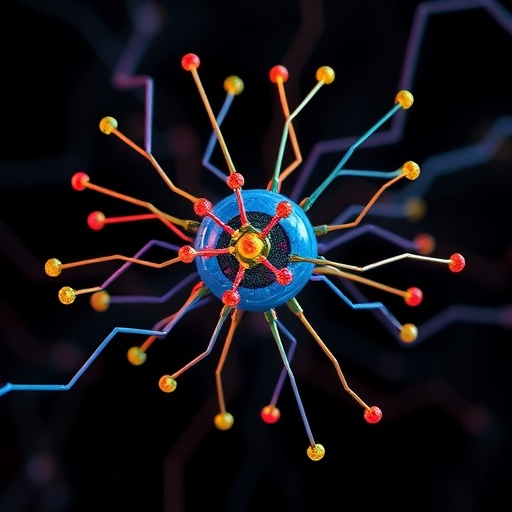
In the quest for advanced artificial intelligence systems, research is increasingly focusing on neuromorphic computing—an approach that draws inspiration from the architecture and functionality of biological neural networks. Traditional computing paradigms, which rely heavily on complementary metal-oxide-semiconductor (CMOS) technology, struggle to emulate the intricacies of biological neurons. This discrepancy often necessitates complex and power-hungry circuit designs, which hampers the compactness and efficiency that neuromorphic designs promise. In light of these challenges, recent innovations in materials science have introduced new components like diffusive memristors that may bridge the gap between biological and artificial neural networks.
Diffusive memristors operate based on ion dynamics, mimicking certain aspects of how biological neurons process and transmit information. This characteristic presents a unique opportunity to develop systems that not only emulate the functional aspects of biological neurons but also achieve higher energy efficiency and spatial compactness. At the core of this advancement, researchers have conceptualized a novel spiking artificial neuron, which consists of a single diffusive memristor, a transistor, and a resistor—collectively referred to as the 1M1T1R design. This minimalist architecture occupies only the footprint of a traditional transistor, making it an exemplary model for modern neuromorphic systems.
The 1M1T1R neuron embodies six critical characteristics commonly associated with biological neurons, which are essential for functioning within a neural network context. These include leaky integration, where the neuron gradually loses information unless it is reinforced; threshold firing, which dictates the conditions under which the neuron fires or sends signals; cascaded connection, enabling interconnected neuron communication; intrinsic plasticity, allowing the neuron to adapt its behavior based on experience; refractory periods, during which a neuron cannot reactivate after firing; and stochasticity, introducing an element of randomness in firing patterns akin to biological variability.
One of the standout features of this design is its remarkably low energy consumption. The 1M1T1R neuron operates at the picojoule level per spike, with potential advancements suggesting it could achieve even lower energy thresholds nearing the attojoule range with further miniaturization. This drastic reduction in energy requirements not only aligns with the principles of sustainability and efficiency but also opens avenues for practical applications in portable and power-constrained environments.
The neuronal characteristics of the 1M1T1R neuron have profound implications when simulating recurrent spiking neural networks. By incorporating these foundational traits into a computational model, researchers can observe how such attributes enhance overall network performance. This simulation holds promise for various applications, from enhancing machine learning algorithms to developing advanced robotics systems capable of adaptive learning and complex decision-making.
The ability to induce these intrinsic properties in artificial neurons highlights the potential for creating systems that can learn and adapt over time, much like their biological counterparts. The significance of intrinsic plasticity cannot be overstated, as it facilitates the continuous evolution and adjustment of synaptic strengths based on inputs and experience, thereby mimicking the learning capabilities of human brains.
As researchers continue to explore the practical implications of such technologies, the transition from theoretical concepts to tangible applications becomes more realistic. The 1M1T1R neuron could pave the way for advancements not only in artificial intelligence but also in understanding and modeling the complexities of biological systems themselves. By integrating memristive behavior, future AI systems can attain a level of sophistication previously thought unattainable.
The opportunity for scalability in these artificial neurons is another aspect that stands out. As technology progresses, the current design heralds a new generation of compact neuromorphic chips that can feasibly integrate millions, if not billions, of such neurons. This could lead to a leap in computational capabilities, potentially enabling machines to process information in real-time with unprecedented efficiency.
Emerging from the intersection of materials science, artificial intelligence, and electrical engineering, the 1M1T1R neuron represents a holistic approach to neuromorphic computing. By unifying the principles of nature with modern technology, researchers are poised to redefine what is possible in automated systems. This innovative pathway may not only enhance computational efficiency but also allow for nuanced interactions between machines and their environments.
As this field evolves and new breakthroughs are made, we may find ourselves at the cusp of a significant paradigm shift in both artificial intelligence and our understanding of neural networks. The ongoing exploration of diffusive memristors could potentially unlock solutions to challenges that have long impeded advancements in AI and computational neuroscience. As scientists unravel the intricacies of these systems, the fusion of living biological principles with technological innovation may yield transformative applications that redefine our relationship with machines.
In conclusion, the introduction of a spiking artificial neuron based on a diffusive memristor enhances the global landscape of neuromorphic computing. It exemplifies the shift from reliance on traditional CMOS technology to a more organic, adaptable framework for creating artificial intelligence systems. The optimization of neuronal characteristics not only improves efficiency but also aligns computational models more closely with biological processes. This innovative direction promises a future where artificial neural systems can operate with the efficiency, complexity, and capability resembling that of human intelligence.
Cite Scienmag News
Cassandra Pierce. (October 27, 2025). Novel Spiking Neuron Combines Memristor, Transistor, Resistor. Scienmag. https://scienmag.com/novel-spiking-neuron-combines-memristor-transistor-resistor/
Cassandra Pierce. "Novel Spiking Neuron Combines Memristor, Transistor, Resistor." Scienmag, 27 October 2025, https://scienmag.com/novel-spiking-neuron-combines-memristor-transistor-resistor/. Accessed 4 September 2026.
Cassandra Pierce. "Novel Spiking Neuron Combines Memristor, Transistor, Resistor." Scienmag. October 27, 2025. https://scienmag.com/novel-spiking-neuron-combines-memristor-transistor-resistor/


