

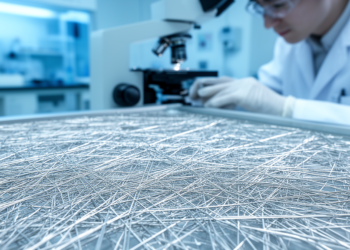
Hardware That Learns: UCLA-Rooted Nanowire Networks Point Toward Physical AI
A Nature Reviews Physics review co-authored by UCLA researchers describes computing platforms in which self-organizing nanowire and nanoparticle networks physically ...
A Nature Reviews Physics review co-authored by UCLA researchers describes computing platforms in which self-organizing nanowire and nanoparticle networks physically ...
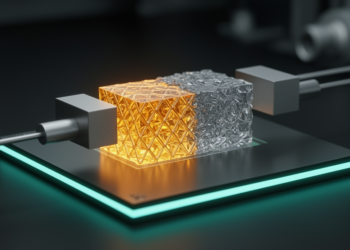
Researchers built a monolithic one-selector one-resistor cross-point memory device from a single GexTe1-x material system, tuning its composition to switch ...
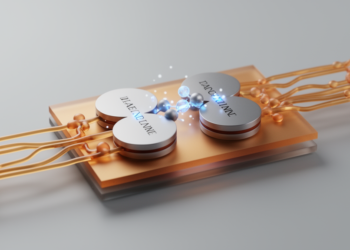
An azobenzene redox layer helped an organic electrochemical transistor retain enhanced conductance for more than 800 seconds and informed a ...
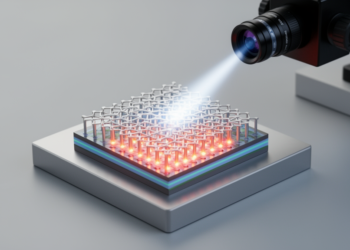
An asymmetric quasi-BIC metasurface coupled to multiple quantum wells produced tunable linear and nonlinear photoresponses for proof-of-concept image preprocessing, pattern ...
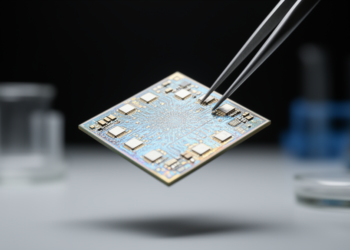
A new review argues that engineering atomically sharp interfaces in two-dimensional materials can break flash memory's long-standing trade-offs among speed, ...
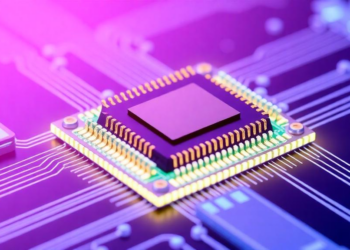
A simulation-based design in Scientific Reports presents an ultra-compact non-volatile photonic matrix-vector multiplication engine using mode division multiplexing and programmable ...

A systematic review identifies post-CMOS hardware neurons as a promising route toward faster, more energy-efficient and adaptive brain-inspired computing for ...
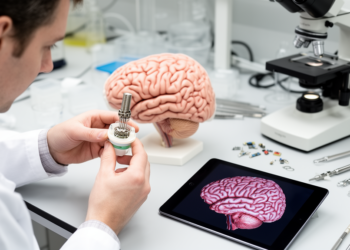
A 2026 hypothesis paper proposes the Auxilium, an extracranial system that could connect surviving brain tissue with external or biological ...

A single contact-engineered MoS₂ memtransistor classified heartbeat segments with 93.9% accuracy in a proof-of-concept ECG reservoir-computing experiment.

A dextran-gated organic optoelectronic synaptic transistor achieves single-pulse energy consumption as low as 2 femtojoules, below the energy of a ...


Embark on a thrilling journey of discovery with Scienmag.com—your ultimate source for cutting-edge breakthroughs. Immerse yourself in a world where curiosity knows no limits and tomorrow’s possibilities become today’s reality!